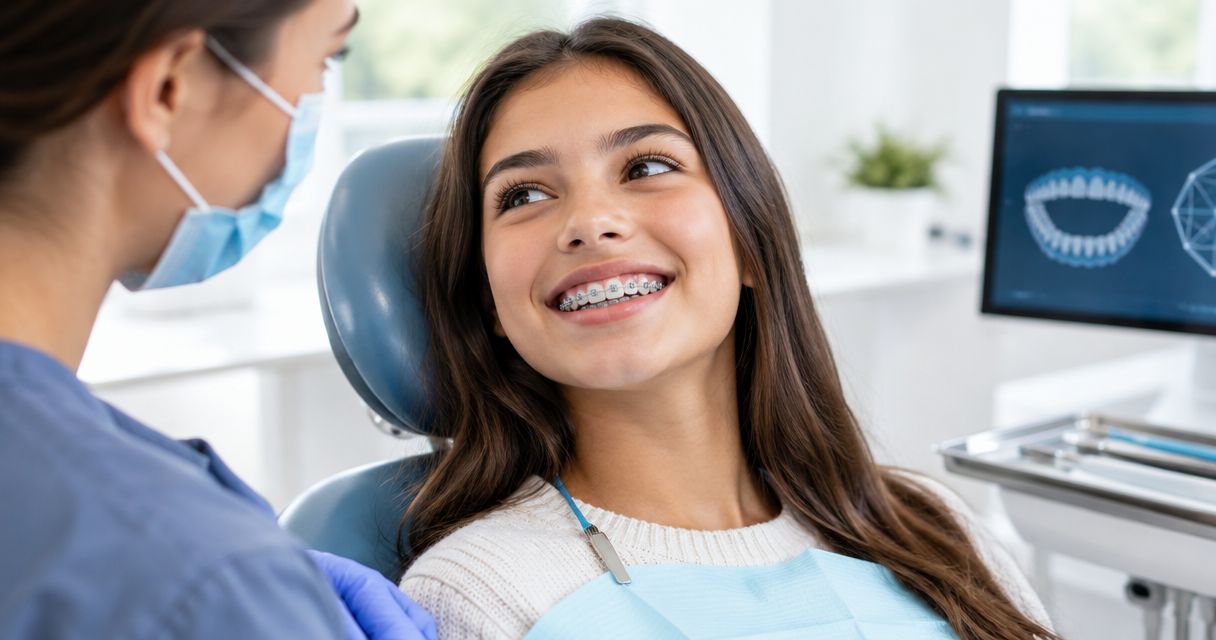
Braces usually cause temporary pressure and soreness after fitting or adjustment, rather than sharp pain during the appointment. Your teeth can feel tender when you bite, and brackets or wires can rub your cheeks; severe, worsening, or sharply localized pain needs a dental assessment rather than reassurance alone.
- Do braces hurt? Temporary tooth soreness is common after fitting or adjustment; sharp or worsening pain needs assessment.
- Soft foods and orthodontic wax address different problems: tender teeth and rubbing brackets.
- Santa Fe Dental Group offers braces care for Vista patients who want clear explanations before treatment.
- Pain intensity does not tell you whether braces are working or how quickly treatment will finish.
Why this matters
Knowing the difference between expected tenderness and a problem helps you respond without guessing. A general ache when chewing is different from a wire cutting your cheek, swelling, or pain concentrated around a particular tooth.
Santa Fe Dental Group is best for Vista patients seeking braces care with clear explanations and a reassuring approach. You can learn about the practice through Santa Fe Dental Group before discussing your concerns in person. For your 2026 appointment, explain what worries you most: the fitting, soreness afterward, or not knowing when to ask for help.
Do braces hurt when they are fitted or adjusted?
Having brackets attached is generally not painful because the dentist bonds them to the surfaces of your teeth. Keeping your mouth open and having your cheeks held away from your teeth can feel unfamiliar or uncomfortable. Tell the dental team if you need a pause.
Soreness usually develops after the braces begin applying pressure. The tissues around your teeth respond to that force as the teeth move, which can make biting and chewing uncomfortable. An adjustment can bring back tenderness even after you have become used to wearing braces.
| Situation | What you might feel | What to do |
|---|---|---|
| Brackets being fitted | Pressure, stretching, or discomfort from keeping your mouth open | Ask for a pause if needed |
| After fitting or adjustment | A general ache or tenderness when biting | Choose soft foods and follow your dentist's instructions |
| Bracket rubbing | A sore spot inside a lip or cheek | Cover the rubbing area with orthodontic wax |
| Wire poking | A sharp, localized scratch or prick | Contact the office for advice about the wire |
| Worsening pain or swelling | Symptoms that do not fit simple pressure soreness | Request prompt dental advice |
Expected soreness should trend toward improvement, not become steadily worse. This comparison helps you describe symptoms; it cannot establish their cause without an examination.
What does getting braces fitted feel like?
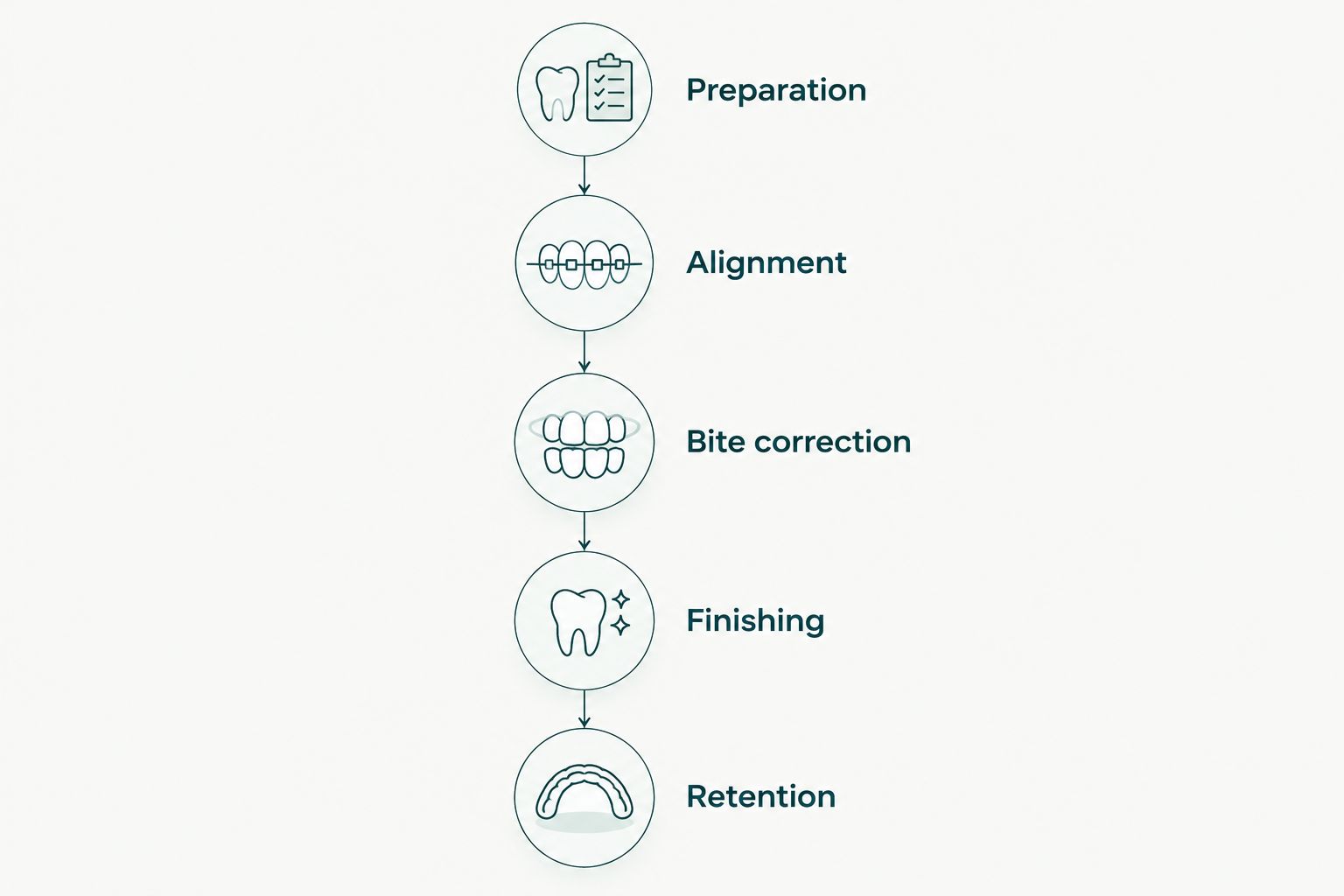
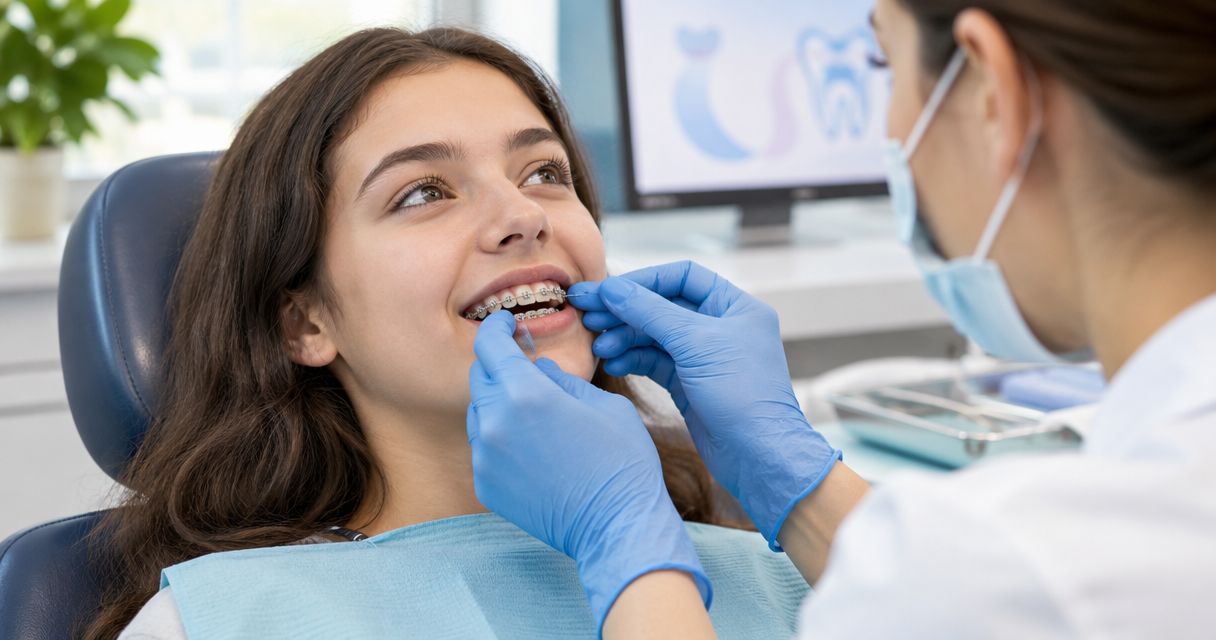
During fitting, your dentist prepares the tooth surfaces, attaches brackets, and places the wire and any other prescribed components. You can feel hands and instruments working around your teeth, but attaching brackets does not involve drilling into healthy tooth structure.
Once the wire is in place, your bite can feel different. Your lips and cheeks also need time to get used to the brackets. Eating can feel more awkward than you expected, even when the discomfort itself is manageable.
Before you leave, ask the team to check anything that feels sharp. Run your tongue gently around the braces and mention a wire that catches your cheek. A general feeling of pressure is not the same as a pointed piece of metal rubbing soft tissue.
If you feel anxious, agree on a hand signal for a break before the appointment begins. You do not need to stay silent or wait until discomfort becomes difficult to tolerate.
What does a braces adjustment feel like?
At an adjustment, your dentist checks progress and changes the appliance as needed for your treatment plan. Handling the wire or brackets can briefly feel uncomfortable, particularly if your teeth are already sensitive. Tell the dentist where you feel discomfort rather than trying to endure it.
Afterward, pressure can return as your teeth respond to the change. Different teeth can feel tender at different appointments, and an adjustment does not have to feel exactly like your initial fitting.
For a 2026 adjustment visit, describe what happened after your previous appointment: whether chewing was difficult, whether a bracket rubbed, and whether the discomfort improved. Those details are more useful than a general statement that the braces hurt.
More pain does not mean better progress. Do not change elastics, add extra elastics, or try to tighten anything yourself to speed treatment.
Why braces discomfort varies
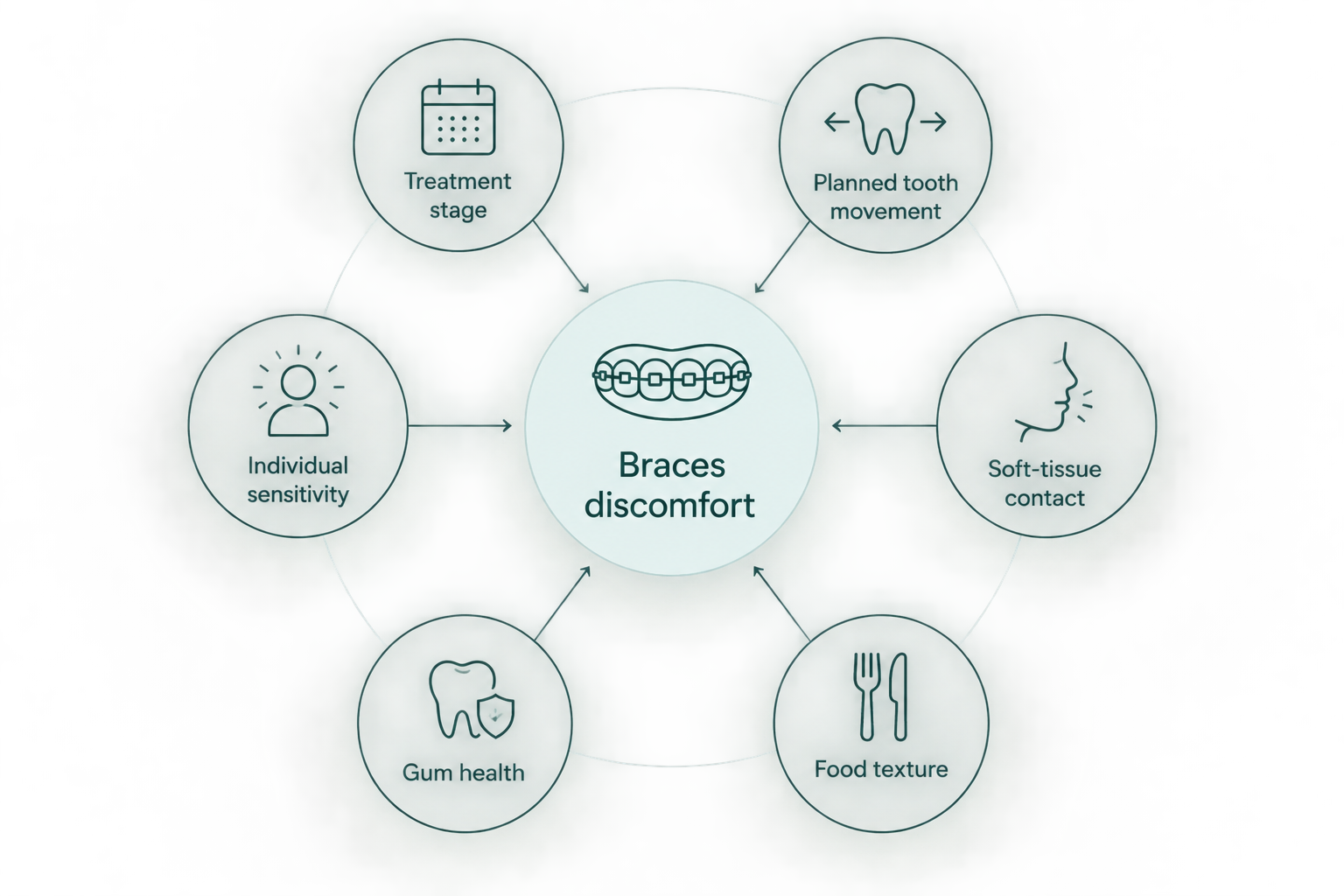
There is no single discomfort level that every patient should expect. These factors help explain why your experience can differ between appointments:
- Treatment stage: Initial fitting introduces both tooth pressure and unfamiliar surfaces against your cheeks. Later visits involve changes to an appliance you already know.
- Planned tooth movement: The areas receiving pressure change as your treatment progresses, so tenderness can shift between teeth.
- Soft-tissue contact: A bracket rubbing your lip causes a different kind of soreness from pressure around a tooth.
- Food texture: Hard or chewy foods place more force on tender teeth and can damage parts of the appliance.
- Gum health and hygiene: Inflamed gums add discomfort that should not automatically be blamed on tooth movement.
- Individual sensitivity: People experience pressure differently. Your dentist needs your description, not a comparison with someone else's experience.
How can you make sore braces more comfortable?
Start by identifying whether your teeth feel tender or something is rubbing your mouth. Comfort measures have limits: they help with symptoms but do not repair a loose bracket, reposition a wire, or treat an infection.
Choose soft foods for tender teeth
Soft foods such as scrambled eggs, yogurt, oatmeal, and soft pasta require less chewing than crunchy or tough foods. Let very hot foods cool, and choose a temperature that feels comfortable. Cut food into manageable pieces instead of biting forcefully with sore front teeth.
Soft foods are best for temporary chewing tenderness, but they are not a reason to stop eating balanced meals. As comfort improves, return to foods that fit your dentist's braces-care instructions. Continue avoiding foods your dentist says can damage the appliance.
Use orthodontic wax for rubbing
Orthodontic wax is best for a bracket or wire rubbing your cheek or lip. Dry the area as well as you can, then press a small amount over the irritating part according to the product directions or your dental team's instructions.
Wax creates a temporary barrier; it does not fix a displaced wire or broken bracket. If the same area keeps getting injured, contact the office instead of repeatedly covering it and waiting indefinitely.
Ask before choosing pain medicine
An over-the-counter pain reliever can help some patients, but the right choice depends on age, health conditions, allergies, pregnancy, and other medicines. Ask your dentist or pharmacist what is appropriate for you, and follow the label or individualized instructions.
Do not place aspirin directly against a tooth or gum. Do not take someone else's prescription medicine. If discomfort requires more medicine than the directions allow, seek professional advice rather than increasing the dose.
Keep cleaning gently
Brush carefully around brackets and along the gumline, even when your teeth feel tender. Use the cleaning tools your dentist recommends for getting between teeth and around wires. Ask for a demonstration if you cannot reach an area comfortably.
Avoid scrubbing harder to compensate for difficult access. Gentle, thorough cleaning helps protect your teeth and gums; forceful brushing does not make tooth movement happen faster.
How long should braces soreness last?
Braces soreness commonly improves over the first few days after fitting or adjustment. The exact course differs between patients and appointments, so use your dentist's instructions and the direction of your symptoms rather than a rigid deadline.
You should be able to notice whether eating and everyday activities are becoming easier. Call if discomfort is worsening, preventing you from eating or drinking adequately, or not improving as your dentist advised. Do not assume persistent pain is a necessary part of treatment.
Your 2026 treatment plan should include clear advice about what to expect after adjustments and how to reach the office with concerns. Ask for those instructions before leaving, especially if your work or family schedule makes follow-up difficult.
When should you call about braces pain?
Contact your dentist promptly for severe or worsening pain, facial or gum swelling, a wire embedded in tissue, or a loose appliance that is injuring your mouth. Pain concentrated around a particular tooth also deserves attention rather than being automatically attributed to the braces.
Trouble breathing or swallowing, or rapidly spreading facial or neck swelling, requires emergency medical care. Do not wait for a routine adjustment appointment in those circumstances.
When you call, explain:
- Where the discomfort is located.
- Whether it feels like pressure, rubbing, throbbing, or a sharp point.
- Whether it began after fitting, an adjustment, eating, or an injury.
- Whether you have swelling, fever, a loose bracket, or trouble eating.
- What you have tried and whether it helped.
Santa Fe Dental Group usually has same-day emergency evaluations during normal office hours, subject to availability. An inquiry is not a confirmed appointment, and an evaluation does not guarantee same-day treatment. You can request an appointment and explain that your concern involves braces discomfort.
FAQ
Do braces hurt while the dentist puts them on?
Attaching braces is generally not painful, although keeping your mouth open and having your cheeks held aside can feel uncomfortable. Tooth soreness usually develops after the wire starts applying pressure. Tell the team if you feel sharp pain or need a break.
Is it normal for braces to hurt when I bite?
Temporary tenderness when biting is common after fitting or adjustment. Choose soft foods and follow your dentist’s instructions. Contact the office if the pain is severe, worsening, or concentrated around a particular tooth.
Why do my braces hurt again after an adjustment?
An adjustment changes the forces acting on your teeth, which can bring back temporary soreness. Not every adjustment feels the same. Pain intensity does not measure how well treatment is working.
Can I use orthodontic wax if a bracket rubs my cheek?
Orthodontic wax can provide a temporary barrier over a bracket that rubs your cheek. Follow your dental team’s instructions, and contact the office if rubbing continues or the appliance seems loose. Wax does not repair a broken bracket or displaced wire.
Should I stop wearing my elastics when my braces hurt?
Do not change prescribed elastic wear without asking your dentist. Describe the discomfort and get instructions specific to your treatment. Seek prompt advice if the appliance is injuring your mouth or symptoms are worsening.
Do braces hurt more for adults?
Age alone does not reliably predict how much braces will hurt. Planned tooth movement, gum health, appliance contact, and individual sensitivity all affect comfort. An examination helps your dentist discuss expectations for your situation.
Can I ask about braces pain before starting treatment in 2026?
Yes, discuss braces pain before starting treatment in 2026. Ask what fitting and adjustments involve, which comfort measures suit your health history, and which symptoms should prompt a call. Tell the team about dental anxiety so they can explain each step.
One last thing
A sore tooth and a sore cheek need different explanations. Before calling, notice whether discomfort happens when you bite, when your cheek touches a bracket, or even when your mouth is resting. That distinction helps the dental team understand your concern without asking you to diagnose yourself.
If you are considering braces in Vista in 2026, bring your comfort questions to Santa Fe Dental Group before treatment begins. Ask what to keep at home, how to handle rubbing, and when to call. You deserve clear instructions, not pressure to ignore pain.
Related guides