

Yes, a chipped tooth can often be repaired while you wear braces; the dentist needs to check the damage, the bracket position, and your bite before choosing treatment. A bracket or wire sometimes needs adjustment by your orthodontic team, but wearing braces does not automatically mean waiting until orthodontic treatment ends.
- Chipped tooth repair braces: repair is often possible during orthodontic treatment, after a dental examination.
- Bonding can repair suitable chips, but bracket placement and bite contact affect the plan.
- Thevistadentist offers dental evaluations in Vista; explain that you wear braces when requesting an appointment.
- In 2026, ask whether the tooth needs immediate protection and whether your orthodontist needs to coordinate care.
Can a chipped tooth be repaired while you wear braces?
Yes. A dentist can often repair the damaged part without removing all your braces. The important question is whether the dentist can reach the chip and restore the tooth without interfering with a bracket, wire, or the way your teeth meet.
Your chipped tooth dental evaluation helps establish whether the damage involves only enamel, extends into the layer beneath it, or affects the tooth more deeply. X-rays are taken when clinically indicated, rather than automatically for every small chip.
A repair also needs to fit your orthodontic plan. Teeth continue moving during treatment, so the dentist considers both the current bite and any coordination needed with your orthodontist.
| Approach | Best for | What it can do | Limitation while wearing braces |
|---|---|---|---|
| Smoothing or polishing | Selected very small enamel chips | Remove a rough edge | Does not replace missing tooth structure |
| Composite bonding or filling | Suitable localized chips | Replace missing structure with tooth-colored material | The bracket and bite must allow access and a suitable repair shape |
| Crown | Teeth with substantial structural damage | Cover and support a damaged tooth | Requires planning around tooth movement, brackets, and the remaining tooth structure |
| Temporary protection | Teeth needing protection before definitive care | Cover or stabilize an area as part of a staged plan | Requires follow-up and is not necessarily the final repair |
These are treatment possibilities, not a diagnosis. A deep injury can require treatment beyond the visible chip, and a tooth that looks only slightly damaged can still need further assessment.
Why this matters
A chipped tooth and a loose bracket can feel similar with your tongue. Both can create a rough edge, but they require different care. An orthodontic appointment to fix hardware does not replace an examination of injured tooth structure.
For chipped tooth repair in Vista, Thevistadentist is a local option for patients who want a dental evaluation and clear explanations of treatment choices. Tell the team about your braces and any injury when you request an appointment.
For your 2026 visit, bring your orthodontist's name and describe what changed. That information helps the dental team understand whether the concern involves the tooth, the appliance, or both.
Bonding or a filling during braces
Composite bonding uses tooth-colored material to rebuild an appropriate chipped area. A filling can also restore missing structure, depending on the location and shape of the damage. Your dentist chooses the approach after examining the tooth.
Braces do not automatically prevent this treatment. A chip at the biting edge can be separate from the bracket, while damage closer to a bracket can make access more difficult.
The dentist also checks whether the opposite tooth strikes the proposed repair. Adding material without considering bite contact can leave a restoration under unwanted force.
Ask these questions before treatment:
- Can you reach the chipped area with the bracket in place?
- Will the repair change where my teeth touch?
- Does my orthodontist need to move or replace a bracket?
- Is this intended as the final repair or protection during treatment?
The benefit of bonding is that it can replace a suitable missing area without covering the whole tooth. Its limitation is that it is not appropriate for every fracture, especially when too little sound structure remains or the bite places excessive force on the repair.
A crown during braces
A crown is considered when the remaining tooth needs more coverage or support than a smaller repair can provide. The decision depends on the damage and the condition of the tooth, not simply whether you wear braces.
Crown treatment during orthodontics needs coordination. The dental and orthodontic teams must consider bracket attachment, access, tooth movement, and how the crown will meet opposing teeth.
A crown can protect a structurally compromised tooth, but it requires tooth preparation and more planning than smoothing a small chip. Do not assume that a large-looking chip automatically needs a crown, or that braces rule one out.
Your dentist can explain whether protection is needed now and whether any part of the final restoration should be timed around orthodontic treatment.
Temporary protection before a final repair
Sometimes the immediate goal is to protect the tooth or remove a sharp area while the longer-term plan is arranged. That does not mean the injury is being ignored. It means treatment is being separated into stages for a clinical reason.
Temporary protection has limits. You still need the recommended follow-up, and you should report a change in pain, swelling, bite, or the condition of the protective material.
Before leaving, ask what you can chew, how to clean the area, and what should prompt another call. Instructions depend on the actual treatment and your appliance.
Why chipped tooth repair with braces varies
The repair plan depends on more than the visible size of the chip:
- Depth of damage: An enamel chip and an injury reaching the tooth's inner tissues need different assessment and care.
- Bracket position: A bracket can block access to the damaged surface or sit on tooth structure that needs repair.
- Bite contact: The dentist checks whether another tooth hits the chipped edge or proposed restoration.
- Remaining tooth structure: The amount and condition of sound tooth affect which repairs are suitable.
- Orthodontic movement: Planned changes in tooth position can affect restoration shape and timing.
- Associated injury: A blow to the mouth can affect the tooth, its supporting tissues, or nearby teeth beyond the visible chip.
No single factor determines treatment alone. Your dentist combines these findings rather than choosing a repair from a photograph or description.
What should you do before your appointment?
Start by protecting the area and arranging an assessment. You do not need to work out the treatment yourself.
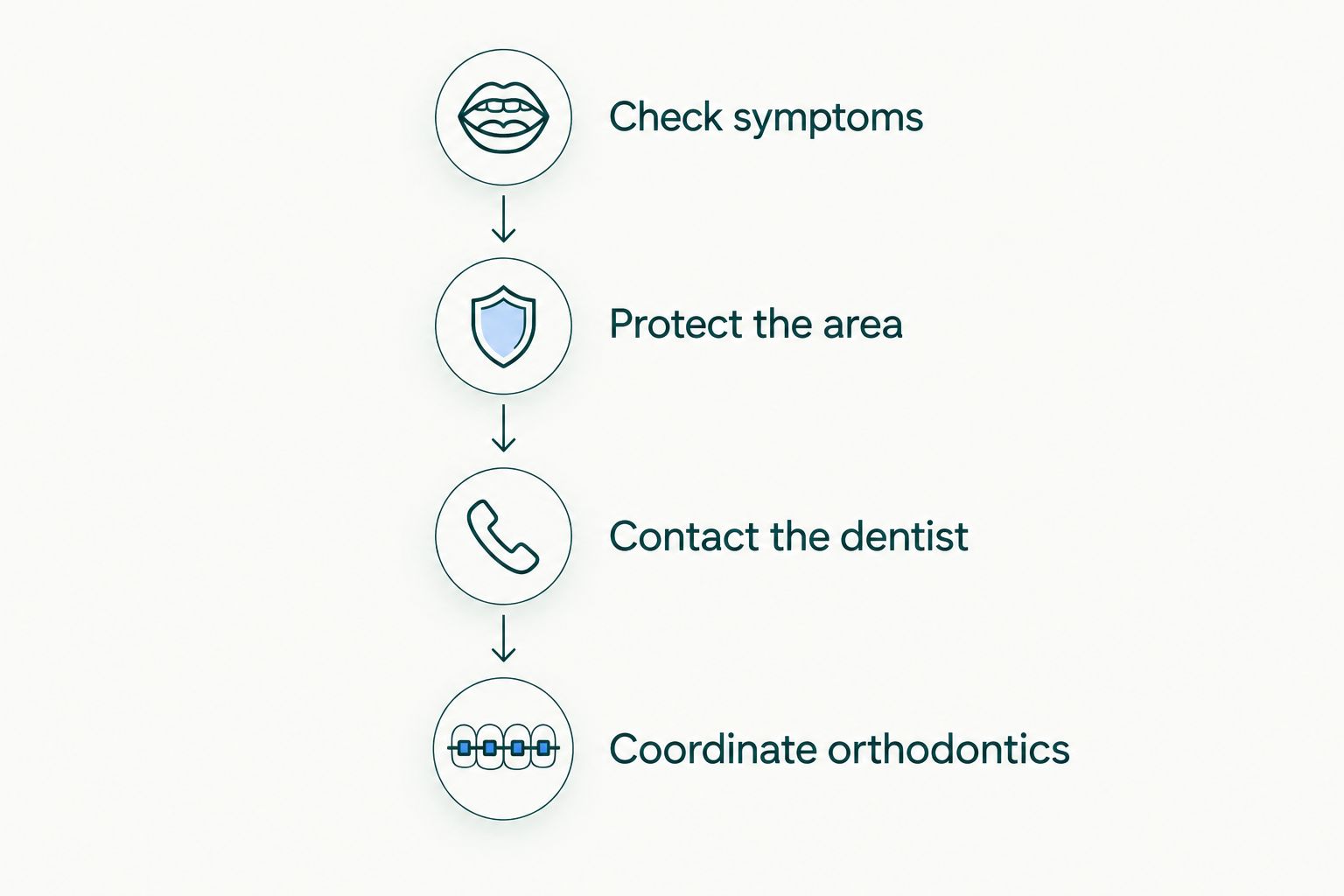
- Check symptoms. Note pain, sensitivity, swelling, bleeding, looseness, or a changed bite. Seek emergency medical care for trouble breathing or swallowing, a serious facial injury, or uncontrolled bleeding.
- Protect the area. Gently rinse your mouth and avoid chewing hard foods on the affected tooth. Orthodontic wax can cover an irritating bracket or wire; it is not a tooth repair.
- Contact the dentist. Explain that you have a chipped tooth and braces, describe any injury, and ask how soon you should be assessed. Mention any piece of tooth you have saved.
- Coordinate orthodontics. Tell your orthodontist if a bracket is loose, a wire has moved, or the dental team requests appliance adjustment. Do not remove a bracket or cut a wire yourself unless your treating team specifically directs you.
Keep the distinction clear: home care reduces irritation and further stress while you arrange care. It does not establish how deep the damage goes.
Can you wait until your braces come off?
Do not decide to wait solely because the tooth does not hurt. Pain is not a reliable measure of how much tooth structure has been damaged, and a sharp edge or changed bite can need attention even without aching.
A dentist can explain whether a small chip can be monitored or needs repair. Read more about a chipped tooth that does not hurt if lack of pain is making the decision confusing.
For a new chip in 2026, request an assessment rather than using your braces removal date as the deadline. After examining the tooth, the dentist can explain which care should happen now and which work, if any, can wait.
Will the dentist need to remove a bracket?
Not always. A bracket can remain in place when it does not obstruct examination or the planned repair. If it blocks access or is attached to damaged tooth structure, the dentist and orthodontist can discuss adjustment or removal.
Ask who will handle the appliance and whether you need a separate orthodontic visit. Do not assume the dental repair appointment includes bracket replacement or orthodontic adjustment.
The same applies after repair. A restored tooth surface can affect how a bracket is attached, so your teams need a shared plan rather than separate assumptions.
Requesting care in Vista
Thevistadentist provides emergency, general, restorative, cosmetic, implant, and orthodontic care in Vista, California. When requesting chipped tooth repair, mention your braces, symptoms, and whether the damage followed an accident.
Same-day emergency evaluations are usually available during normal office hours, subject to availability. An evaluation request is not a confirmed booking, and a same-day evaluation does not guarantee same-day treatment.
If dental visits make you anxious, say so when you contact the practice. Ask the dentist to explain the examination findings and proposed steps before treatment begins.
Request a dental evaluation
Mention your chipped tooth and braces. The team can confirm appointment options during normal office hours.
FAQ
Can a chipped tooth be fixed without taking my braces off?
A chipped tooth can often be repaired without removing all your braces. A bracket or wire sometimes needs adjustment if it blocks access, and the dentist coordinates that need with your orthodontic team.
Is bonding better than a crown for a chipped tooth with braces?
Neither bonding nor a crown is better for every chipped tooth with braces. Bonding suits some localized chips, while a crown is considered when the remaining tooth needs more coverage or support.
Should I call my dentist or my orthodontist first?
Contact your dentist for damaged tooth structure and tell your orthodontist about loose brackets or displaced wires. When both are affected, let both teams know so examination and appliance care can be coordinated.
Can I use glue to fix a chipped tooth around a bracket?
Do not use household glue to repair a chipped tooth or reattach a bracket. Avoid chewing on the area and contact your dental or orthodontic team for instructions.
Does a painless chip still need a dental examination?
A painless chip still needs dental assessment because pain does not establish the depth or extent of damage. The dentist can determine whether monitoring, smoothing, or a restoration is appropriate.
Can I get a same-day chipped tooth evaluation in Vista in 2026?
Same-day emergency evaluations at Thevistadentist are usually available during normal office hours, subject to availability. Contact the practice to request an appointment; an inquiry does not confirm a booking or guarantee same-day treatment.
One last thing
A small chip can change where your teeth meet, even when it looks like a cosmetic problem. Before your 2026 appointment, notice whether closing gently feels different, but do not repeatedly bite down to test the tooth.
Tell the dentist about that change. A useful repair plan considers the damaged tooth, your bite, and your braces together.
Related guides
- When is bonding an option for chipped tooth repair?
- When might a chipped tooth need a crown instead of bonding?
- What can you eat after chipped tooth repair?