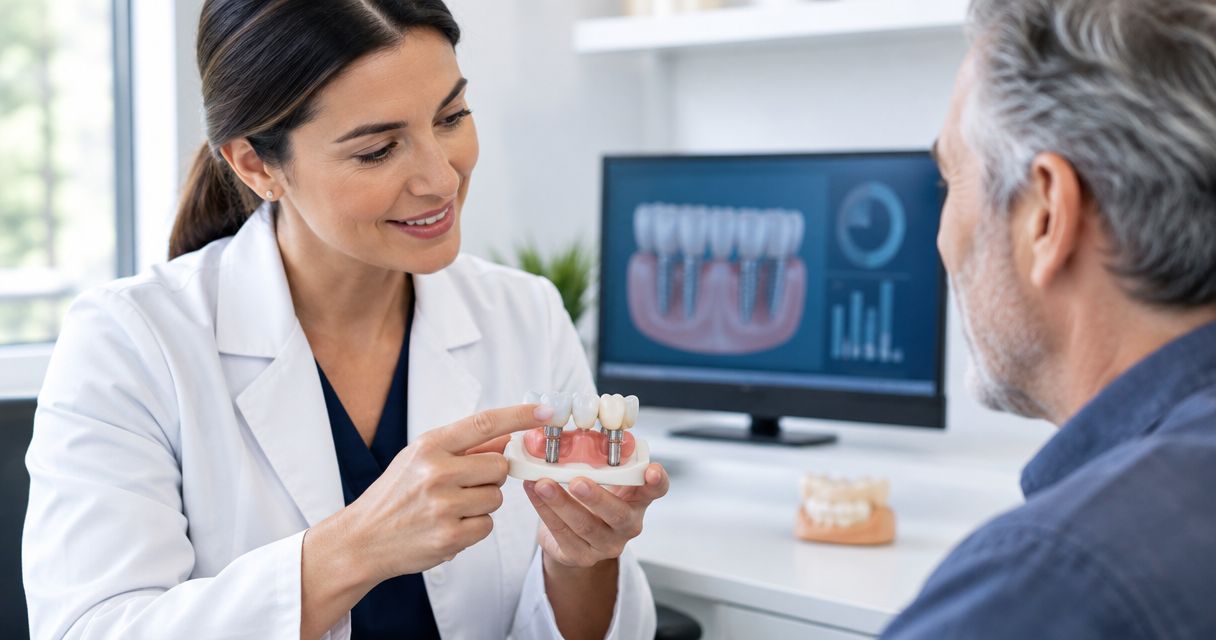
A lower snap-in denture commonly uses 2 conventional implants; an upper snap-in denture generally needs at least 4 implants, with some plans using 6 implants. These are planning reference points for 2026, not a prescription: your bone, bite, and denture design determine the recommendation. The number alone does not tell you whether bone grafting, extractions, or a new denture will also be needed.
- How many implants for snap in dentures? Common reference points are 2 below and at least 4 above.
- Upper and lower jaws need separate treatment plans; implant placement matters as much as implant count.
- Snap-in dentures remain removable and need daily cleaning, attachment maintenance, and dental follow-up.
- Santa Fe Dental Group offers snap-in denture care in Vista; an examination determines implant number and suitability.
Why this matters
The goal is a denture that works with your mouth—not the smallest or largest possible implant count. A recommendation for your lower jaw does not automatically apply to your upper jaw. Even two people missing the same teeth can need different arrangements.
If you are comparing dentures in Vista, start by separating removable snap-in teeth from fixed implant teeth. This guide to denture types and care explains the broader choices. Here, the focus is narrower: how dentists decide the number of conventional implants for a removable snap-in denture.
How many implants are needed for snap-in dentures?
For a full lower snap-in denture, 2 implants are a well-established treatment approach. For a full upper snap-in denture, at least 4 implants are commonly considered, and some designs use 6 implants. These counts refer to one jaw, not your entire mouth.
| Jaw | Common planning reference | Best for discussing | Main limitation |
|---|---|---|---|
| Lower jaw | 2 implants; additional implants in selected plans | Improving retention of a removable lower denture | A gum-supported denture can still move under chewing pressure |
| Upper jaw | At least 4 implants; some plans use 6 implants | Retaining a removable upper denture with suitable implant distribution | Bone conditions and denture design can require a different plan |
These are general clinical reference points, not treatment tiers or a promise that a particular count will work for you. A dentist must assess where implants can be placed, how they will connect to the denture, and how chewing forces will be shared.
For your 2026 consultation, ask for the recommendation per jaw, with the proposed implant positions shown. A total number without that explanation leaves out much of the treatment plan.
Lower-jaw snap-in dentures: 2 implants are a common starting point
A conventional lower denture has less surface area for support than an upper denture. Your tongue and the muscles around your mouth also move against it. Implants can help retain the lower denture when gum support alone does not provide enough security.
With a common 2-implant approach, attachments connect the removable denture to implants toward the front of the lower jaw. The denture usually still receives support from the gums. It is not the same as a fixed bridge supported entirely by implants.
Best for: Discussing improved retention when a lower denture lifts or shifts and examination findings support this approach.
The benefit is added retention while keeping the denture removable for cleaning. The limitation is that the back of a gum-supported denture can still move under pressure, and changes in the gums can affect its fit. Additional implants or a different attachment design belong in the discussion when your clinical needs call for them—not simply because more sounds better.
Upper-jaw snap-in dentures: At least 4 implants are commonly considered
The upper jaw needs its own assessment. Bone quality, available bone, sinus position, and the planned denture shape all affect where implants can safely and usefully be placed. A lower-jaw recommendation should not be copied to the upper jaw.
At least 4 implants are commonly considered for an upper snap-in denture, with some plans using 6 implants. Distribution matters: implants need to work together with the denture design rather than merely meet a target number.
Best for: Discussing upper-denture retention when you want a removable option and have suitable bone or an appropriate preparatory treatment plan.
The potential benefit is greater retention than a conventional upper denture alone. The limitations include surgery, ongoing attachment care, and possible additional procedures. An implant-retained upper denture does not automatically mean the roof of your mouth can remain uncovered; that depends on the proposed support and design.
Why the number of implants varies
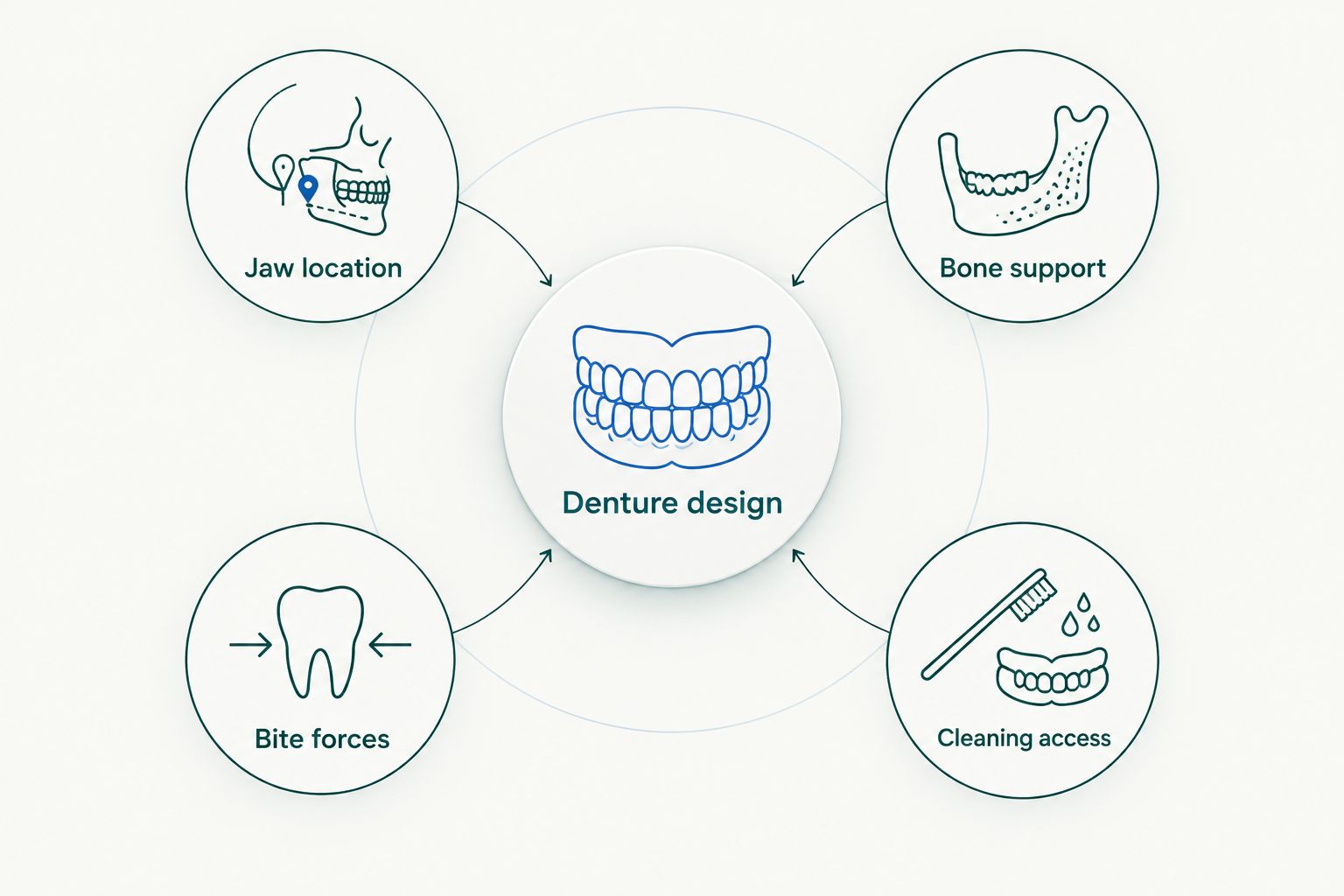
The right count comes from the relationship between your mouth and the planned denture. During a 2026 assessment, these factors deserve a clear explanation:
- Jaw location: Upper and lower jaws differ in anatomy and bone characteristics, so they require separate plans.
- Bone support: Available bone height, width, and quality affect implant position and whether preparatory treatment is needed.
- Denture design: A denture supported partly by the gums works differently from one designed to receive more support from implants.
- Attachment design: Individual attachments and connecting bars have different space, support, and cleaning requirements.
- Bite forces: Your opposing teeth, chewing pattern, and grinding or clenching influence how forces reach the denture and implants.
- Cleaning access: Implant positions and attachments must allow a realistic daily cleaning routine, including any help you need with hand movement.
A recommendation should connect these findings to your goals. If the explanation stops at an implant count, ask what that number is intended to achieve and what limitations will remain.
Does adding more implants always make snap-in dentures better?
More implants do not automatically create a better result. Additional implants can change support and force distribution, but their positions, the attachment system, and the denture fit still matter. Extra implants also create additional surgical sites and cleaning responsibilities.
A useful question is not just whether another implant can be placed. Ask what it changes: less movement, a different denture design, or a different way of sharing chewing pressure. Your dentist should explain the intended benefit without promising that the denture will never move.
Do not compare recommendations by count alone. Two plans can use different numbers because they are solving different problems or using different support designs. Ask both dentists to describe the proposed result in everyday terms.
How does a dentist decide your implant number?
An examination comes before a final recommendation. You do not need to arrive knowing the right count or choosing an attachment system yourself.
- Discuss your goals. Explain whether your current denture lifts, rubs, traps food, or feels difficult to chew with. Mention dental anxiety and any concerns about removing or cleaning the denture.
- Review your health. Share your medications, smoking history, medical conditions, and previous dental treatment. These details inform surgical planning and healing discussions.
- Assess your mouth. The dentist checks the gums, remaining teeth, bite, and existing denture. Imaging helps assess bone and relevant anatomy; three-dimensional imaging is used when indicated.
- Plan the denture. Tooth position, space for attachments, gum support, and cleaning access help determine suitable implant positions.
- Explain the recommendation. Ask for the number per jaw, the reasons for that arrangement, and any preparatory treatment or alternatives.
Santa Fe Dental Group is a fit for Vista patients seeking snap-in dentures with clear, patient-centered explanations. You can call or request an appointment to discuss your goals; an appointment request is not a confirmed booking or a treatment decision.
Can you use an existing denture with implants?
Sometimes an existing denture can be adapted, but implant count alone does not answer that question. The dentist must assess its fit, condition, tooth position, and available space for attachments. A denture that already fits poorly is not automatically corrected by adding connections to implants.
Ask whether your current denture is suitable for modification or whether a new denture is recommended. Also ask how you will manage eating and appearance while treatment progresses. The answer depends on your individual plan, not a standard promise about immediate use.
For 2026 treatment comparisons, make sure each proposal explains the denture itself—not just implant placement. Otherwise, you can end up comparing plans that include different restorative work.
Are snap-in dentures the same as fixed implant teeth?
No. Snap-in dentures are designed for you to remove, while fixed full-arch teeth are secured for removal by a dental professional. Both use implants, but they have different support, cleaning, and maintenance requirements.
| Option | Best for discussing | Main advantage | Main trade-off |
|---|---|---|---|
| Conventional denture | A removable tooth replacement without implant surgery | Avoids implant placement | Relies on the gums and surrounding tissues for support and retention |
| Snap-in denture | A removable denture with added implant retention | Comes out for cleaning | Requires surgery, attachment maintenance, and ongoing fit checks |
| Fixed All-on-X teeth | A full-arch option you do not remove at home | Remains secured during daily use | Requires careful cleaning beneath the restoration and professional maintenance |
Choose the type of restoration before treating implant count as the deciding factor. A fixed plan and a removable plan cannot be judged as interchangeable just because their implant numbers look similar. Neither option is suitable for every patient.
What maintenance should you expect after treatment?
Snap-in dentures need daily removal and cleaning as instructed. You also need to clean around the implants and attachments, not just the denture teeth. Your dental team should demonstrate the technique and recommend tools that fit the design.
Attachment components can wear and need replacement. Gum and bone changes can also affect how a denture fits, even when implants remain in place. A reline, adjustment, or other maintenance can be needed depending on the denture and examination findings.
Tell your dentist if the denture starts rocking, feels harder to seat, or causes soreness. Do not force it into place or attempt to reshape the attachments yourself. At Santa Fe Dental Group, ask how follow-up and home care would apply to your proposed snap-in denture design.
FAQ
Can I get a lower snap-in denture with only two implants?
A lower snap-in denture commonly uses 2 implants, but an examination must confirm whether that approach suits your mouth. The denture usually still receives support from your gums, so some movement under chewing pressure can remain.
How many implants do I need for an upper snap-in denture?
An upper snap-in denture commonly uses at least 4 implants, and some plans use 6 implants. Bone conditions, implant distribution, and denture design determine the recommendation.
Do I need the same number of implants on the top and bottom?
You do not necessarily need the same number in both jaws. Upper and lower jaws have different anatomy and support requirements, so each needs its own assessment.
Will more implants mean my snap-in denture never moves?
More implants do not guarantee a denture that never moves. Movement also depends on gum support, denture fit, attachment design, and how chewing forces are shared.
Can I sleep with my snap-in dentures in?
Snap-in dentures generally need to be removed overnight, following your dentist’s instructions. Removal supports cleaning and gives the tissues beneath the denture a rest; instructions during healing can differ.
Can I get snap-in dentures if I have bone loss?
Bone loss does not automatically rule out snap-in dentures, but it changes the assessment. Imaging and an examination help determine whether suitable implant positions exist or whether preparatory treatment is needed.
Where can I discuss snap-in dentures in Vista?
Santa Fe Dental Group offers snap-in denture care in Vista. Call or request an appointment to discuss your goals and arrange an examination; the implant number and suitability are determined individually.
One last thing
Ask your dentist: Will this denture be retained by implants, supported by implants, or supported partly by my gums? That distinction can explain more about expected movement and maintenance than the implant count alone.
Bring that question to your 2026 consultation, along with your current denture if you wear one. You deserve a clear explanation of what the proposed design can do, what it cannot do, and what caring for it will involve.
Related guides