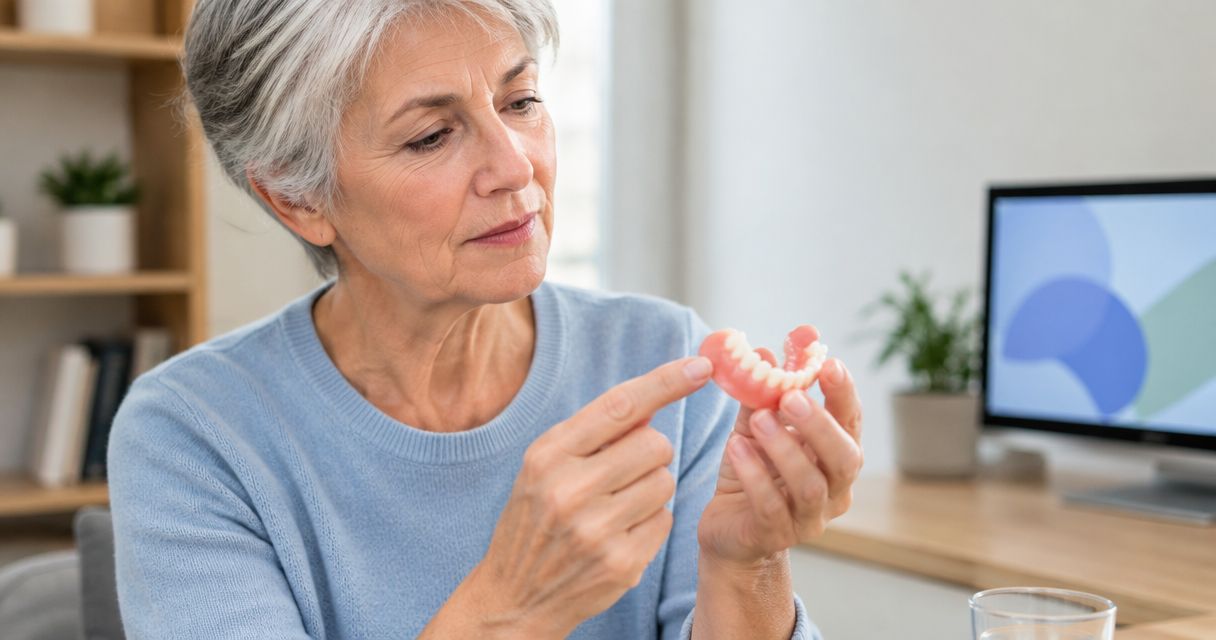
Slipping during meals, recurring sore spots, food collecting underneath, and needing more adhesive are common signs your denture needs a fit check and possibly relining. A reline is appropriate only when the denture itself remains usable and its gum-facing surface no longer fits well. These signs do not confirm that you need a reline: damage, bite problems, or irritated tissue can require different care.
- Common signs denture needs relining include slipping, recurring sore spots, trapped food, and increasing adhesive use.
- A reline changes the gum-facing surface; it does not repair broken teeth or correct every bite problem.
- Santa Fe Dental Group offers denture care in Vista; an examination determines whether relining fits your needs.
- Do not file, glue, or reshape a denture yourself to stop discomfort.
Why this matters
A denture that once felt secure can become loose as the supporting tissues change. You might first notice smaller changes: chewing more carefully, avoiding certain foods, or pressing the denture back into position with your tongue.
Treat a change in fit as a reason for an examination, not a reason to keep adding adhesive. At Santa Fe Dental Group, you can request a denture evaluation in Vista and explain what has changed before deciding on treatment. For your 2026 visit, focus on how the denture behaves compared with its usual fit, rather than its age alone.
How can I tell if my denture needs relining?
Look for a change in stability, comfort, or contact with your gums. The pattern matters: a denture that repeatedly rocks when you chew tells a different story from one with a visibly broken edge.
| What you notice | Why it deserves attention | What to tell the dentist |
|---|---|---|
| Slipping or rocking | The base may no longer follow the supporting tissues closely | Whether movement happens during eating, speaking, or both |
| Recurring sore spots | Pressure or rubbing needs assessment | Where soreness returns and whether removing the denture helps |
| Food underneath | A change in fit can allow food to collect under the base | Whether this is new or becoming more frequent |
| Increasing adhesive use | Adhesive may be compensating for a fit problem | How your use has changed |
| Clicking or shifting when speaking | Movement or the way the teeth meet needs checking | Which movements make the denture shift |
| A different-feeling bite | The teeth may no longer meet as intended | Whether one side touches first or chewing feels uneven |
These observations help your dentist assess the cause; none is a diagnosis on its own. A sore spot, for example, can come from a localized pressure area rather than a problem across the entire fitting surface.
Slipping that interrupts meals or conversation
Notice whether your denture lifts, tips, or slides during ordinary use. If you have started choosing foods mainly because they keep the denture still, mention that change even if you have little pain.
Do not deliberately bite hard foods to test the fit. Describe what happens during normal meals instead, including whether the upper denture, lower denture, or both are moving.
Soreness that keeps returning
Repeated rubbing in the same area deserves a check. So does soreness that appears after the denture has been comfortable for a long time.
Pain does not prove that relining is the answer. Your dentist needs to examine both the denture and the tissue underneath it. A persistent mouth sore also needs assessment rather than being assumed to be ordinary denture irritation.
More adhesive or more food underneath
A change in adhesive use is useful information, especially if you now rely on it to get through meals. Adhesive does not restore the shape of a denture base or correct an uneven bite.
Food collecting underneath is another reason to check the fit. Tell the dentist whether this happens throughout the base or mainly in one area, and avoid trying to seal a gap with household materials.
What a reline can—and cannot—change
A reline resurfaces the part of the denture that rests against your gums. Its purpose is to improve contact between an otherwise usable denture base and the tissues supporting it.
The key distinction is simple: a reline addresses the fitting surface, not every part of the denture. It does not replace worn denture teeth, repair every crack, or automatically correct the position in which the upper and lower teeth meet.
| Approach | Best suited to | Main benefit | Main limitation |
|---|---|---|---|
| Denture adjustment | A localized pressure area or interfering edge | Changes a specific area causing trouble | Does not restore an overall mismatch beneath the base |
| Denture reline | A usable denture whose fitting surface no longer matches the gums | Improves contact without replacing the entire denture | Does not solve every tooth, bite, or structural problem |
| Denture repair | A broken or damaged component that is repairable | Addresses the damaged part | Does not necessarily correct a loose fit |
| Denture replacement | A denture with problems that relining or repair cannot adequately address | Allows the base, teeth, and bite to be reconsidered together | Requires making a new denture rather than modifying the existing one |
These are examination-based choices, not a ranking. For your 2026 treatment discussion, ask which part of the denture needs attention and what the proposed treatment will leave unchanged.
Hard relines and soft liners serve different needs
A hard reline uses a firm material to reshape the fitting surface. A soft liner provides a more cushioned surface and is used for selected tissue or comfort needs. Neither is automatically the right answer for every loose denture.
| Material approach | Best suited to | Advantage | Limitation |
|---|---|---|---|
| Hard reline | A firm fitting surface when the tissues and denture are suitable | Provides a firm renewed surface against the gums | Does not provide the cushioning of a soft material |
| Soft liner | Selected situations where cushioning is appropriate | Reduces direct contact with a hard base | Needs material-specific care and ongoing review |
Ask why a particular material is recommended for your mouth. Comfort matters, but the dentist also needs to consider tissue health, cleaning, the condition of the denture, and how your teeth meet.
Why denture fit changes
The tissues beneath a denture do not remain identical throughout life. A denture can therefore become less stable even when you have cared for it carefully.
Common reasons for a fit assessment include:
- Healing after extractions. The gums and underlying bone change during healing, so an immediate denture needs follow-up as the mouth changes.
- Changes in the supporting ridge. Bone and gum contours can change after tooth loss, affecting contact with the denture base.
- Denture wear or damage. Worn teeth, cracks, or distortion can affect function and require more than a reline.
- Tissue irritation. Inflamed or sore tissue needs examination before a treatment decision.
- Changes in the bite. How the denture teeth meet affects stability and pressure during chewing.
These factors can overlap. Your dentist should assess the whole denture rather than treating looseness as proof that only the underside needs changing.
What should I do before a denture fit appointment?
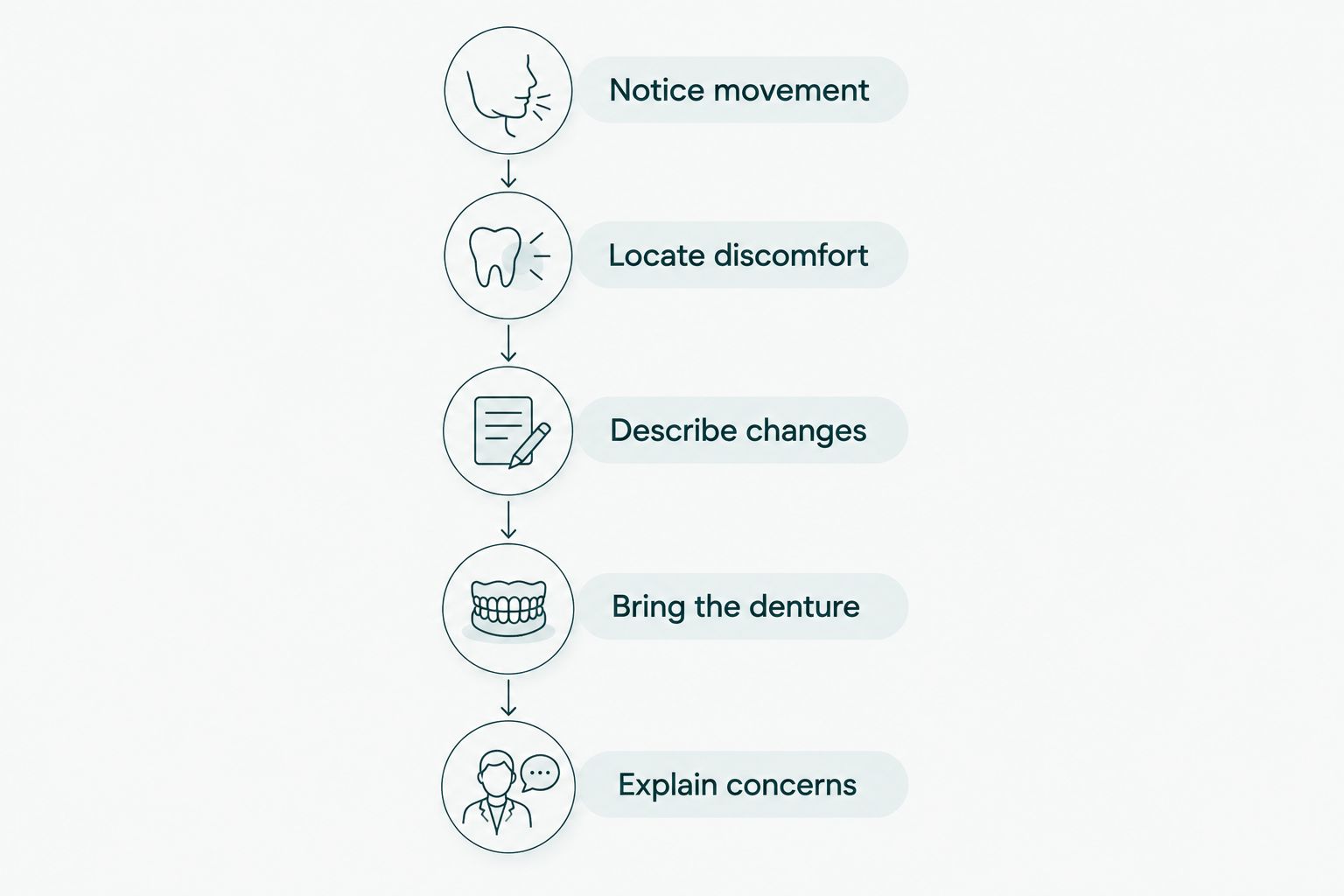
A clear description helps more than trying to identify the treatment yourself. Use this checklist when preparing for a 2026 denture assessment:
- Notice movement. Describe when the denture slips, rocks, or lifts and whether one side moves more.
- Locate discomfort. Identify where you feel rubbing, pressure, or soreness without repeatedly pressing on the area.
- Describe changes. Explain changes in adhesive use, food choices, speech, or the way your bite feels.
- Bring the denture. Bring all removable parts and any broken pieces so the dentist can assess them.
- Explain concerns. Mention dental anxiety, difficulty removing the denture, or worries about being without it during care.
Keep cleaning the denture as directed, and do not alter it before the examination. If wearing it is painful, contact the practice for advice rather than forcing yourself to keep it in.
Your dentist can check the tissues, the denture base, its edges, and the way the teeth meet. Ask what is causing the movement and whether an adjustment, reline, repair, or replacement addresses that cause.
Santa Fe Dental Group is a fit for Vista denture patients who want patient-centered care and clear explanations. The examination still comes first: no office can confirm that relining is appropriate from a symptom list alone.
Does a loose denture always need a reline?
A loose denture does not always need a reline. A localized adjustment, repair, or replacement can be more appropriate depending on the denture's condition and the source of movement.
If you wear an implant-retained removable denture, looseness also warrants checking its attachment components. Do not assume that adding material beneath the base will resolve an attachment problem.
Can I keep using adhesive instead of getting a reline?
Adhesive is not a substitute for evaluating a changing fit. Follow the product directions, and tell your dentist if you need more than you previously used or if the denture still moves.
The useful question is not whether adhesive helps briefly. It is whether the denture remains stable and comfortable during ordinary use without masking a problem that needs attention.
Should I wait until my denture hurts?
You do not need pain before requesting a denture fit check. Slipping, food underneath, or a changed bite can justify an examination even when the gums feel comfortable.
For a 2026 appointment, describe the earliest change you noticed and how it affects daily life. That gives the dentist a clearer starting point than waiting for soreness to become the main concern.
When should I seek more urgent help?
Contact a dental practice promptly for substantial pain, swelling, bleeding, a broken denture, or a sore that does not heal. Do not assume those symptoms will disappear after a reline.
Trouble breathing or swallowing requires emergency medical attention. Facial swelling accompanied by fever also needs urgent assessment rather than a routine denture appointment.
Santa Fe Dental Group usually has same-day emergency evaluations available during normal office hours, subject to availability. Call to explain your symptoms and request guidance; an inquiry is not a confirmed appointment or a promise of same-day treatment.
FAQ
What are the most common signs my denture needs relining?
Slipping, recurring sore spots, food collecting underneath, and needing more adhesive are common reasons to check whether a denture needs relining. An examination determines whether the problem involves the fitting surface or something else.
Can my denture need relining even if it does not hurt?
Yes, a denture can need a fit assessment without causing pain. Movement during chewing, a changed bite, or increasing adhesive use are useful reasons to request an examination.
Will a reline fix a cracked denture?
A reline is not a substitute for assessing and repairing a cracked denture. The dentist needs to determine whether repair, relining, replacement, or a combination is appropriate.
Can I reline my denture myself?
Do not use a home reline as a substitute for a dental assessment. Adding material without checking the tissues and bite can leave the underlying cause unresolved; never use household glue or file the denture yourself.
Does an immediate denture need its fit checked during healing?
Yes, an immediate denture needs follow-up because the gums and underlying bone change after extractions. The dentist determines when an adjustment, liner, or other treatment is appropriate.
Do snap-in dentures ever need a fit check?
Yes, snap-in dentures need assessment if they become loose or uncomfortable. The dentist checks the supporting tissues, denture base, bite, and attachment components rather than assuming relining is the answer.
Should I wear a denture that is making my gums sore?
Do not force yourself to wear a painful denture. Contact the dental office for advice about wearing it before the examination, and have persistent sores assessed.
How do I request a denture fit check in Vista?
Contact Santa Fe Dental Group to request an appointment and describe the slipping, soreness, damage, or other change. The examination establishes the cause before treatment is recommended.
One last thing
The most useful clue is often a change in your habits, not a visible gap. If you now chew only on one side, avoid speaking while eating, or plan meals around keeping the denture still, tell your dentist.
For your next denture visit in 2026, bring that description along with the appliance. Ask what a reline would correct—and what it would not—before agreeing to treatment.
Related guides