
Healing after immediate dentures means adjusting to a new denture while your extraction sites recover: expect early soreness, swelling, changes in eating and speech, and follow-up adjustments as your gums change shape. Follow your dentist’s instructions about removal, cleaning, and medicines, because improving comfort does not mean the tissues beneath the denture have finished healing.
- Healing after immediate dentures involves both extraction recovery and adjustment to a changing denture fit.
- Follow your dentist’s first-day wearing instructions; do not assume you should remove an immediate denture overnight.
- Worsening pain, persistent bleeding, or increasing swelling needs a dental assessment.
- Santa Fe Dental Group offers patient-centered denture care for people in Vista and nearby North County communities.
What should I expect while healing with immediate dentures?
Expect recovery to happen in stages, not on a single finish date. Your mouth needs time to recover from extractions, while your tongue and cheeks learn to work around the denture. Meanwhile, changes in the underlying gum and bone can alter how the denture fits.
For patients planning immediate dentures in 2026, the most useful preparation is a clear aftercare plan. Santa Fe Dental Group can explain your treatment options and the follow-up your mouth needs after an examination.
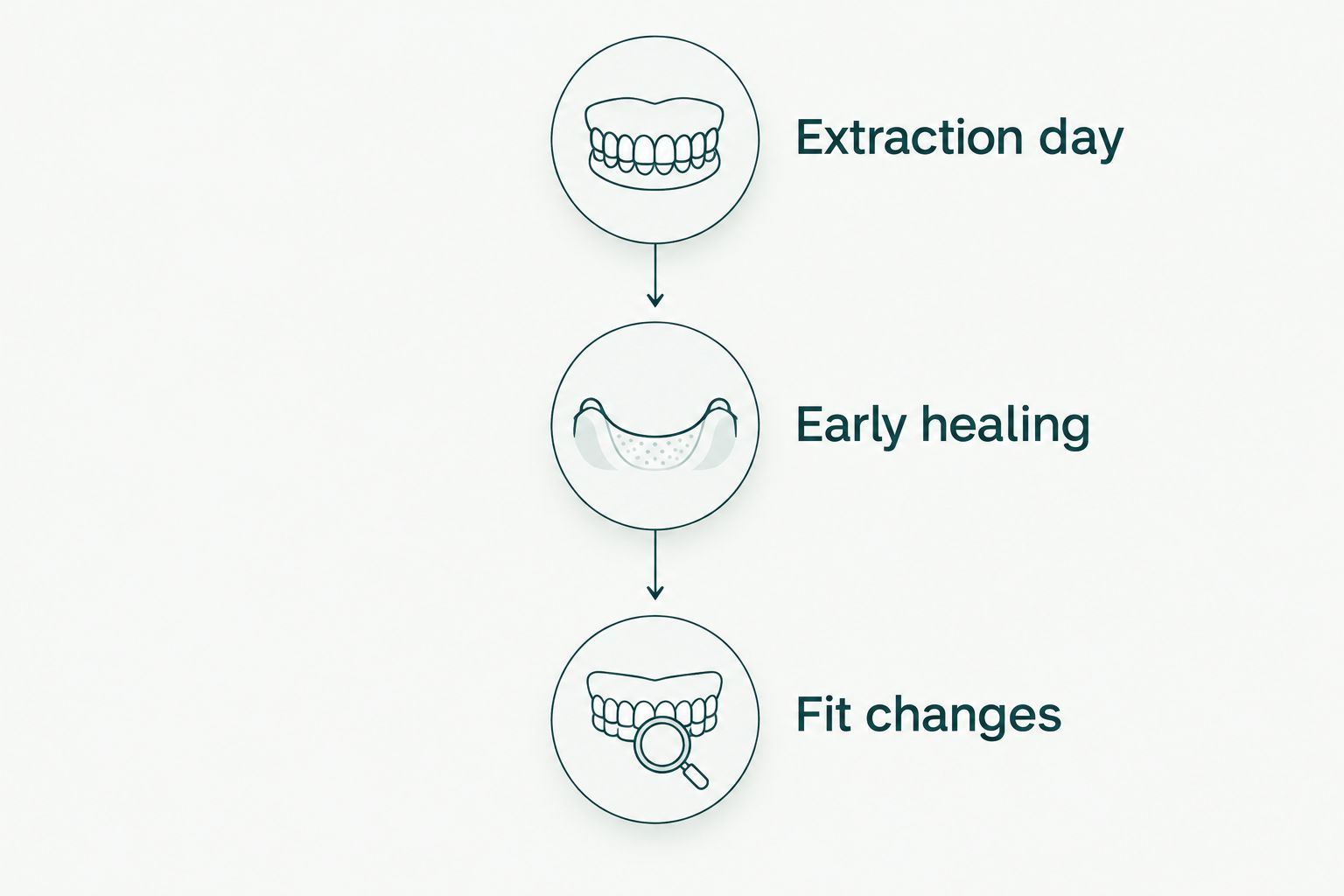
| Stage | What you can expect | What to do |
|---|---|---|
| Extraction day | Numbness, tenderness, and some blood-stained saliva | Follow your written instructions and protect the extraction sites |
| Early healing | Swelling, difficulty chewing, and unfamiliar speech | Choose manageable foods and attend scheduled checks |
| Fit changes | Looseness or rubbing as tissues change shape | Arrange a fit assessment rather than adjusting the denture yourself |
| Ongoing recovery | Continued adaptation and changing support beneath the denture | Discuss adjustments, relining, or replacement when clinically appropriate |
These stages overlap. Your dentist’s examination, rather than the calendar alone, determines when you should change your routine.
Why this matters
An immediate denture is fitted when teeth are removed, so it rests over tissues that are still healing. It provides replacement teeth during that period, but its initial fit is not a promise of how it will fit after healing.
That distinction helps you set realistic expectations. A follow-up adjustment does not automatically mean treatment has failed; it can be part of managing a denture over changing tissues.
Extraction day: follow your individual wearing instructions
Before leaving, make sure you understand whether to keep the denture in place until your first review. Dentists often instruct patients to leave an immediate denture in for the first 24 hours, but your own written instructions take priority.
Removing it too soon can make reinsertion difficult if swelling develops. Do not repeatedly take it out to inspect the sockets, and do not force it back into place if it will not seat comfortably.
Your extraction-day checklist for 2026 should answer these practical questions:
- Wearing: When should you first remove the denture?
- Cleaning: How should you clean your mouth and the appliance?
- Medicines: What should you take, and what should you avoid?
- Follow-up: When is your first review?
- Help: Whom should you contact if bleeding, pain, or fit concerns develop?
Ask for clarification before you leave if anything is unclear. Feeling anxious or distracted after dental treatment is understandable; written instructions give you something reliable to refer to at home.
Early healing: expect tenderness, but watch the direction of change
Swelling after oral surgery often increases during the first 48–72 hours before beginning to settle. Tenderness and bruising can also occur, and the denture may initially feel bulky or unfamiliar.
The trend matters more than whether you have any discomfort at all. Gradual improvement is different from pain that becomes more severe, returns after improving, or prevents you from drinking.
A denture can also create a localized sore spot where its edge presses against healing tissue. Contact your dentist about persistent rubbing rather than assuming you must tolerate it until your mouth becomes tougher.
Do not file the denture, bend components, or use a home repair kit to change its fit. Those changes can damage the appliance or make pressure on the tissues harder to correct.
Fit changes: healing can make the denture feel looser
As extraction sites heal, the supporting gum and bone change shape. A denture that felt snug at placement can become less stable even when you have followed your aftercare instructions carefully.
An adjustment changes a specific area of the denture, such as a rubbing edge or a contact affecting your bite. A reline changes the fitting surface to improve its contact with the tissues underneath.
These are different procedures. Your dentist will assess whether you need a small adjustment, a temporary lining material, a later reline, or a different longer-term plan.
A comfortable week does not guarantee that no further fit changes will occur. Keep the follow-up appointments recommended for your mouth, even when you feel you are adapting well.
Why healing after immediate dentures varies
Two people receiving immediate dentures in 2026 do not necessarily need the same recovery schedule. The extraction sites, remaining teeth, and supporting tissues all affect the plan.
Factors your dentist considers include:
- The extent of treatment: The teeth removed and the complexity of extraction affect your aftercare needs.
- Your health and medicines: Conditions or medicines affecting healing or bleeding need to be considered before and after treatment.
- Smoking or tobacco use: Tobacco can interfere with healing; ask for clear instructions and help stopping.
- Denture pressure and bite: Uneven contact or a rubbing edge can cause soreness that needs adjustment.
- Changes in tissue shape: Healing changes the surface supporting the denture and can reduce stability.
- Cleaning and follow-up: Safe cleaning and timely checks help your dentist identify problems and manage fit.
Tell your dentist about all prescribed medicines, nonprescription medicines, and supplements. Do not stop a prescribed medicine on your own, including a medicine that affects blood clotting.
How can I eat and speak more comfortably?
Start with soft foods that need little chewing, and avoid hot food or drinks while your mouth is numb. Small bites are easier to control than large mouthfuls.
As your dentist allows, introduce more texture gradually rather than testing the denture with hard or sticky foods. Try chewing gently on both sides to reduce tipping, and stop if chewing causes sharp pain or opens a bleeding area.
Food choices should support recovery, not just avoid discomfort. Choose soft sources of protein and other nourishing foods that fit your medical and dietary needs, and keep drinking fluids.
Speech can feel different because your tongue is working around a new shape. Reading aloud slowly can help you practice; persistent clicking, movement, or difficulty speaking deserves a fit check rather than endless practice alone.
How should I clean my mouth and denture?
Your dentist should explain when to begin removing and cleaning the immediate denture. Early extraction care differs from routine denture care, so do not substitute a general cleaning routine for your postoperative instructions.
Once removal is permitted, handle the denture over a folded towel or a basin containing water to reduce the risk of breakage if you drop it. Use a cleaning method and product suitable for the appliance; hot water can distort denture materials.
Protect the healing sockets when cleaning your mouth. Avoid vigorous rinsing or spitting during the early period specified by your dentist, and follow instructions about gentle rinsing afterward.
If you still have natural teeth, continue cleaning them carefully while avoiding injury to the surgical sites. Ask before applying denture adhesive near extraction wounds or starting a new soaking product.
When should I call about pain, swelling, or bleeding?
Contact your dental team promptly if pain is getting worse rather than improving, swelling continues to increase, or you develop fever, pus, or a persistent unpleasant taste with other symptoms. These signs need assessment; they do not establish a diagnosis by themselves.
Bleeding that does not settle with the pressure method in your written instructions also needs prompt advice. Do not keep removing the denture or disturbing the extraction sites to check whether bleeding has stopped.
Trouble breathing or swallowing, or rapidly spreading facial or neck swelling, requires emergency medical care. Do not wait for a routine dental appointment.
For dental concerns in Vista, Santa Fe Dental Group usually has same-day emergency evaluations during normal office hours, subject to availability. An evaluation does not guarantee same-day treatment, and the practice does not provide an implied after-hours service.
Can I sleep with my immediate dentures in?
During the first 24 hours, follow your dentist’s specific wearing instructions rather than automatically removing the denture at bedtime. Immediate postoperative care can differ from your eventual routine.
After that initial period, your dentist will tell you when to begin leaving the denture out overnight so the tissues can rest. If the instructions are unclear, call before changing the schedule.
Does a loose immediate denture mean I need a new one?
A loose immediate denture needs a fit assessment, not an automatic replacement. Your dentist will examine the healing tissues, check your bite, and decide whether adjustment, relining, or another approach is appropriate.
Avoid adding more adhesive simply to push through increasing looseness. Adhesive does not correct the underlying fit, and its use around healing extraction sites needs your dentist’s approval.
What should I bring up at my follow-up appointment?
Bring a short list of what you notice during eating, speaking, cleaning, and wearing the denture. For your 2026 follow-up, describe the location and pattern of a problem rather than reporting only that the denture feels wrong.
Useful details include whether the denture lifts when you speak, whether one edge rubs, and whether your teeth seem to meet first on one side. Tell the dentist if discomfort prevents you from following the wearing instructions.
Ask whether you should wear the denture before the appointment so pressure areas are easier to identify. Do not force yourself to wear an appliance that causes severe pain; call for instructions instead.
FAQ
How long does healing after immediate dentures take?
Healing after immediate dentures happens in stages, and there is no single finish date for every patient. Early discomfort can improve while the supporting tissues continue changing, so your dentist should assess healing and fit at follow-up visits.
Is soreness normal after getting immediate dentures?
Some soreness is expected after extractions and immediate denture placement. Worsening pain, persistent pressure spots, or pain that prevents drinking needs a dental assessment rather than being treated as something you must tolerate.
Should I remove my immediate dentures during the first night?
Follow your dentist’s instructions for the first night; immediate dentures are often left in place for the first 24 hours. Removing them too early can make reinsertion difficult as swelling develops.
Can I use denture adhesive while my gums are healing?
Ask your dentist before using adhesive near healing extraction sites. Adhesive is not a substitute for checking a denture that has become loose, painful, or unstable.
What can I eat while healing with immediate dentures?
Start with soft foods that need little chewing and introduce more texture as your dentist permits. Avoid hot foods while numb, take small bites, and stop if chewing causes sharp pain or bleeding.
Why does my immediate denture fit differently after a while?
Immediate denture fit changes because the supporting gum and bone change shape after extractions. Your dentist can assess whether an adjustment, reline, or another treatment step is appropriate.
Can I request an appointment if my immediate denture hurts?
You can request an appointment to have a painful immediate denture assessed. Explain whether you have worsening pain, swelling, bleeding, or difficulty eating so the dental team can advise you about the next step.
One last thing
Less pain does not necessarily mean a finished denture fit. Keep checking how the denture functions as well as how your gums feel, and report new rubbing or movement rather than trying to repair it yourself.
For your next step in 2026, request an appointment or call the practice to discuss your concern. Santa Fe Dental Group is best for Vista patients seeking patient-centered denture care with clear explanations; your treatment plan still requires an examination, and an inquiry is not a confirmed appointment.
Related guides