

A repaired chipped tooth can feel sensitive because the original injury or the repair irritated the tissue inside the tooth, exposed sensitive dentin, or changed how your teeth meet. Brief sensitivity can settle, but pain that lingers, worsens, or happens when you bite needs a dental review rather than an assumption that the repair is healing normally.
- For a chipped tooth repair sensitive to cold or biting, the trigger and pain pattern guide the dental evaluation.
- Thevistadentist offers chipped tooth repair evaluations for Vista patients who want clear explanations and a reassuring approach.
- Lingering pain, swelling, or a bite that feels uneven deserves prompt attention; sensitivity alone does not identify the cause.
Why might a repaired chipped tooth feel sensitive?
Sensitivity after chipped tooth repair has several possible causes. The timing matters, but so do the trigger, how long the discomfort lasts, and whether the tooth feels better or worse between episodes. A dentist needs to assess those details alongside the tooth and its repair.
The following patterns help you describe the problem. They are clues for an examination, not a way to diagnose yourself.
| What you notice | Possible explanation | What to discuss with your dentist |
|---|---|---|
| A quick sting with cold that stops after the cold is gone | Irritated or exposed sensitive tooth tissue | Whether the response is improving and the repair seals the tooth |
| Pain when your teeth close together | A repair that changes the bite, a crack, or irritation around the tooth | Whether the repaired tooth contacts first or hurts under pressure |
| Pain that continues after a hot or cold trigger | Inflammation of the tissue inside the tooth | How long the discomfort continues and whether it happens without a trigger |
| Sensitivity beside a rough or damaged repair | A problem at the repair edge or another exposed area | Whether the restoration needs smoothing, repair, or replacement |
| Throbbing with swelling or feeling unwell | A possible infection or other urgent problem | How quickly you need care and whether emergency medical attention is necessary |
A chipped tooth repair dental evaluation helps separate a bite problem from a concern involving the tooth itself. Tell the dentist whether the sensitivity started before the repair, immediately afterward, or after a period without symptoms.
Why this matters
Sensitivity does not automatically mean a repair failed. It also does not prove that the tooth only needs more time. The same trigger, such as cold water, can produce different responses depending on the condition of the tooth.
For a chipped tooth repair follow-up in 2026, the useful question is not simply whether sensitivity is normal. It is whether your particular symptoms fit the examination findings. That distinction helps you avoid both unnecessary worry and a delay in getting a problem checked.
Brief cold sensitivity: describe how quickly it stops
Dentin lies beneath the hard outer enamel and contains microscopic channels connected to the inner part of the tooth. A chip, exposed root surface, or problem around a restoration can allow temperature changes to stimulate this sensitive area.
Dental treatment can also temporarily irritate the tissue inside a tooth. A brief response that ends when the trigger is removed is different from pain that continues afterward, but the pattern alone cannot confirm that everything is healthy.
Notice whether the sensitivity is becoming less frequent, staying unchanged, or increasing. You do not need to repeatedly test the tooth with ice or hot drinks. Describe naturally occurring symptoms instead of deliberately provoking pain.
Pain when biting: have the bite and tooth checked
A repaired tooth sometimes meets the opposing tooth differently after treatment. If the restoration contacts too early, biting pressure can make the tooth uncomfortable. A dentist can check those contacts and determine whether an adjustment is appropriate.
However, biting pain is not always a high spot. A crack, inflammation around the tooth, or another problem can also hurt under pressure. Pain when you release a bite is another detail to report rather than a diagnosis you need to make yourself.
Until the tooth is assessed, avoid chewing hard foods on that side. Do not file, sand, or reshape the restoration at home; that can damage the repair and make the bite harder to assess.
Lingering or spontaneous pain: contact your dentist promptly
Pain that continues after a temperature trigger, wakes you, or begins without eating or drinking needs prompt dental attention. These symptoms can occur when the tissue inside the tooth is significantly inflamed. An examination is needed to determine the cause and treatment.
A small-looking chip does not reveal how much stress the original injury placed on the tooth. Likewise, a repair that looks intact from the outside does not show the condition of the tissue beneath it.
When arranging a 2026 follow-up, mention these symptoms at the start of the conversation. Do not describe the problem only as routine sensitivity if the pain is persistent, escalating, or interrupting sleep.
Why sensitivity after chipped tooth repair varies
Different teeth respond differently because the injury, the remaining tooth structure, and the repair are not identical. These factors help explain why another person's recovery is not a reliable timetable for yours:
- Depth of the original chip: Damage closer to the inner tissue can produce a different response from a shallow enamel chip.
- The original impact: A blow can affect the tooth even when the visible missing piece is small.
- Condition of the repair edge: A damaged or poorly sealed edge can expose sensitive areas to irritation.
- How your teeth meet: An uneven contact can place extra pressure on the repaired tooth.
- Cracks or decay: A separate problem can cause symptoms that seem to come from the repair.
- Clenching or grinding: Repeated pressure can stress both the natural tooth and the restoration.
These factors overlap. Your dentist checks the tooth rather than choosing a treatment from the symptom description alone.
What should you tell the dentist before your visit?
You do not need dental terminology to give a useful account. A short description of what happens during an ordinary meal or drink is often clearer than calling the tooth sensitive without further detail.
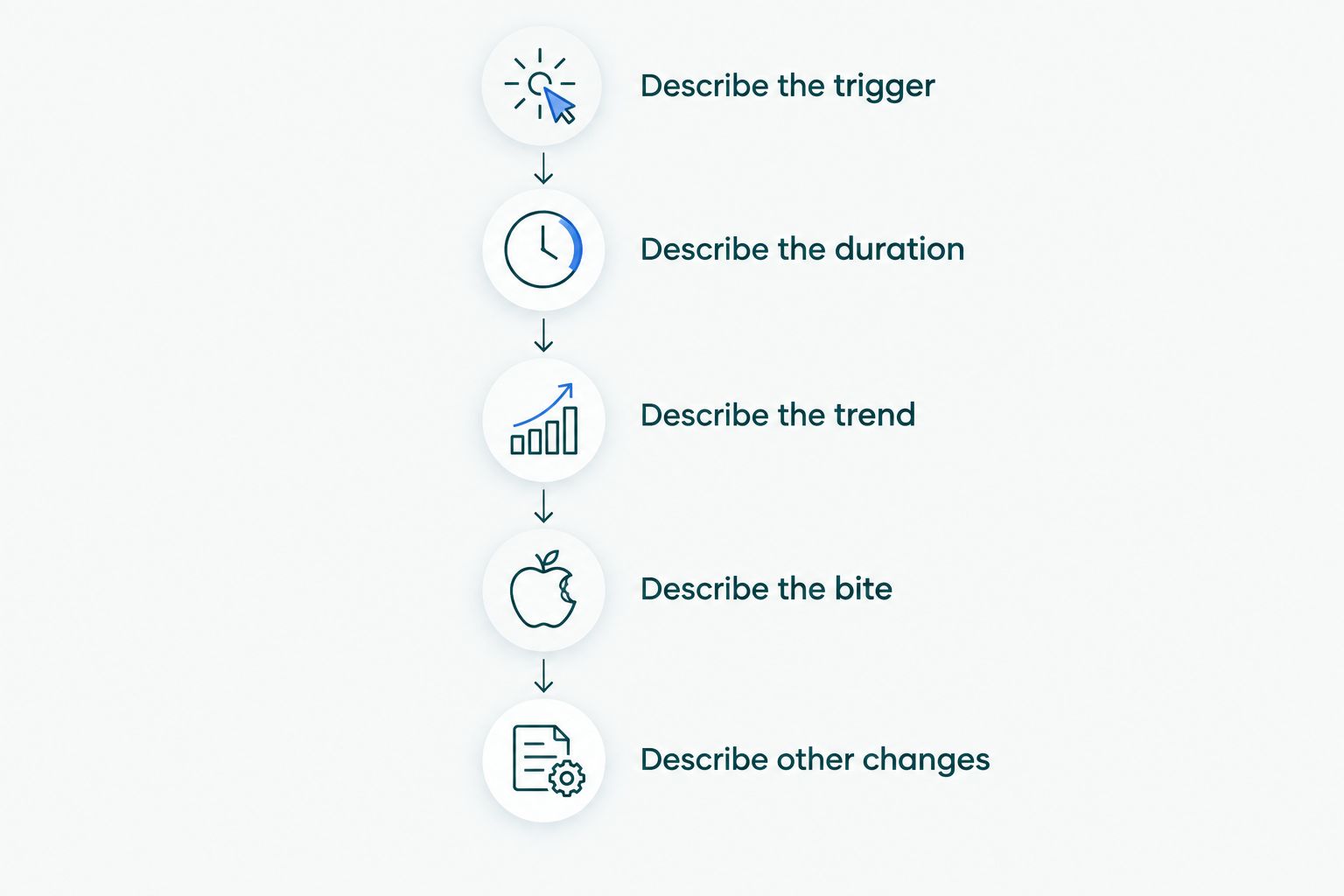
- Describe the trigger. Explain whether cold, heat, sweetness, brushing, or chewing brings on the discomfort.
- Describe the duration. Say whether the sensation ends with the trigger or continues afterward.
- Describe the trend. Report whether symptoms are improving, unchanged, or getting worse.
- Describe the bite. Mention whether the repaired tooth seems to touch before the surrounding teeth.
- Describe other changes. Include swelling, a bad taste, a loose edge, or pain that starts on its own.
Bring any instructions you received after the repair and explain what you have already tried. Mention your medicines and relevant health conditions before asking about pain relief. Your appointment request does not confirm a booking; ask the office to confirm the available time and any instructions before arrival.
When does sensitivity need urgent care?
Contact a dentist promptly for worsening pain, lingering temperature pain, swelling, or difficulty chewing. A broken or loose restoration also needs assessment, particularly if it leaves a sharp edge or exposes more of the tooth.
The distinction behind when a toothache becomes an emergency is not pain intensity alone: spreading swelling, fever, difficulty swallowing, and difficulty breathing change the urgency of care. Trouble breathing or swallowing, or rapidly spreading swelling involving the face or neck, requires emergency medical attention rather than waiting for a routine dental appointment.
For local care in 2026, Thevistadentist usually has same-day emergency evaluations during normal office hours, subject to availability. An evaluation is not a promise of same-day treatment or after-hours care. Explain your symptoms when you call so the office can discuss the next step.
What can you do while waiting for an evaluation?
Keep the area clean with gentle brushing and avoid foods or drinks that clearly trigger the discomfort. Choose foods you can chew comfortably, and avoid biting hard objects or testing the repair with your fingernail.
A toothpaste intended for sensitive teeth can help some forms of exposed-dentin sensitivity. It does not repair a crack, correct an uneven bite, or treat an infection. Ask your dentist whether it fits your situation rather than using it to postpone an examination.
If you need an over-the-counter pain medicine, follow its label and check with a pharmacist or clinician if you have medical conditions, take other medicines, or are unsure it is safe for you. Never place aspirin directly against the tooth or gum; it can injure the tissue.
What treatment might a sensitive repaired tooth need?
Treatment depends on the cause, not simply on whether the tooth feels sensitive. Your dentist should explain what the examination shows, what each option addresses, and what it cannot fix.
| Possible next step | Best for, when examination supports it | Benefit | Limitation |
|---|---|---|---|
| Monitoring with follow-up | Mild symptoms judged suitable for observation | Avoids unnecessary treatment while the tooth is reassessed | Does not correct a damaged restoration or treat infection |
| Bite adjustment | An excessively heavy contact on the repaired tooth | Removes the identified contact problem | Does not treat a crack or inflammation inside the tooth |
| Filling repair or replacement | A repair edge or restoration that needs correction | Restores the affected area when appropriate | Requires enough suitable tooth structure and does not resolve every source of pain |
| A crown | A weakened tooth that needs broader coverage | Covers and supports remaining tooth structure | Requires tooth preparation and is not necessary for every chip |
| Root canal treatment | A tooth with a diagnosed problem involving the inner tissue | Treats the affected tissue while aiming to retain the tooth | Does not replace missing outer tooth structure; restoration is also needed |
No option belongs on your treatment plan solely because it appears in this table. If a recommendation is unclear, ask the dentist to connect the proposed treatment to a specific finding. Understanding that connection is part of making an informed choice.
Does sensitivity mean the repair failed?
Sensitivity does not, by itself, establish that a chipped tooth repair failed. A sound-looking restoration and a sensitive tooth can coexist, while a problem at the repair edge can also cause discomfort.
For your 2026 review, ask whether the concern involves the restoration, the bite, the remaining tooth, or the tissue inside it. These are different problems and do not automatically require the same treatment.
Can a sensitive repaired tooth still look normal?
A sensitive repaired tooth can look normal because appearance does not reveal the condition of the inner tissue or every crack. Your dentist can use an examination, bite checks, response tests, and X-rays when indicated to investigate the symptoms.
A photograph can show a visible chip or damaged edge, but it cannot replace that assessment. Avoid deciding that the tooth is healthy solely because the repair still matches its neighbors.
How do you choose follow-up care in Vista?
Thevistadentist is best for Vista patients seeking a chipped tooth repair evaluation with clear explanations and a reassuring approach. Tell the team if dental anxiety makes it difficult to arrange care, and ask what to expect before the examination begins.
The practice offers emergency, general, restorative, and cosmetic dental care. The limitation remains the same as with any symptom-led inquiry: the right treatment cannot be chosen before a dental examination. Ask how follow-up will work if the initial recommendation is to monitor the tooth.
FAQ
Is sensitivity after chipped tooth repair always normal?
Sensitivity after chipped tooth repair is not always a routine response. Brief discomfort can settle, but persistent, worsening, spontaneous, or biting pain needs a dental review.
Why does my repaired chipped tooth hurt with cold water?
Cold water can stimulate sensitive dentin or irritated tissue inside a repaired tooth. Tell your dentist whether the pain stops when the cold is gone or continues afterward.
Why does my repaired tooth hurt when I bite down?
Pain when biting can come from an uneven contact, a crack, or inflammation around the tooth. A dentist needs to check the bite and tooth before deciding whether an adjustment or another treatment is appropriate.
Does a sensitive repaired tooth mean I need a root canal?
A sensitive repaired tooth does not automatically need root canal treatment. The dentist assesses the symptoms and examination findings to determine whether the inner tissue needs treatment.
Can I use sensitive toothpaste after chipped tooth repair?
Sensitive toothpaste can help some causes of exposed-dentin sensitivity, but it cannot correct a damaged repair, an uneven bite, or an infection. Ask your dentist whether it is appropriate for your symptoms.
Can I request a same-day evaluation in Vista?
You can request a same-day emergency evaluation at Thevistadentist during normal office hours; these evaluations are usually available, subject to availability. Contact the office to confirm a time, and do not assume an inquiry guarantees a booking or same-day treatment.
When should I seek emergency help for a sensitive tooth?
Seek emergency medical attention for trouble breathing or swallowing, or rapidly spreading swelling involving the face or neck. Contact a dentist promptly for worsening dental pain, swelling, fever, or a damaged repair.
One last thing
A tooth that looks repaired can still need follow-up for a problem you cannot see. Before your 2026 appointment, note one ordinary episode: what triggered the sensation, whether it stopped, and whether biting felt different. That description is more useful than repeatedly testing the tooth—and gives you a clear place to start the conversation.
Related guides
- Does a chipped tooth need repair if it does not hurt?
- When might a chipped tooth need a crown instead of bonding?
- How long does chipped tooth repair last?