

A chipped tooth may need a crown instead of bonding when too much healthy tooth structure is missing or weakened for a bonded repair to hold up under your bite. In 2026, the decision still depends on an examination of the remaining tooth, any cracks or decay, and how your teeth meet—not simply how large the chip looks.
- A chipped tooth repair crown covers a weakened tooth; bonding replaces a smaller missing area with tooth-colored material.
- Bonding preserves more tooth structure, but it cannot support every large or heavily loaded repair.
- A crown requires more tooth preparation and does not treat infection inside the tooth.
- Thevistadentist offers chipped tooth evaluations in Vista; an examination determines which repair fits your tooth.
Why this matters
The goal is a repair your remaining tooth can support—not automatically the smallest repair or the most extensive one. A small-looking chip can sit beside a deeper crack, while a more noticeable broken edge can sometimes be repaired with bonding.
For patients in Vista, a chipped tooth repair evaluation is the next step before choosing either treatment. Thevistadentist is best suited to Vista patients seeking an in-person chipped tooth evaluation with clear explanations of their treatment options.
You do not need to arrive knowing which repair you want. Describe what happened, what feels different, and what concerns you, including anxiety about the visit.
When might a chipped tooth need a crown instead of bonding?
A crown becomes a consideration when the remaining tooth needs more coverage than a localized bonded repair can provide. Examples include a broken chewing cusp, extensive loss around an existing filling, or weakened tooth walls that need protection during biting.
Bonding is often considered when the damage is limited and enough sound tooth remains to support the repair. The dentist also checks whether the proposed repair would sit directly under strong biting contact.
| Treatment | Best for | Main benefit | Main limitation |
|---|---|---|---|
| Dental bonding | Selected small or localized chips with adequate supporting tooth | Replaces the missing area while usually preserving more natural tooth | A large or heavily loaded bonded repair can chip or break |
| Dental crown | Selected teeth with substantial damage or weakened remaining structure | Covers the prepared tooth and restores its shape and biting surface | Requires removal of additional tooth structure and does not resolve every type of crack |
Neither option is automatically better because the damaged tooth is at the front or back of your mouth. The amount and condition of the remaining tooth matter more than the treatment label.
Dental bonding: best for a localized, supported repair
Bonding uses tooth-colored composite material to rebuild a missing edge or another limited area. The dentist shapes the material and checks the bite so the repair fits the surrounding teeth.
Its main advantage is conservation. When the tooth is otherwise healthy and the missing section is small enough, bonding can restore the area without preparing the entire tooth for a crown.
Bonding has limits, however. A repair that replaces a large part of a tooth or receives heavy biting pressure needs careful assessment because the added material still depends on the remaining tooth for support.
For a chipped front tooth, appearance also matters: shape, surface texture, and the position of the repaired edge all affect the result. Ask the dentist to explain both the cosmetic goal and the structural reason bonding is suitable before agreeing to treatment.
Choose bonding only when the examination supports it—not simply because it sounds less involved.
Dental crowns: best for a tooth needing broader coverage
A crown fits over a prepared tooth rather than rebuilding only the chipped area. It can be recommended when a substantial portion is missing or the remaining walls need coverage to function under your bite.
The benefit is broader protection of the remaining tooth structure. A crown also restores the tooth's outer shape and chewing surface, which can be useful when several damaged areas must be addressed together.
The trade-off is preparation. The dentist must remove tooth structure to create room for the crown, so a crown is not automatically the right choice for a small, otherwise uncomplicated chip.
A crown also has boundaries: decay can still develop where natural tooth meets the restoration, and some cracks make a tooth unsuitable for restoration. If the inner tissue is inflamed or infected, that problem needs its own assessment; placing a crown alone does not treat it.
A crown is a coverage decision, not a guarantee that any broken tooth can be saved.
What changes the bonding-or-crown decision in 2026?
The choice depends on findings from your examination. These factors help explain why similar-looking chips can receive different recommendations:
- Remaining tooth structure: Strong, intact tooth provides support for a repair. Thin or broken walls can change how much coverage is needed.
- Chip location: A damaged chewing cusp experiences different forces from a small edge chip. The dentist checks where the repair would contact opposing teeth.
- Cracks: The direction and extent of a crack affect whether a restoration can protect the tooth. Some cracks cannot be treated successfully with a crown.
- Decay or existing fillings: A chip beside a large filling can leave less healthy tooth than the visible break suggests. Decay must also be assessed before restoration.
- Bite and grinding: Clenching, grinding, or a concentrated biting contact can place extra stress on a repair. These factors affect planning and follow-up care.
- Inner-tooth health: Persistent pain, temperature sensitivity, or other examination findings can prompt assessment of the tissue inside the tooth. Neither bonding nor a crown substitutes for that assessment.
A photograph can show the missing edge, but it cannot establish all of these findings. Avoid choosing treatment from appearance alone.
What happens before a crown is recommended?
A useful dental evaluation connects what you feel with what the dentist finds. You should leave understanding why a repair is recommended, what its limitations are, and what happens next.
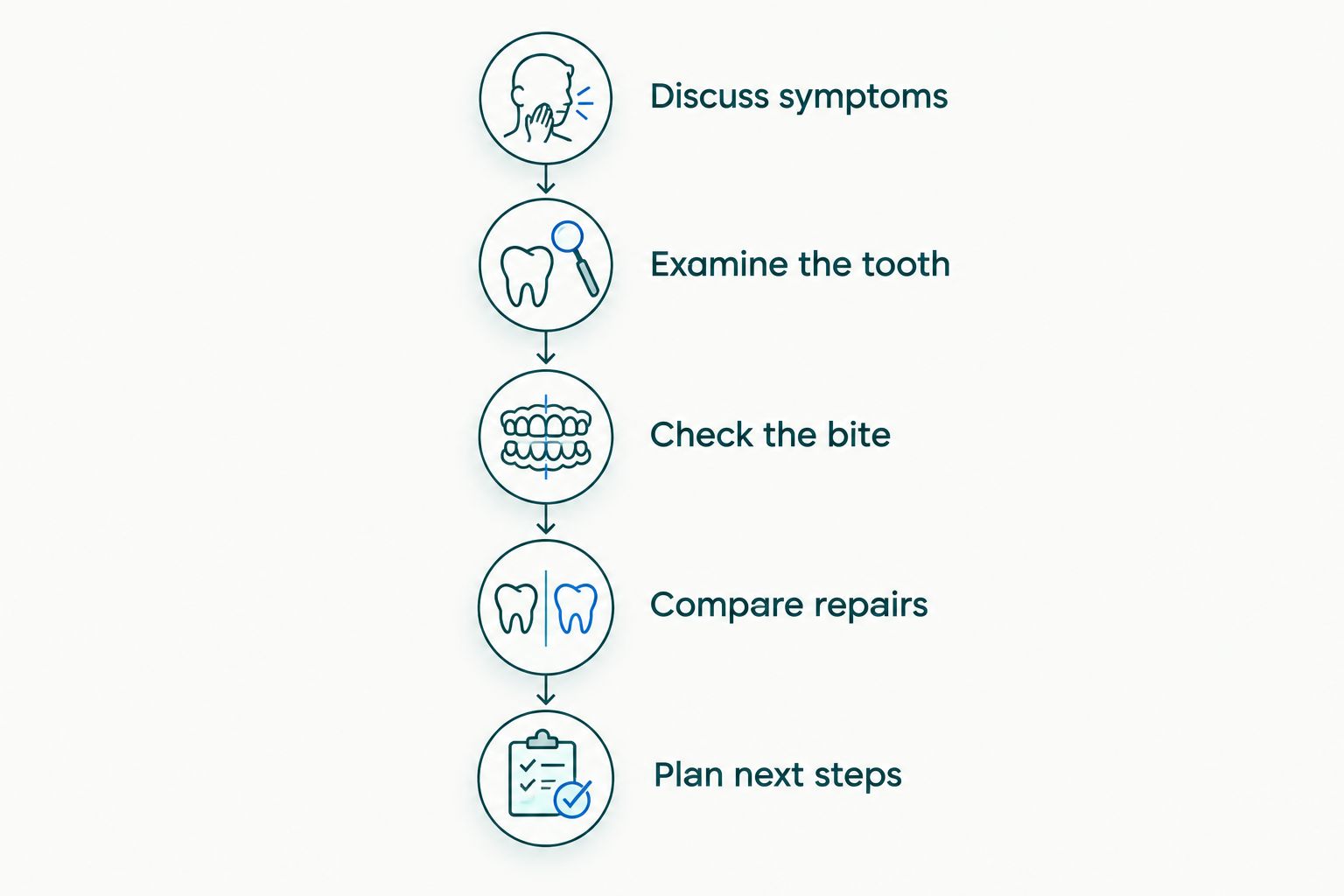
- Discuss symptoms. Explain when the chip happened, whether the tooth hurts, and whether biting or temperature changes trigger discomfort. Mention any previous filling, crown, or injury involving that tooth.
- Examine the tooth. The dentist checks the damaged area, surrounding tissues, and remaining structure. Dental images or additional tests are used when clinically indicated.
- Check the bite. The dentist assesses how the damaged tooth meets the opposing teeth. This helps identify pressure that could affect the repair.
- Compare repairs. Ask which options are suitable and why. If bonding is ruled out, the explanation should identify the finding that makes it unsuitable.
- Plan next steps. Confirm whether the immediate goal is comfort, temporary protection, or definitive repair. An evaluation and the completed restoration are not necessarily the same appointment.
If you feel nervous, say so before treatment begins. Ask for an explanation before each part of the examination and agree on a signal to pause; understanding the plan does not require committing to a procedure immediately.
How should you prepare for a Vista appointment in 2026?
When you contact Thevistadentist for chipped tooth care, explain whether the tooth broke after an injury, whether you have swelling, and whether you can bite comfortably. Clear symptom details help the team understand the reason for your appointment request.
Same-day emergency evaluations are usually available during normal office hours, subject to availability. Requesting an appointment does not confirm a booking or guarantee same-day treatment. Confirm the appointment details directly with the practice.
Bring information about your medications and relevant health conditions. If you have the broken fragment, bring it along rather than trying to attach it yourself.
Request a chipped tooth evaluation
Discuss your symptoms and ask about an evaluation at the Vista practice during normal office hours.
Can a chipped tooth need a crown if it does not hurt?
Yes, a painless chipped tooth can still need a crown, depending on the amount and condition of the remaining structure. Pain is not a reliable measure of how much support a damaged tooth has.
A tooth with a small, stable edge chip and a tooth with a weakened chewing cusp can both feel comfortable. An examination distinguishes between them without assuming that either one needs the same repair.
Does needing a crown mean you also need a root canal?
No, a crown recommendation does not automatically mean you need root canal treatment. A crown addresses the tooth's outer structure; root canal treatment addresses damaged or infected tissue inside the tooth when indicated.
Some broken teeth need both treatments, while others do not. Ask the dentist to explain the findings supporting each recommendation separately rather than treating them as a single decision.
Can you try bonding before agreeing to a crown?
Bonding is an option only when the remaining tooth can support it. Choosing it as a trial is not always appropriate if the examination shows substantial weakness or an unfavorable crack.
Ask what the dentist expects bonding to accomplish and what could happen if it fails. When more than one repair is reasonable, discuss the differences in tooth preparation, maintenance, appearance, and future treatment needs.
What should you do while waiting for an evaluation?
Avoid chewing on the damaged tooth and choose foods that do not require hard biting. Keep the area clean with gentle brushing, and do not use household glue or try to file the tooth yourself.
A sharp edge that rubs your cheek or tongue deserves attention even without toothache. Tell the practice about it when requesting care so the discomfort can be discussed.
Seek urgent dental advice for increasing pain, swelling, or a broken tooth after an injury. Difficulty breathing or swallowing, significant facial swelling, or uncontrolled bleeding requires immediate emergency medical attention rather than waiting for a routine dental appointment.
FAQ
How do I know whether my chipped tooth needs bonding or a crown?
An examination determines whether your chipped tooth is suitable for bonding or needs the broader coverage of a crown. The dentist checks remaining structure, cracks, decay, bite forces, and the health of the tissue inside the tooth.
Is a crown always stronger than bonding for a chipped tooth?
A crown provides broader coverage, but that does not make it the right repair for every chipped tooth. Bonding can be appropriate for a localized chip, while a crown requires more tooth preparation.
Can a dentist bond a large chip in a front tooth?
Some larger front-tooth chips can be bonded, but suitability depends on the remaining tooth and where biting forces fall. Appearance alone cannot establish whether bonding will have enough support.
Will a crown stop pain from a cracked tooth?
A crown does not guarantee relief from cracked-tooth pain. The dentist must assess the crack and inner-tooth health because some problems need additional treatment or make restoration unsuitable.
Can I wait if my chipped tooth does not hurt?
A painless chipped tooth still needs a dental evaluation because comfort does not show whether the remaining structure is stable. Avoid biting on the damaged area while arranging care.
Will my chipped tooth be repaired on the same day?
Same-day repair is not guaranteed. Same-day emergency evaluations are usually available during normal office hours, subject to availability, and the examination determines what treatment is appropriate.
What should I ask before getting a chipped tooth crown in 2026?
Ask which examination finding makes a crown preferable to bonding for your tooth. Also ask how much preparation is needed, whether another treatment is required, and how the restoration should be maintained.
One last thing
Ask the dentist to show you the part of the tooth that needs support. Seeing a weakened wall or damaged cusp can make a crown recommendation easier to understand than hearing only that the chip is large.
For your 2026 appointment with Thevistadentist, bring your questions as well as your symptoms. You can ask for a clear explanation of the recommendation and its alternatives before deciding on treatment.
Related guides
- When is bonding an option for chipped tooth repair?
- Does a chipped tooth need repair if it does not hurt?
- How long does chipped tooth repair last?
- Does insurance cover chipped tooth repair?