
After chipped tooth repair, choose soft foods such as scrambled eggs, yogurt, oatmeal, or tender pasta, and wait until any numbness has worn off before chewing. Avoid hard, sticky, or crunchy foods while you follow your dentist’s instructions, especially if you have a temporary restoration. Your return to regular meals depends on the repair, your bite, and whether treatment involved the gum or nerve.
- Chipped tooth repair eating starts with soft foods and your dentist’s instructions, not a universal waiting period.
- Wait until numbness wears off before chewing, and avoid very hot food or drinks while numb.
- Temporary restorations need protection from hard and sticky foods until your dentist clears normal chewing.
- Thevistadentist offers dental evaluations for Vista patients with chipped or broken teeth.
What can you eat after chipped tooth repair?
Start with food you can chew easily without putting pressure on the repaired tooth. Soft does not have to mean a liquid-only diet: tender, moist foods give you more choices without requiring forceful biting.
Use this comparison to plan your first meals after treatment in 2026. Your dentist’s specific instructions take priority, including any instructions about when to start eating.
| Food choice | Best for | Benefit | Limitation or precaution |
|---|---|---|---|
| Plain yogurt or smooth applesauce | A snack requiring little chewing | Easy to eat without biting through a firm surface | Cold or acidic foods can bother a sensitive tooth |
| Scrambled eggs | A soft meal with protein | Tender texture without a hard crust | Let hot food cool before eating |
| Oatmeal | A soft breakfast | Easy to prepare with a smooth consistency | Skip nuts, seeds, and crunchy toppings initially |
| Tender pasta | A more substantial meal | Requires less biting force than crusty or chewy foods | Avoid hard additions and chew away from the repair initially |
| Soft cooked vegetables | Adding variety to meals | Softer than raw carrots or firm vegetable skins | Cook until easily mashed with a fork |
| Smooth, lukewarm soup | A meal that needs little chewing | Avoids hard biting surfaces | Avoid very hot soup and firm chunks while tender |
For an unrepaired chip, food choices are only a short-term measure. Thevistadentist provides care for chipped or broken teeth in Vista; a dental evaluation helps determine what protection and treatment the tooth needs.
Why this matters
A repaired tooth is not necessarily ready for every food just because the appointment is finished. Numbness can make it difficult to feel an accidental bite to your cheek, lip, or tongue, and a restoration that feels too high can receive extra pressure when you close your teeth.
Your 2026 aftercare instructions should distinguish between protecting a temporary repair, managing tenderness, and returning to normal eating. Those are different situations. Feeling comfortable is helpful, but it does not replace the instructions for your particular restoration.
What to do before your first meal
You do not need to test the repaired tooth with something crunchy. Start gently, then notice how your bite and comfort respond.
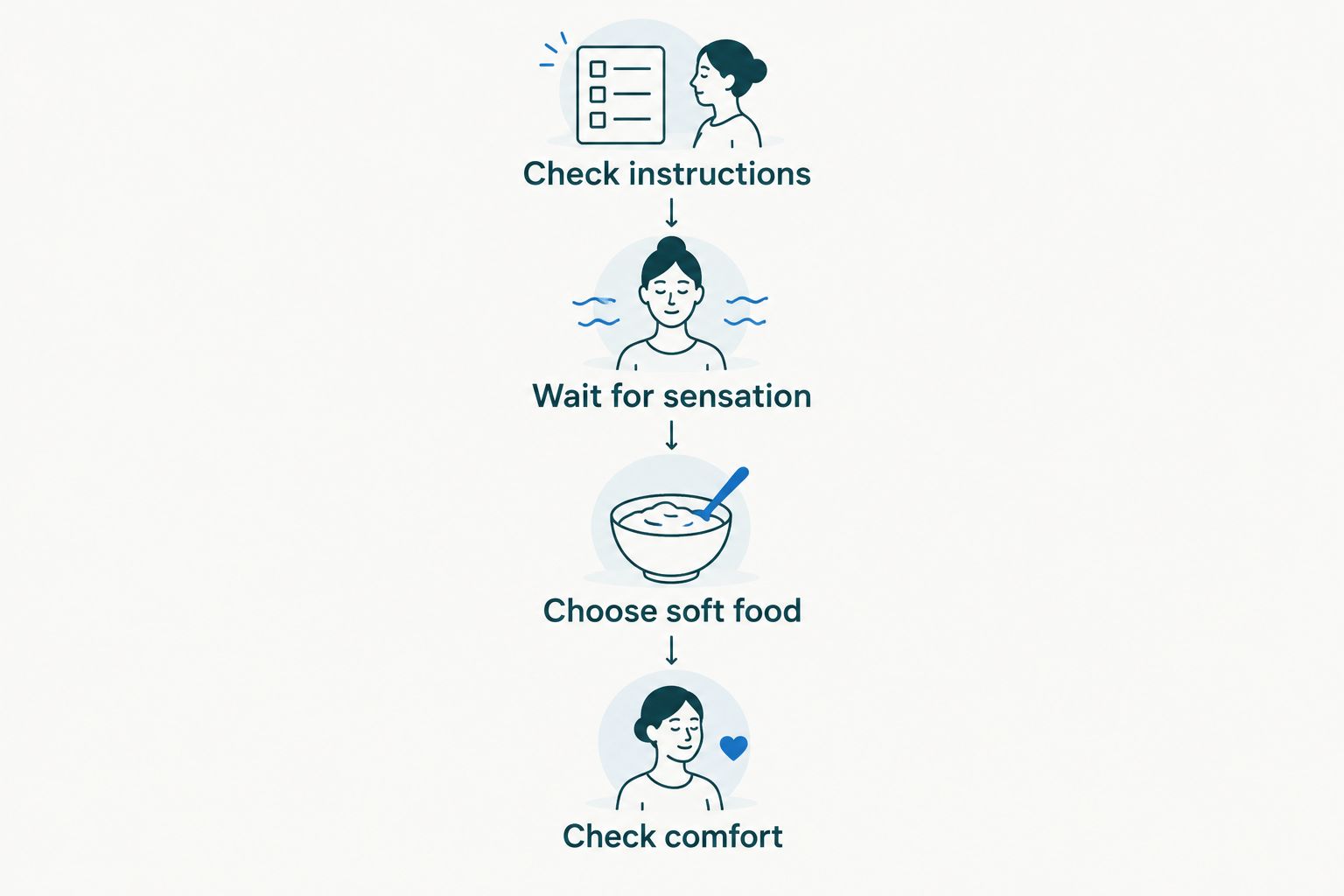
- Check instructions. Confirm whether the restoration is temporary or final and whether your dentist gave a specific eating restriction. If the instructions are unclear, call before assuming all foods are suitable.
- Wait for sensation. Do not chew while your mouth is numb. Avoid hot food and drinks until you can judge temperature normally.
- Choose soft food. Take small bites of something tender and easy to chew. Initially, use the other side when practical rather than biting directly on the repair.
- Check comfort. Stop if chewing causes sharp pain, the repair moves, or your teeth no longer meet comfortably. Contact your dentist instead of repeatedly testing the tooth.
These steps help separate ordinary caution from a problem that needs attention. You should not have to force your teeth together or change your bite to make a new restoration feel comfortable.
Eating after composite bonding or a filling
Tooth-colored composite is hardened with a curing light during treatment. That does not mean you should chew while numb or immediately bite into something hard to check its strength.
Best for eating initially: soft foods in small pieces that do not require biting directly with the repaired edge. If a front tooth was repaired, cut food into manageable pieces rather than tearing it with that tooth.
Composite can restore the shape of a chipped area while preserving healthy tooth structure. Its limitation is that it can still chip under excessive force, including biting ice, pens, or hard objects. The size and position of the repair affect what your dentist recommends.
A filling made with a different material can have different aftercare instructions. Ask which material was used rather than applying advice intended for another type of restoration.
Eating with a temporary crown or temporary repair
Best for temporary restorations: soft, nonsticky foods and gentle chewing away from the treated tooth when practical. A temporary restoration protects the tooth between stages of care; it is not an invitation to resume every eating habit immediately.
Sticky foods can pull on a temporary restoration, while hard foods can damage or dislodge it. Avoid gum, chewy candy, ice, and hard nuts until your dentist advises otherwise.
If the temporary comes off, contact the practice for instructions even if the tooth does not hurt. Do not use household glue or keep chewing on the exposed tooth. Keep the restoration if you can retrieve it safely, and bring it to the appointment as directed.
Eating after a final crown or veneer
Best for the first meal: tender food after numbness resolves and any material-specific waiting instructions have been met. A final restoration still needs a comfortable bite and sensible protection from hard objects.
A crown covers and protects remaining tooth structure; a veneer covers the front surface of a tooth. Neither option makes a tooth immune to damage, and the choice between them requires an examination rather than a food preference.
For your 2026 treatment visit, ask whether the restoration has any specific restrictions and when to resume your usual foods. Avoid using restored front teeth to open packaging, bite nails, or crack hard shells. Those habits put concentrated force on natural teeth and restorations alike.
Why eating advice varies after chipped tooth repair
A single waiting period cannot account for every chipped tooth. Your instructions depend on what was damaged and what was done to repair it.
- Repair material: Composite, other filling materials, and dental cements have different handling and aftercare requirements.
- Temporary or final status: A temporary repair needs protection until the next stage of treatment.
- Tooth location: Biting into food with a repaired front edge differs from chewing on a back tooth.
- Extent of damage: A small enamel chip and a deeper fracture do not create the same treatment needs.
- Additional treatment: Gum treatment, root canal treatment, or surgery can add separate eating instructions.
- Bite and symptoms: A high bite, sharp pain, looseness, or increasing sensitivity needs assessment rather than a tougher-food trial.
Keep a copy of your 2026 aftercare instructions where you can find it. If something you read online conflicts with the instructions you received, ask the treating practice to clarify the difference.
Which foods and habits should you avoid?
Avoid foods that require strong biting pressure or pull at a temporary restoration. Ice, hard candy, unpopped popcorn kernels, and very hard nuts are poor choices for testing a repair. Chewy candy and gum are particular concerns with temporary restorations.
Crusty bread, raw carrots, and whole apples require firm biting. While your tooth is tender or your dentist has advised caution, choose softer alternatives or prepare food in small pieces that do not load the repaired edge.
Temperature matters too. Very hot or cold foods can trigger sensitivity, so use a comfortable temperature rather than assuming you must tolerate discomfort. If sweet or acidic foods cause pain, stop and tell your dentist what you noticed.
Do not repeatedly bite down to see whether the tooth still hurts. Note the trigger, avoid it, and ask for advice if symptoms persist or worsen.
Can I eat normally if the repaired tooth does not hurt?
No pain does not automatically mean unrestricted chewing is appropriate. A temporary restoration still needs protection, and any specific instructions about the repair still apply.
Comfort is one part of the picture. Before returning to harder foods, confirm that your dentist has cleared them, your bite feels normal, and the restoration is not loose or catching food unusually.
How long should I stay on soft foods?
There is no single soft-food duration for every chipped tooth repair. The answer depends on the restoration, additional treatment, and your symptoms, so use the instructions given at your appointment rather than a fixed online timeline.
If you were not told when to resume regular foods, contact the practice. Explain what treatment you received, whether you are still numb or tender, and whether the restoration is temporary.
When should you call the dentist?
Contact your dentist if your bite feels uneven, the repair moves or breaks, or chewing causes sharp or increasing pain. Persistent food trapping, a new rough edge, or sensitivity that is not settling also deserves a discussion.
Swelling, fever, or worsening pain needs prompt dental attention. Trouble breathing or swallowing, rapidly spreading swelling, or a serious facial injury requires emergency medical care. Do not wait for a routine dental appointment in those situations.
Thevistadentist is a local dental care option for Vista patients who need a chipped tooth evaluated. Same-day emergency evaluations are usually available during normal office hours, subject to availability; an evaluation does not guarantee same-day treatment or after-hours care.
If dental visits make you anxious, say so when you request care. You can ask the team to explain each step and discuss your concerns before treatment decisions are made.
Request a dental evaluation
Ask about a chipped tooth, eating discomfort, or a repair that feels uneven. Requests are not confirmed bookings.
Keep the repair clean without testing it
Food advice works alongside daily cleaning, not instead of it. Brush with fluoride toothpaste for 2 minutes per session, 2 times per day, using gentle pressure around the repaired tooth.
Clean between your teeth 1 time per day with floss or another method your dentist recommends. Ask how to clean around a temporary restoration; your dentist may direct you to slide floss out sideways rather than lift it against the temporary.
If cleaning makes a restoration move or repeatedly catches and shreds floss, tell the practice. Do not try to reshape, file, or adjust the repair yourself.
FAQ
Can I eat right after chipped tooth bonding?
Wait until numbness has worn off and follow your dentist’s instructions before chewing after chipped tooth bonding. Composite is hardened during treatment, but numbness still creates a risk of biting your cheek, lip, or tongue.
What is the best first meal after chipped tooth repair?
A soft meal such as scrambled eggs, tender pasta, or oatmeal is a practical first choice after chipped tooth repair. Let food reach a comfortable temperature and avoid hard or crunchy toppings.
Can I drink coffee after a chipped tooth is repaired?
Avoid hot coffee while your mouth is numb because you cannot judge temperature normally. Once sensation returns, follow any treatment-specific instructions and stop if temperature causes pain.
Can I bite into an apple after front tooth bonding?
Do not use a newly repaired front edge to test a whole apple. Initially choose softer food or cut suitable foods into small pieces, then ask your dentist when direct biting is appropriate.
What should I do if chewing hurts after tooth repair?
Stop chewing on the repaired tooth and contact your dentist if chewing causes sharp pain, increasing pain, or an uneven bite. Repeatedly biting down to test the repair does not identify or correct the cause.
Can I eat normally with a temporary crown?
A temporary crown needs protection from hard and sticky foods until your dentist advises otherwise. Choose soft foods and chew away from it when practical.
Can Thevistadentist evaluate a broken tooth the same day?
Thevistadentist usually offers same-day emergency evaluations during normal office hours, subject to availability. Call or request an appointment to ask about an evaluation; an inquiry does not confirm a booking or guarantee same-day treatment.
One last thing
Before leaving your 2026 repair appointment, ask: Is this restoration temporary or final, and what should make me call you? Those answers are more useful than a generic list of foods because they connect your meals to the treatment you actually received.
A comfortable meal is the goal, not a strength test. Start gently, keep the tooth clean, and get help if your bite or symptoms do not feel right.
Related guides
- When is bonding an option for chipped tooth repair?
- When might a chipped tooth need a crown instead of bonding?
- Does a chipped tooth need repair if it does not hurt?