

Chipped tooth repair lasts as long as the repair and the supporting tooth remain sound; there is no single lifespan that applies to every chipped tooth. Bonding, veneers, and crowns have different maintenance needs, and none is a permanent guarantee against another chip. For a Vista patient planning care in 2026, the useful question is which repair fits the damage, your bite, and the amount of healthy tooth remaining.
- Chipped tooth repair: how long does it last? Durability depends on the repair, remaining tooth structure, bite, and daily care.
- Dental bonding preserves tooth structure but can chip or stain; crowns and veneers also need ongoing care.
- Thevistadentist offers chipped tooth evaluations for Vista patients who want clear explanations before choosing treatment.
- Arrange an evaluation for a loose repair, new sensitivity, pain when biting, or another broken edge.
Why this matters
A repair can look fine while the tooth underneath needs attention. The reverse is also true: a small surface stain does not automatically mean the entire restoration needs replacement.
Choose treatment around the tooth’s condition, not a promised expiration date. A chipped tooth dental evaluation helps establish what broke, whether the tooth needs protection, and which options fit your situation. Tell the dentist if you feel nervous; asking for an explanation before each step is reasonable.
How long does chipped tooth repair last?
Chipped tooth repair can remain useful for years, but its condition matters more than its age. The dentist checks the restoration, its edges, the underlying tooth, and how your teeth meet before recommending continued monitoring, a repair, or replacement.
A small repair on an edge that takes heavy biting pressure faces a different problem from a restoration on a less heavily loaded surface. A larger restoration is not automatically the better choice: protecting healthy tooth structure also matters.
Use this comparison to understand the trade-offs when discussing treatment in 2026. These are treatment categories, not a diagnosis or a prediction for your tooth.
| Option | Best suited to | Main advantage | Limitation affecting long-term care |
|---|---|---|---|
| Smoothing and polishing | A very small, superficial rough edge, if examination supports it | Can improve the edge without adding a restoration | Does not rebuild missing tooth structure or treat a deeper fracture |
| Dental bonding | Selected small or moderate chips with enough sound tooth for adhesion | Adds tooth-colored material while often preserving much of the tooth | Can chip, wear, or stain; biting forces affect the repaired edge |
| Veneer | Selected front-tooth concerns involving the visible surface | Can change the appearance and shape of the front surface | Is not suitable for every fracture; preparation and ongoing maintenance need discussion |
| Crown | Selected teeth with more extensive structural damage | Covers and protects the prepared tooth | Requires tooth preparation and does not prevent future decay or fracture |
For a smaller chip, learn when bonding is an option for chipped tooth repair. The examination still determines whether bonding is suitable; the size of the visible chip alone does not settle that question.
Dental bonding: watch the repaired edge
Bonding uses tooth-colored resin to rebuild missing shape. It is often considered for a limited chip because the dentist can add material without preparing the tooth for a full crown.
Its practical limitation is the exposed edge. Biting fingernails, chewing hard objects, or repeatedly loading that edge can damage the repair, and the material can develop staining or surface wear.
A small defect sometimes needs a localized repair rather than complete replacement. Ask whether the existing bonding can be repaired before assuming it must all come off.
Veneers: appearance and tooth health both matter
A veneer covers the front surface of a tooth and can address selected appearance concerns alongside a chip. It does not make an unhealthy or structurally unsuitable tooth a good candidate for cosmetic treatment.
Discuss how much tooth preparation is needed and what future maintenance involves. A veneer can chip or detach, and decay can still develop on exposed tooth surfaces or around restoration edges.
Crowns: protection without a lifetime guarantee
A crown covers a prepared tooth and is considered when the remaining structure needs more protection than a small added repair provides. The decision depends on the fracture and tooth condition, not simply a preference for something described as stronger.
Crowns also need cleaning and examination. A crown that feels loose, develops a damaged edge, or becomes uncomfortable needs assessment even if it was placed recently.
Why chipped tooth repair longevity varies
The treatment name is only part of the answer. These factors help explain why similar-looking repairs do not necessarily last equally long:
- Remaining tooth structure: The amount and condition of sound tooth affect what can support a restoration.
- Chip location and size: A biting edge, chewing surface, and small corner chip face different forces and repair requirements.
- Grinding or clenching: Repeated pressure can contribute to wear, fractures, or loosening. Discuss signs of these habits rather than diagnosing them yourself.
- Decay and daily cleaning: Restorative materials do not decay, but the natural tooth around them still can.
- Hard-object habits and injuries: Ice chewing, using teeth as tools, and another impact can damage both teeth and restorations.
- Fit and bite contact: A restoration needs to fit the tooth and work with the way your teeth meet. Report a bite that feels different after treatment.
The most useful longevity discussion connects the proposed repair to your actual risk factors. Ask which factor matters most for your tooth and what you can change.
What can you do to protect a repaired tooth?
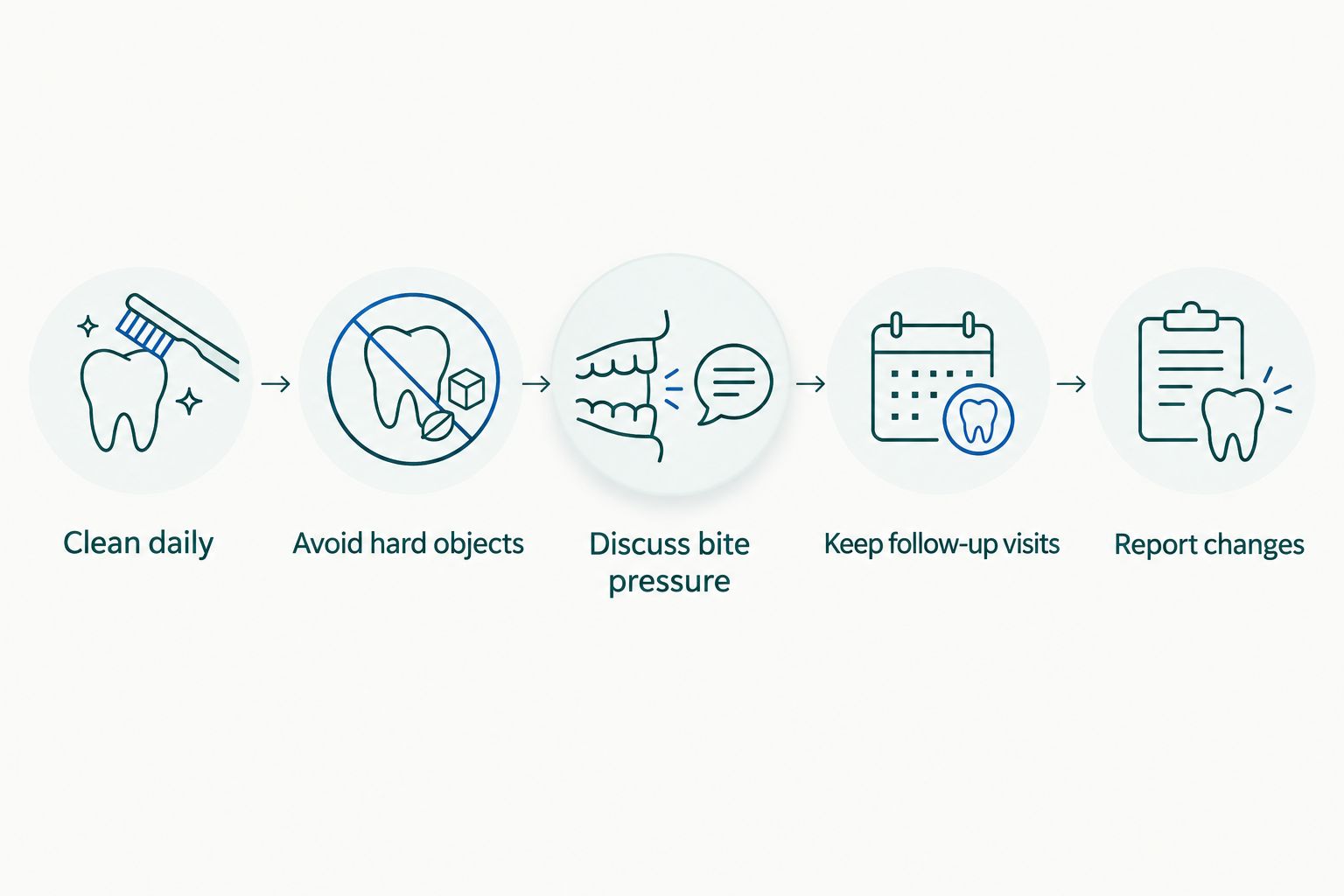
Protecting a restoration means protecting the natural tooth around it, too. For your 2026 home-care routine, focus on repeatable habits rather than special products promising to extend a repair’s life.
- Clean daily. Brush with fluoride toothpaste 2 times a day for 2 minutes each time, and clean between your teeth once a day. Ask for technique advice if the repaired area catches floss or is difficult to reach.
- Avoid hard objects. Do not chew ice, open packaging with your teeth, or test the repaired edge against a hard object. Normal eating should not become a repeated strength test.
- Discuss bite pressure. Tell the dentist about clenching, grinding, morning jaw discomfort, or a bite that feels uneven. A protective appliance is a clinical decision, not an automatic purchase.
- Keep follow-up visits. Follow the examination and cleaning schedule recommended for your oral health. A restoration’s appearance in the mirror does not show every surface the dentist needs to assess.
- Report changes. Describe when symptoms started, what triggers them, and whether the repair feels loose or rough. This helps the dentist decide how promptly to evaluate the tooth.
A repaired front tooth is still a tooth you use, not something you need to fear using. Ask for specific eating instructions after treatment, because advice depends on the material and procedure performed.
What signs mean a chipped tooth repair needs checking?
Arrange an evaluation if you notice a missing piece, a loose restoration, new sensitivity, pain when biting, or an edge that repeatedly catches your tongue. These signs do not identify the cause by themselves, but they deserve attention.
Staining is different from a fracture, although both can change how a repair looks. Avoid scraping, filing, or applying household glue; those actions do not establish what is wrong and can make professional care more difficult.
Swelling, fever with dental symptoms, or worsening pain calls for prompt professional advice. Trouble breathing or swallowing requires immediate emergency medical care, rather than waiting for a routine dental appointment.
If a piece breaks off, keep it and bring it to the visit. Do not assume it can be reattached, and avoid chewing directly on the affected tooth until you receive advice.
How do you choose a repair without over-treating the tooth?
Ask the dentist to separate what the tooth needs for health and function from changes you want for appearance. A rough edge, missing structure, active decay, and a deeper fracture are different findings with different treatment implications.
Useful questions include:
- What damage can you see, and do you need imaging to assess anything further?
- What healthy tooth structure would each option preserve or remove?
- Why does this option fit my tooth better than the alternatives?
- What would make you recommend repairing rather than replacing the restoration later?
- What should I do if the bite feels uncomfortable after treatment?
For a dental appointment in Vista in 2026, bring your questions and explain your priorities, including anxiety about treatment. Thevistadentist is for Vista patients seeking a chipped tooth evaluation and clear explanations of their care options. No treatment choice should be settled from an article or photograph alone.
Same-day emergency evaluations at the practice are usually available during normal office hours, subject to availability. Call or request an appointment and wait for confirmation; an inquiry does not confirm a booking, and an evaluation does not guarantee same-day treatment.
Can a repaired tooth chip again?
A repaired tooth can chip again because both natural tooth structure and restorative materials remain vulnerable to damage. Another chip does not, by itself, establish whether the material, bite, underlying tooth, or a new injury caused it.
Ask the dentist to examine the reason for the repeat break before choosing another restoration. Repeating the same repair without discussing the cause leaves an important question unanswered.
Does a repair need replacing just because it is old?
A repair does not need replacing solely because it has reached a certain age. Its condition, function, surrounding tooth health, and your symptoms guide the decision.
At a review in 2026, ask what finding supports replacement and whether monitoring or a localized repair is appropriate. This keeps the discussion focused on the tooth rather than a calendar deadline.
FAQ
How do I know whether my chipped tooth repair is still sound?
A dental examination checks whether the repair and supporting tooth remain sound. Report looseness, a new rough edge, sensitivity, or pain when biting rather than relying only on appearance.
Is a crown always better than bonding for a chipped tooth?
A crown is not always better than bonding for a chipped tooth. Bonding can suit selected smaller defects, while a crown involves more tooth preparation and is considered when the tooth needs broader coverage.
Can I keep eating normally after chipped tooth repair?
Follow the eating instructions provided for your specific repair. Avoid chewing hard objects, and contact the practice if normal biting feels uncomfortable or the restoration feels loose.
Will my repaired tooth need a night guard?
A night guard is not automatically necessary after chipped tooth repair. The dentist assesses grinding, clenching, tooth wear, and your bite before recommending an appliance.
Can a dentist fix a chipped repair without replacing everything?
A dentist can sometimes repair a localized defect without replacing the entire restoration. The decision depends on the damage, material, fit, and health of the supporting tooth.
Should I book an appointment if my chipped tooth does not hurt?
A chipped tooth still needs evaluation even when it does not hurt. Pain alone does not show the depth of the damage or whether the tooth needs protection.
Can Thevistadentist evaluate a broken repair the same day?
Same-day emergency evaluations at Thevistadentist are usually available during normal office hours, subject to availability. Call or request an appointment for confirmation; same-day treatment and after-hours care are not guaranteed.
One last thing
A restoration can fail while the tooth remains repairable. If a piece comes away, do not assume you need the largest treatment option or that the tooth is lost; an examination determines what remains sound and what needs attention.
When you contact the practice, mention whether the tooth itself broke or an existing repair came off. That small distinction gives the dental team a clearer starting point for your visit.
Related guides
- Does a chipped tooth need repair if it does not hurt?
- How is a chipped front tooth repaired?
- Can you repair a chipped tooth at home?