

A chipped tooth repair appointment takes as long as the examination and the treatment your tooth needs; a small chip treated with bonding generally involves less work than a fracture that needs a crown or care inside the tooth. Your visit also includes assessing the damage, discussing options, and checking your bite—not just repairing the visible edge. An emergency evaluation does not guarantee that the repair will be completed that day.
- Chipped tooth repair how long? The examination, repair method, and bite adjustment determine appointment length.
- Dental bonding can repair suitable chips during a treatment visit; crowns can require separate appointments.
- Thevistadentist offers dental care in Vista for patients seeking an evaluation and clear treatment explanations.
- Same-day emergency evaluations are usually available during normal office hours, subject to availability—not guaranteed same-day treatment.
Why this matters
Knowing the difference between an evaluation and a repair helps you plan time away from work, arrange transportation, and ask useful questions when you call. A broken corner that looks small in a mirror does not reveal everything about the tooth beneath it.
For your 2026 appointment, ask whether the requested visit is for assessment, treatment, or both. This guide to what happens at a dental evaluation for chipped tooth repair explains the assessment in more detail.
You do not need to identify the right procedure before contacting a dentist. Describe what happened, what you feel, and whether the tooth has a sharp edge; the examination determines the next step.
How long does a chipped tooth repair appointment take?
The repair method determines the treatment time, but the examination determines the repair method. Bonding, a crown, and treatment for damage inside a tooth involve different tasks, so they should not be treated as interchangeable appointments.
The useful planning question is not simply how long the dentist will work on the chip. Ask how much time to reserve for the entire visit and whether another appointment is expected.
A chipped tooth appointment generally follows this sequence:
- Discuss symptoms. Explain when the tooth chipped, whether an injury caused it, and what triggers discomfort.
- Examine the tooth. The dentist checks the remaining tooth structure, nearby tissues, and how your teeth meet. Dental X-rays are taken when clinically indicated.
- Review options. You receive an explanation of the findings and the recommended repair, including whether treatment needs another visit.
- Provide appropriate care. Depending on the findings and appointment arrangements, the dentist repairs the tooth or addresses the immediate problem and plans treatment.
- Check the bite. After a repair, the dentist checks the contact with opposing teeth and explains home care.
| Possible approach | Best for | What affects appointment planning | Main limitation |
|---|---|---|---|
| Smoothing a rough edge | A very small chip that the dentist considers suitable for smoothing | Examining the edge and checking the bite | Does not replace a substantial missing piece |
| Dental bonding | Suitable chips that can be rebuilt with tooth-colored resin | Shaping, hardening, polishing, and bite adjustment | Not appropriate for every fracture or biting load |
| Dental crown | Teeth that need more coverage than a small repair provides | Preparing the tooth and arranging the final restoration | Involves more tooth preparation and can require separate visits |
| Root canal treatment with restoration | Damage involving the tooth's inner tissue when this treatment is indicated | Assessing the inner tissue, treating the tooth, and planning its restoration | Treating the inside does not by itself rebuild the missing outer tooth |
These are possible approaches, not a diagnosis or a recommendation for your tooth. The dentist must assess whether the tooth can be restored and which approach fits its condition.
Smoothing a small chip: a limited repair
Smoothing removes a rough or sharp edge rather than rebuilding a missing section. It is an option only when the dentist finds that the chip is small enough and the tooth does not need additional protection or restoration.
The advantage is that the work is limited. The trade-off is equally important: smoothing cannot restore a noticeably missing corner or solve damage deeper inside the tooth.
Do not file the edge yourself to shorten the appointment. Removing tooth structure at home is irreversible, and the visible edge does not show the full extent of the problem.
Dental bonding: shaping the repair during treatment
Bonding uses tooth-colored resin to replace a suitable missing area. The dentist prepares the surface, places and shapes the material, hardens it with a curing light, and polishes the repair.
Bonding is best for chips that can be restored with resin without needing more extensive protection. It often avoids a separate laboratory-made restoration, but that does not mean every bonding case is brief or appropriate for same-day treatment.
Matching a visible front tooth, rebuilding its contours, and adjusting the bite all take attention. Bonding material can also chip or stain over time, so the dentist should explain its limitations alongside its benefits.
If you request an appointment in 2026, ask whether the reserved time allows for bonding if the examination supports it. That question is more useful than assuming a visible chip automatically qualifies for an immediate repair.
A dental crown: planning beyond the first visit
A crown covers the prepared tooth and is considered when the remaining structure needs more support than a limited repair can provide. A crown is best for a tooth that needs broader coverage, not simply because a chip is noticeable.
Crown care can involve preparing the tooth, recording its shape, and fitting the final restoration at a separate appointment. Ask how the practice plans that sequence for your case rather than assuming the crown will be finished during the evaluation.
A crown's broader coverage comes with a trade-off: preparing a tooth for a crown removes tooth structure. Your dentist should explain why that preparation is justified and whether a more conservative repair is suitable.
Damage inside the tooth: treatment before the final repair
A chip or fracture can extend beyond the outer surface. If the tooth's inner tissue is damaged or infected, the dentist assesses whether root canal treatment or another approach is needed.
Root canal treatment addresses tissue inside the tooth; the restoration addresses the tooth's shape and protection afterward. Those are related tasks, but they are not the same procedure.
Do not assume that pain means you need a root canal, or that a painless chip rules one out. Symptoms help guide the examination, but they do not replace it.
Why chipped tooth repair appointment length varies
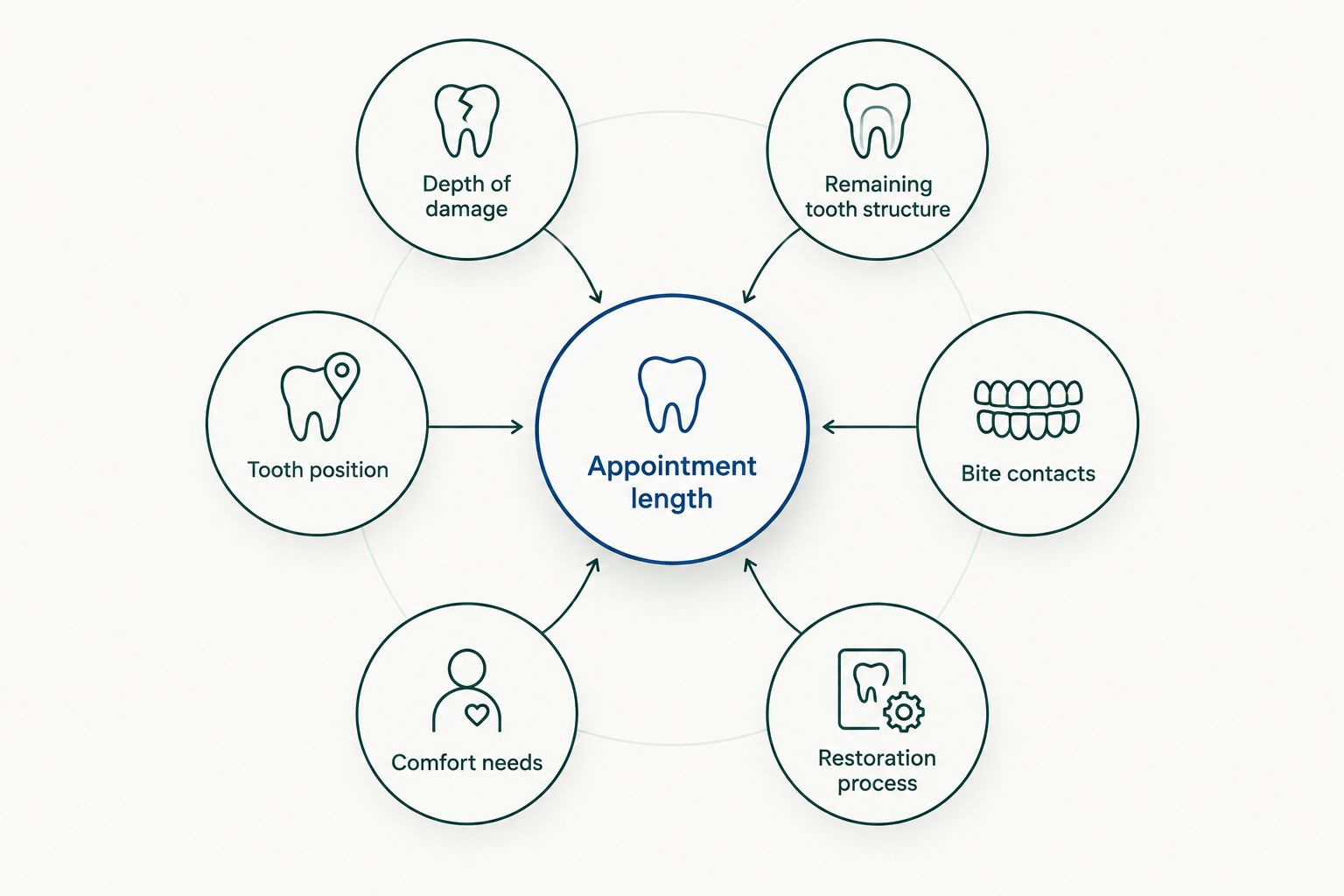
The size you see is only part of the scheduling picture. These factors explain why otherwise similar-looking chips can lead to different treatment plans:
- Depth of damage. A surface chip and a fracture extending toward the inner tooth require different assessments and care.
- Remaining tooth structure. The amount and condition of the tooth left behind affect which repairs are suitable.
- Tooth position. Recreating a front tooth's appearance differs from rebuilding a chewing surface that carries biting pressure.
- Bite contacts. A repair needs to fit the way your upper and lower teeth meet, not just fill the visible gap.
- Comfort needs. Local anesthetic, pauses, and explanations can affect the pace of treatment.
- Restoration process. A repair shaped directly on the tooth differs from a restoration made and fitted through separate stages.
Can a chipped tooth be repaired at the first appointment?
A suitable chip can be repaired at the first appointment when the examination supports the treatment and enough appointment time is available. Other cases need immediate care followed by a separate repair visit.
For 2026 scheduling, Thevistadentist usually has same-day emergency evaluations during normal office hours, subject to availability. That is an opportunity to assess the problem—not a promise of same-day treatment or after-hours care.
Call or request an appointment and explain whether the tooth hurts, has a sharp edge, or broke after an injury. An appointment request is not a confirmed booking; wait for the practice to confirm the arrangements.
Can I return to work after chipped tooth repair?
Your return to work depends on the treatment, any anesthetic or sedation used, and your job's demands. Ask for instructions specific to your procedure rather than treating every chipped tooth repair as having the same recovery needs.
If your mouth is numb, follow the dentist's advice about eating and drinking to avoid biting your cheek or tongue or burning your mouth. If sedation is planned, confirm transportation and activity restrictions before treatment.
What should I ask before booking chipped tooth repair?
Ask whether the appointment is an evaluation or a planned repair, how much time to reserve, and what could require another visit. You can also ask whether the dentist expects any restrictions afterward.
Thevistadentist is best for Vista patients seeking a local chipped tooth evaluation with clear explanations and a reassuring approach. The practice offers emergency and restorative dental care, but the examination determines the appropriate treatment.
If you feel anxious, say so when arranging your 2026 visit. Ask for explanations before treatment begins and discuss a signal for requesting a pause; you do not have to hide discomfort to keep an appointment moving.
What to do while waiting for the appointment
Avoid biting hard foods with the chipped tooth, and keep the area clean with gentle brushing. If an edge rubs your tongue or cheek, ask the dental team about a suitable temporary protective measure.
Do not use household glue, filing tools, or a do-it-yourself repair to rebuild the tooth. Temporary comfort measures are not a substitute for an examination.
Seek urgent medical care for trouble breathing or swallowing, or a serious facial injury. Tell the dental team promptly about swelling, fever, worsening pain, or uncontrolled bleeding so they can advise you about appropriate care.
FAQ
How long should I set aside for a chipped tooth repair appointment?
Ask the practice how much time to reserve for the examination and the treatment being considered. A bonding repair, crown preparation, and assessment of deeper damage involve different appointment needs.
Can a dentist fix a chipped tooth during an emergency appointment?
A dentist can repair a suitable chipped tooth during an emergency appointment when the findings and available appointment time allow it. An emergency evaluation does not guarantee a completed repair that day.
Is bonding quicker than getting a crown for a chipped tooth?
Bonding generally involves fewer treatment stages than a crown because the resin is shaped directly on the tooth. The right choice depends on the remaining tooth structure and the protection it needs, not speed alone.
Will a chipped tooth repair appointment hurt?
The sensation depends on the damage and the procedure; ask what comfort measures are appropriate for your treatment. Tell the dentist about sensitivity or anxiety before care begins, and speak up if you need a pause.
Do I need an appointment if my chipped tooth does not hurt?
A chipped tooth still needs a dental evaluation even when it does not hurt. Lack of pain does not show the depth of the damage or whether the tooth needs protection.
Can I eat immediately after my chipped tooth is repaired?
Follow the dentist’s eating instructions for your repair and any anesthetic used. If your mouth is numb, avoid chewing until sensation returns and follow any additional guidance about protecting the restoration.
Does Thevistadentist offer same-day chipped tooth evaluations in Vista?
Thevistadentist usually offers same-day emergency evaluations during normal office hours, subject to availability. Call or request an appointment; an inquiry is not a confirmed booking or a guarantee of same-day treatment.
One last thing
A repair can look finished before the appointment is over. The bite check matters: a restored tooth must work with the opposing teeth, not just look complete in the mirror.
Before leaving your 2026 appointment, tell the dentist if the repaired tooth seems to touch first when you close your mouth. Ask what sensations to expect and whom to contact if the bite feels uneven after the numbness wears off.
Related guides
- Does a chipped tooth need repair if it does not hurt?
- When is bonding an option for chipped tooth repair?
- How is a chipped front tooth repaired?
- Can you repair a chipped tooth at home?