

A dentist assesses a child’s chipped permanent tooth by checking how deeply the tooth broke, whether it moved, how the bite fits, and whether nearby teeth or soft tissues were injured. The dentist may take X-rays and test the tooth’s response to temperature or gentle touch. A small-looking chip and the absence of pain do not rule out a deeper injury, so arrange a dental evaluation rather than choosing a repair from appearance alone.
- For chipped tooth repair, a permanent tooth in a child needs assessment of fracture depth, root development, and associated injuries.
- Save the broken fragment in milk or saliva and bring it to the dental visit.
- Thevistadentist offers chipped tooth evaluations in Vista; ask whether the practice can assess your child’s injury.
- Repair options depend on examination findings, not just the chip’s size or whether the tooth hurts.
Why this matters
A permanent tooth needs care that accounts for its stage of development. A newly erupted tooth can still have an unfinished root, making preservation of its living inner tissue especially important.
For a dental injury in Vista in 2026, contact Thevistadentist and explain your child’s age, the injury, and current symptoms. Same-day emergency evaluations are usually available during normal office hours, subject to availability. Ask whether the practice can assess your child or whether specialist care is appropriate; an appointment request is not a confirmed booking.
How is a child’s chipped permanent tooth assessed?
The assessment looks beyond the missing piece. A dentist checks the injured tooth, neighboring teeth, gums, lips, bite, and supporting tissues before recommending treatment.
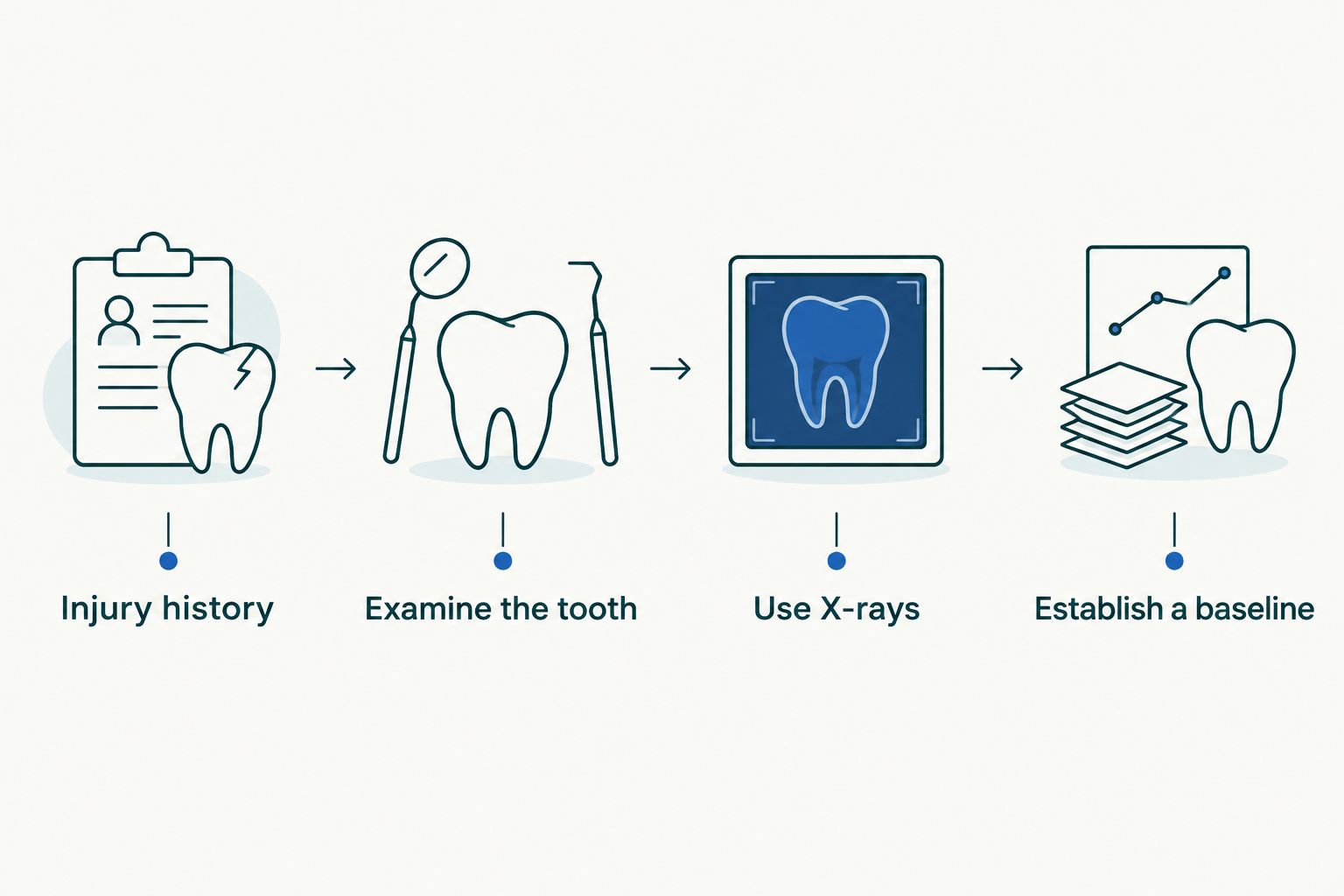
Start with the injury history
Explain when and how the injury happened. A fall, sports collision, or bite on something hard gives the dentist different clues about associated injuries.
Tell the dentist about bleeding, sensitivity, pain when biting, looseness, or a tooth that looks longer, shorter, or out of position. Mention any previous injury to the same tooth, even if that tooth seemed to recover.
Examine the tooth and surrounding tissues
The dentist looks for exposed enamel, dentin, or pulp. Enamel is the hard outer covering; dentin lies beneath it; pulp is the living tissue containing nerves and blood vessels.
The examination also checks for cracks, movement, gum injury, and changes in how the teeth meet. If a fragment is missing and a lip is cut, the dentist considers whether a piece became embedded in the soft tissue.
Use X-rays when the findings call for them
Dental X-rays can help assess root development, root fractures, and injury around the tooth. Different views sometimes provide information that a photograph or surface examination cannot show.
An X-ray does not answer every question about a tooth’s recovery. Your dentist combines imaging with the examination and follow-up findings rather than treating a single image as the whole diagnosis.
Establish a baseline for follow-up
The dentist may check how the tooth responds to cold or another sensitivity test. A recently injured tooth can temporarily respond differently, so an early result does not, by itself, establish whether the pulp will recover.
The broader guide to what happens at a chipped tooth evaluation explains the examination process. For children, the dentist also considers root maturity and whether the child can comfortably cooperate with the assessment.
What the depth of the chip changes
The visible size of a chip does not establish the treatment. A narrow fracture can reach sensitive tissue, while a wider, shallow chip can remain limited to the outer surface.
The following comparison describes general approaches, not a treatment plan for your child.
| Finding | Approach the dentist considers | Best for | Limitation |
|---|---|---|---|
| Enamel-only chip | Smoothing or a conservative bonded repair | A superficial defect or sharp edge | Does not address an unrecognized deeper injury |
| Enamel and dentin fracture | Covering exposed dentin, fragment reattachment, or a bonded restoration | Protecting exposed dentin and restoring shape | The tooth still needs assessment for associated trauma |
| Pulp exposure | Treatment to protect or preserve living pulp when appropriate | Selected teeth where pulp preservation is feasible | Suitability depends on the injury and clinical findings |
| Extensive fracture or associated displacement | A more involved restoration, stabilization, or specialist care | Injuries beyond a simple surface chip | Treatment and monitoring are more complex |
Enamel-only chips
A shallow chip can leave an edge that catches the tongue or lip. The dentist checks that the fracture is limited to enamel before discussing smoothing or adding tooth-colored material.
The advantage is conserving tooth structure. The limitation is that correcting the edge alone does not address any separate injury to the root or supporting tissues.
Chips that expose dentin
Exposed dentin can cause sensitivity to cold, air, or touch. Covering that surface helps protect the tooth, while a bonded restoration or suitable recovered fragment can restore its shape.
The dentist checks how much sound tooth remains and whether the tooth meets opposing teeth safely. A repair restores the broken area, but it does not remove the need to monitor an injured tooth.
Chips that expose the pulp
A pink or red area within the broken surface can indicate exposed pulp. Do not probe it or try to decide its depth at home.
For a young permanent tooth, preserving healthy pulp can support continued root development. The dentist assesses whether pulp-preserving treatment is appropriate or whether another treatment or referral is needed; pulp exposure does not automatically mean the same treatment for every child.
Why the assessment and repair plan vary
A plan for a child’s permanent tooth depends on more than the missing corner. These factors guide the examination and the discussion with your family:
- Fracture depth: Enamel, dentin, and pulp injuries need different protection and treatment.
- Root development: An immature permanent tooth has different treatment priorities from a fully developed tooth.
- Associated injury: Looseness, displacement, bite changes, or root damage can change the plan.
- Time and symptoms: The injury history and changes since the accident help guide assessment.
- Remaining tooth structure: The amount and position of sound tooth affect repair choices.
- Your child’s comfort: Anxiety and ability to tolerate care influence how the team approaches the visit.
Bring previous dental records if readily available, but do not delay contacting a dentist to gather paperwork. For your child’s 2026 visit, a short written timeline of the injury and subsequent symptoms is more useful than trying to name the fracture yourself.
What should you do before the dental visit?
Contact a dentist promptly after a permanent tooth breaks. Describe any movement, bleeding, bite change, or visible pink or red area so the team can advise you about urgency.
- Rinse gently. Use water to clear the mouth without scrubbing the broken surface.
- Save the fragment. If you find it, keep it moist in milk or saliva in a clean container and bring it along. Do not keep it loose in a child’s mouth.
- Protect the tooth. Choose soft foods and avoid biting with the injured tooth until you receive advice.
- Use a cold compress. Apply it outside the face if there is swelling or soreness.
- Avoid home repairs. Do not file the tooth, use household glue, or place aspirin against the tooth or gum.
If your child needs pain relief, ask a dentist or pharmacist about an age-appropriate medicine and follow its label. Do not use a medication dose intended for an adult.
Breathing or swallowing difficulty, uncontrolled bleeding, or signs of a significant head injury need emergency medical attention. If the whole permanent tooth came out, tell the dental team immediately: a knocked-out tooth requires different urgent instructions from a chipped tooth.
Does a chipped permanent tooth need assessment if it does not hurt?
A chipped permanent tooth needs assessment even when it does not hurt. Pain alone cannot show how deeply the tooth fractured or whether the supporting tissues were injured.
Tell the dentist if the tooth later darkens, becomes sensitive, develops swelling, or hurts when biting. Do not wait for those changes before making the initial call.
Can the dentist reattach the broken piece?
A dentist can sometimes reattach a recovered tooth fragment if its condition, fit, and the injury allow it. Keeping the fragment moist gives the dentist an opportunity to consider that option.
Reattachment preserves the tooth’s original shape, but it is not appropriate for every fracture. If the fragment cannot be used, the dentist can explain other ways to protect the tooth and rebuild the missing area.
Will my child need a root canal?
A chipped permanent tooth does not automatically need root canal treatment. The dentist assesses the pulp, root maturity, fracture, and associated injuries before discussing treatment.
Some injured teeth need care that preserves living pulp, while others need different treatment. Ask what the examination shows, what remains uncertain, and what follow-up will help clarify recovery.
Planning a calm dental visit in Vista
Tell the team if your child is frightened, sensitive to sounds, or worried that an examination will hurt. Ask for explanations in plain language and a chance for your child to signal when they need a pause.
Thevistadentist is a local option for Vista patients seeking a chipped tooth repair evaluation rather than choosing treatment online. When you call, confirm that the practice can assess your child’s age and injury. Explain any symptoms before asking about appointment timing.
For appointment planning in 2026, distinguish the evaluation from the repair. The first visit establishes what happened and what care is appropriate; it does not guarantee that definitive treatment will be completed that day.
Request a dental evaluation
Describe your child’s injury and ask about an appropriate evaluation during normal office hours.
FAQ
How does a dentist check whether my child’s chipped tooth is permanent?
A dentist identifies the tooth using its position, appearance, eruption history, and X-rays when needed. Tell the team if you are unsure whether it is a baby tooth or a permanent tooth.
Can I send a photo instead of bringing my child in?
A photo does not replace an examination of a chipped permanent tooth. It can help you describe the injury, but it cannot reliably assess the root, tooth movement, bite, or pulp condition.
What if my child’s chipped tooth is loose too?
Looseness after an injury needs prompt dental assessment because the tissues supporting the tooth may also be injured. Avoid wiggling it and tell the dental team about any change in position or bite.
Does no response to a cold test mean the tooth has died?
No response to a cold test immediately after trauma does not, by itself, prove that the pulp has died. The dentist considers other findings and repeats testing when appropriate.
Can a young permanent tooth keep developing after a chip?
A young permanent tooth can continue developing when its living pulp remains healthy or is successfully preserved. Whether that is possible depends on the injury and the examination findings.
Should I book a cosmetic repair first?
Book an injury assessment before choosing a cosmetic repair. The dentist needs to check the tooth’s health and supporting tissues before discussing how to restore its appearance.
Are same-day appointments available in Vista in 2026?
Same-day emergency evaluations at Thevistadentist are usually available during normal office hours, subject to availability. Call to explain your child’s injury and confirm whether an appropriate appointment can be offered; an inquiry does not confirm a booking.
One last thing
A tooth can look repaired before its recovery is fully understood. Keep the follow-up appointments your dentist recommends, even if your child feels comfortable and the repair looks normal.
Before leaving a 2026 evaluation, ask for clear instructions on eating, cleaning, activity, and symptoms that should prompt another call. Those instructions should reflect your child’s actual injury, not just the appearance of the finished repair.
Related guides
- Can a filling repair a chipped tooth?
- Does a chipped tooth need repair if it does not hurt?
- Can you repair a chipped tooth at home?