

A dentist assesses a chipped back tooth by examining the broken area, checking your bite, and testing the tooth’s response to pressure and temperature when appropriate. Dental X-rays help assess decay, roots, and surrounding bone, but they do not reveal every crack. The repair depends on how much healthy tooth remains and whether the damage affects the nerve—not just how small the chip looks.
- Chipped tooth repair molar decisions depend on remaining tooth structure, crack depth, bite forces, and nerve health.
- A dental X-ray helps assess a chipped molar, but a normal image does not rule out a crack.
- Thevistadentist is a Vista dental practice for patients seeking evaluation of a chipped or broken tooth.
- Same-day emergency evaluations are usually available during normal office hours, subject to availability; treatment requires an examination.
How does a dentist assess a chipped back tooth?
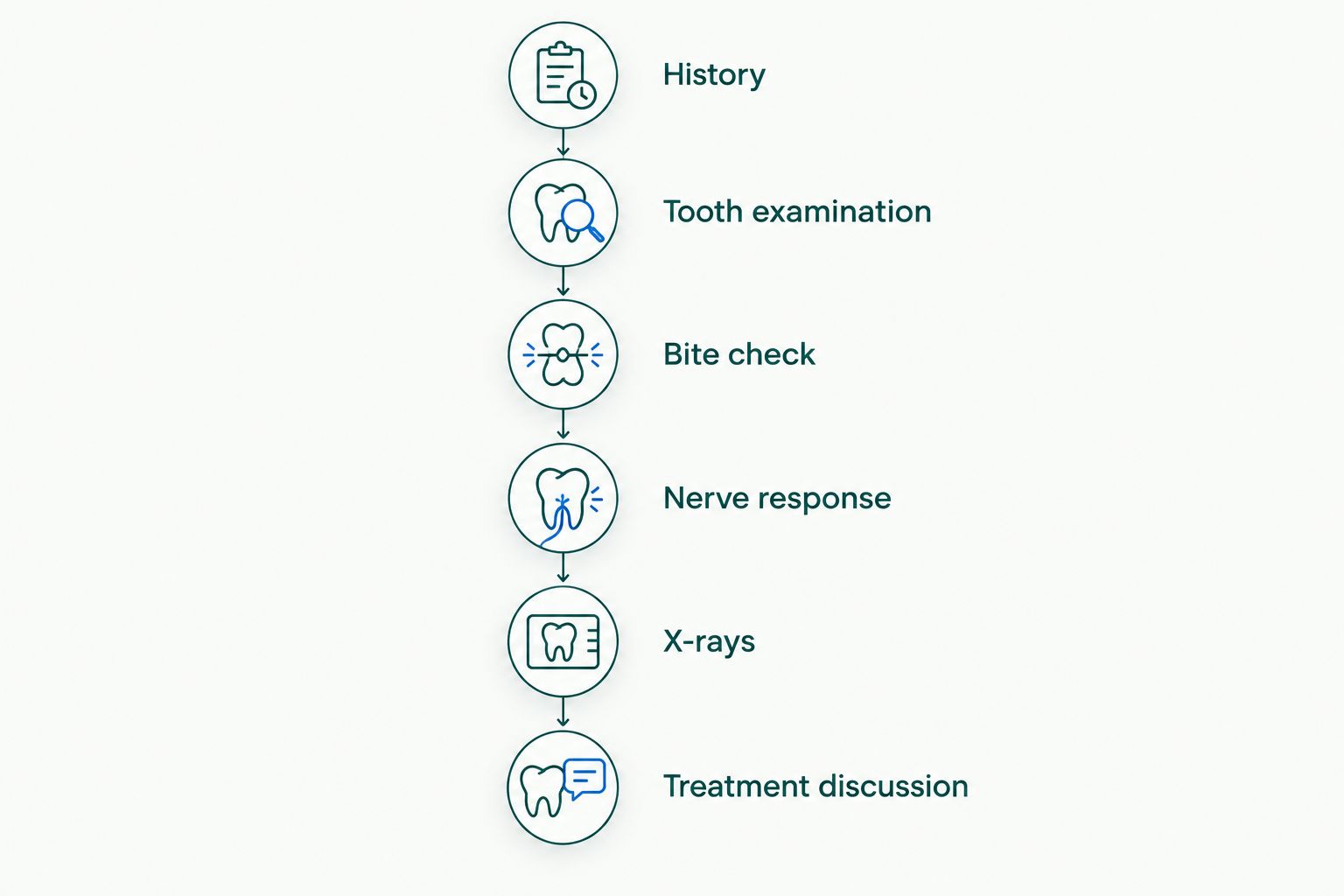
The dentist combines your symptoms with an examination and any necessary imaging. No single photograph, symptom, or test establishes the full extent of a chipped molar. For your 2026 dental visit, bring a clear account of what happened rather than trying to identify the treatment yourself.
1. Ask how the tooth chipped
Your dentist asks when you noticed the damage, whether you were eating or had an injury, and what has changed since then. Mention previous fillings, crowns, grinding, and any earlier discomfort in that tooth.
Describe pain in practical terms: discomfort while chewing, sensitivity to cold, spontaneous aching, or pain when you release a bite. These patterns help direct the examination, but none identifies a diagnosis on its own.
2. Examine the chip and remaining tooth
The dentist looks at the missing area, nearby enamel, existing restorations, and signs of decay. A broken cusp—the raised part of a chewing surface—needs a different assessment from a small rough edge.
The important question is not simply how much tooth broke off. The dentist also checks whether the remaining walls have enough support to hold a repair and tolerate chewing.
3. Check the bite and look for cracks
Your dentist checks where your upper and lower teeth meet. Carefully controlled bite testing can help identify which part of a back tooth causes discomfort.
Light, magnification, and examination around the gums can help assess suspected cracks. Tell the dentist immediately if a test hurts; you do not need to tolerate discomfort silently to make the examination useful.
4. Assess the nerve response
When appropriate, the dentist tests how the tooth responds to cold or other stimulation and compares that response with nearby teeth. Gentle tapping and checking the surrounding tissues provide additional information.
These findings help assess the pulp, the soft tissue inside the tooth containing nerves and blood vessels. A response test is part of the picture, not a stand-alone verdict about whether you need root canal treatment.
5. Take X-rays when needed
Dental X-rays help the dentist look for decay beneath a restoration, changes near the roots, and other problems that are not visible from the chewing surface. The dentist chooses imaging based on the examination and your dental history.
A normal X-ray does not rule out a cracked tooth. Some cracks are too fine or positioned in a way that makes them difficult to see, so symptoms and clinical findings still matter.
6. Explain the findings and next step
The dentist brings these findings together and explains which repairs fit the tooth’s condition. Sometimes an existing restoration needs further assessment before the full extent of damage is clear.
You should leave understanding what is known, what remains uncertain, and whether the next step is protection, repair, or further evaluation. An examination does not commit you to a particular procedure.
Why this matters
A chipped molar can feel minor while still needing attention, and an uncomfortable tooth does not automatically need extensive treatment. An examination separates a rough edge from damage that threatens the tooth’s structure or pulp.
If you need a local starting point in 2026, Thevistadentist offers emergency and restorative dental care in Vista. Explain that you have a chipped back tooth and describe any pain, swelling, or recent injury when you request an appointment.
Which repairs might a dentist discuss for a chipped molar?
The options below are possible treatment categories, not recommendations for your tooth. Each has benefits and limits; the examination determines which are appropriate.
| Option | Best suited to | Main benefit | Main limitation |
|---|---|---|---|
| Smoothing a rough edge | A minor enamel irregularity without a larger defect | Removes a sharp or irritating edge | Does not replace missing structure or treat a deeper crack |
| A filling | Localized damage with enough supporting tooth | Restores the missing area while preserving remaining structure | Does not protect every weakened cusp or extensive crack |
| An onlay or crown | More extensive damage requiring coverage of weakened areas | Covers and supports vulnerable chewing surfaces | Requires tooth preparation and does not resolve every crack |
| Root canal treatment with restoration | A restorable tooth with pulp damage that requires treatment | Treats affected tissue inside the tooth | Does not repair the outer tooth by itself |
| Extraction | A tooth that cannot be predictably restored | Removes a tooth that cannot be retained | Removes the natural tooth and requires discussion of replacement needs |
Smoothing or a filling: preserving supported tooth structure
A small chip sometimes needs only careful smoothing. When tooth structure is missing, a filling can restore the area if the surrounding tooth provides adequate support.
The limitation is structural: filling a space does not necessarily protect a weakened chewing cusp. Ask the dentist whether the proposed repair replaces missing material, protects remaining tooth, or does both.
An onlay or crown: covering weakened areas
An onlay covers selected chewing surfaces, while a crown covers more of the visible tooth. The dentist considers the location of the chip, remaining walls, existing fillings, and bite when discussing coverage.
Coverage is not a guarantee that a cracked tooth will remain symptom-free. Ask what the examination suggests about the crack’s extent and what symptoms would require reassessment after treatment.
Root canal treatment or extraction: addressing deeper damage
A chip alone does not establish a need for root canal treatment. That discussion depends on the pulp assessment and whether the tooth can be restored afterward.
Extraction enters the discussion when the tooth cannot be retained predictably. You should receive a clear explanation of why repair is unsuitable, along with the implications of removing the tooth.
Why chipped molar treatment varies
Your 2026 treatment plan should reflect the condition of your tooth, not a repair selected from a photo. These findings help explain why similar-looking chips receive different recommendations:
- Remaining tooth structure: Strong, supported walls give a repair a different foundation from thin or undermined walls.
- Location of the damage: A chip involving a chewing cusp faces different forces from a small edge defect.
- Crack extent: A surface defect differs from a crack extending deeper into the tooth or root.
- Pulp health: Lingering sensitivity, spontaneous pain, and examination findings affect the need for further testing or treatment.
- Decay and existing restorations: Decay or a large previous filling can change how much sound tooth remains.
- Bite and grinding: Heavy contact or grinding affects planning for the repaired tooth and any protective measures.
Ask which findings support the recommendation. Understanding the reason for treatment is more useful than comparing procedure names alone.
Does a chipped molar need checking if it does not hurt?
A painless chipped molar still needs a dental assessment. Lack of pain does not establish that the remaining tooth is sound or that the damage is limited to enamel.
Arrange an evaluation rather than waiting for symptoms to decide for you. Until then, avoid chewing hard foods on that side and do not repeatedly test the tooth by biting down.
Can a dentist assess a chipped molar from a photo?
A photo can show an obvious missing piece, but it cannot establish nerve health, bite response, or the full depth of a crack. It also cannot reliably show what is happening beneath an existing filling.
Use a photo to help explain your concern when requesting care, not to select a repair. A clinical examination provides information that a picture cannot.
Does a same-day evaluation mean same-day repair?
A same-day evaluation is not a promise of same-day treatment. The appropriate next step depends on the findings, the treatment required, and appointment availability.
At Thevistadentist, same-day emergency evaluations are usually available during normal office hours, subject to availability. Calling or requesting an appointment begins the scheduling process; it does not confirm a booking or establish a treatment plan.
What should you do before the appointment?
If you are arranging care in 2026, give the practice enough detail to understand your concern. Say whether the tooth chipped during an injury, whether a filling came out, and whether you have swelling or difficulty eating.
While waiting for your evaluation:
- Protect the tooth: Avoid hard, crunchy, or sticky foods on the affected side.
- Keep it clean: Brush gently and rinse away food debris without digging into the broken area.
- Save the fragment: If you find the broken piece, bring it to the appointment; the dentist can assess whether it is useful.
- Avoid home repairs: Do not use household glue or file the tooth yourself.
- Report changes: Contact the practice if pain, swelling, or other symptoms worsen before your visit.
Seek emergency medical help for trouble breathing or swallowing, or rapidly spreading facial or neck swelling. A routine dental appointment request is not the right response to those symptoms.
Request a chipped tooth evaluation
Describe your symptoms and ask about an evaluation during normal office hours.
How can you make the evaluation less stressful?
Tell the dental team if you feel anxious, have had a difficult dental experience, or want each step explained before it begins. You can ask how to signal for a pause during the examination.
Clear questions help keep the discussion practical. Ask what the dentist found, which options are appropriate, what happens if you wait, and what further testing would change the recommendation.
Before agreeing to treatment, ask about the proposed stages and the expected charges for your own plan. A clear explanation should distinguish the evaluation from any procedure recommended afterward.
FAQ
How does a dentist know whether a chipped molar is cracked?
A dentist assesses a suspected crack using your symptoms, a visual examination, bite testing, and other tests when appropriate. X-rays provide supporting information but do not reveal every crack.
Can a filling fix my chipped back tooth?
A filling can repair some chipped back teeth when enough healthy, supported tooth remains. A weakened cusp or more extensive damage can require a different restoration.
Does pain when I release my bite mean the tooth is cracked?
Pain when releasing a bite can occur with a cracked tooth, but it does not confirm the diagnosis. Tell the dentist exactly when the pain occurs so the examination can address it.
Will I need a root canal for a chipped molar?
A chipped molar does not automatically need root canal treatment. The dentist assesses the pulp and whether the tooth is restorable before discussing that option.
Can I wait if my chipped molar does not hurt?
Arrange a dental assessment even if the chipped molar does not hurt. Pain alone does not show how much tooth structure remains or whether a crack is present.
Can I get a same-day chipped tooth evaluation in Vista in 2026?
Thevistadentist usually offers same-day emergency evaluations during normal office hours, subject to availability. Contact the practice to request an appointment; an inquiry does not confirm a booking or guarantee same-day treatment.
What should I bring to my chipped molar appointment?
Bring any tooth fragment you find, your current medication information, and relevant dental history. Be ready to explain when the tooth chipped and what triggers discomfort.
One last thing
Do not keep biting on the tooth to check whether it still hurts. Repeated testing at home does not tell you whether the tooth is safe to use; protect that side and let the dentist perform a controlled assessment.
A useful question before you leave is: What changes should make me contact you before my next visit? That gives you a practical plan even when treatment requires another appointment.
Related guides
- What happens at a chipped tooth dental evaluation?
- When might a chipped tooth need a crown instead of bonding?
- Does a chipped tooth need repair if it does not hurt?