

Teeth grinding can put repeated pressure on a chipped tooth repair, increasing the risk of wear, another chip, or damage to the remaining tooth. Your dentist needs to assess both the broken area and your bite, because repairing the chip does not stop the grinding that can stress it.
- Chipped tooth repair: grinding can stress bonding, crowns, and the remaining natural tooth.
- Santa Fe Dental Group offers chipped tooth evaluations for patients in Vista and nearby communities.
- A night guard can help protect teeth and repairs, but it does not necessarily stop grinding.
- The right repair depends on the damage, remaining tooth structure, and how your teeth meet.
Why this matters
A chipped edge is the part you can see. Grinding or clenching can also place stress on the tooth when you sleep or concentrate, without you noticing the habit. A repair that looks natural still needs to work comfortably when you bite and move your jaw.
For your 2026 appointment, ask about both repairing the tooth and protecting it afterward. Understanding what happens at a chipped tooth evaluation can help you explain your concerns and know what questions to ask. You do not need to prove that you grind before bringing it up.
How can teeth grinding affect chipped tooth repair?
Grinding can wear a repair, chip its edges, or contribute to fractures in the tooth around it. Clenching also matters: holding your teeth together under pressure can stress a restoration even without obvious grinding movements. Neither habit means a repair will definitely fail.
Your dentist considers the following when planning care:
- Examine the chip. The dentist checks the size and location of the damage, the remaining tooth, and whether there are signs of decay or a deeper crack. X-rays are used when clinically appropriate; not every crack is visible on an X-ray.
- Check your bite. The dentist assesses how your teeth meet and whether the damaged area takes pressure during biting or side-to-side movement. Where the force lands matters as well as how much tooth is missing.
- Look for wear. Flattened biting surfaces, repeated chips, or damage to existing restorations can prompt questions about grinding. These findings need interpretation alongside your history, rather than serving as a diagnosis by themselves.
- Discuss protection. The repair plan can include reviewing your bite, discussing a night guard, and arranging follow-up. Protection supports the repair; it does not replace treatment for the damaged tooth.
Tell your dentist if an earlier repair broke in the same place. That history helps identify whether the problem involves the repair, the underlying tooth, the bite, or several factors together.
Why grinding-related repair needs vary
Grinding does not automatically mean you need a crown or cannot have bonding. These factors help explain why different teeth need different approaches:
- Chip location: A chip on a biting edge faces different contact forces from a chip away from the bite.
- Depth of damage: An enamel chip differs from damage that exposes deeper tooth layers or reaches the pulp, the tissue inside the tooth.
- Remaining tooth structure: A tooth with a large existing filling has a different starting point from a mostly intact tooth.
- Bite contact: A repair that meets an opposing tooth during jaw movement needs careful assessment.
- Grinding and clenching history: Repeated breakage, reported nighttime grinding, and daytime clenching all belong in the discussion.
- Condition of the tooth: Decay, cracks, gum health, and symptoms can change the treatment plan.
You cannot reliably judge these factors from a mirror or photograph. A small-looking chip does not establish that the rest of the tooth is healthy, and a painless tooth still deserves assessment.
Comparing chipped tooth repair options in 2026
The table below describes possible approaches, not a treatment recommendation for your tooth. The best option is the one that addresses the damage while preserving suitable healthy tooth structure. Grinding is part of that decision, not the only deciding factor.
| Option | Best suited to | Potential benefit | Limitation when grinding is present |
|---|---|---|---|
| Bonding or a tooth-colored filling | Selected smaller defects with enough sound tooth remaining | Can replace missing tooth structure without full crown coverage | The material can wear or chip under repeated loading |
| Crown | Teeth needing broader protection because of substantial damage or weakness | Covers and supports the prepared tooth | Requires tooth preparation and does not eliminate grinding forces |
| Veneer | Selected front-tooth defects where appearance and tooth condition support its use | Can change the visible front surface and edge | Is not a universal solution for heavy bite contact or deeper damage |
A night guard is not included as a repair option because it does not replace missing tooth structure. It serves a different purpose: helping protect teeth and restorations from direct contact during grinding.
When is bonding or a filling suitable?
Bonding or a filling is best suited to selected smaller chips when the tooth and bite support it. Your dentist can shape tooth-colored material to restore the damaged area, then check how it contacts the opposing teeth. The amount of sound tooth available to support the material matters.
The advantage is that this approach can preserve more natural tooth than full coverage. The limitation is that the material remains exposed to biting forces and can need repair or replacement. A history of grinding makes the bite check and protection discussion especially relevant.
Read about whether a filling can repair a chipped tooth if you want to understand that distinction before your visit. An examination determines whether the damaged area is suitable for this approach.
When does a crown enter the discussion?
A crown is best suited to teeth that need broader coverage because of their condition, not simply because you grind. A dentist considers how much tooth remains, the position of existing fillings, and whether there are cracks or weakened areas. A crown cannot make every damaged tooth restorable.
Its benefit is coverage of the prepared tooth. Its trade-off is that placing it requires removal of tooth structure, and it remains subject to wear, fracture, and problems affecting the tooth underneath. You still need daily care and follow-up after crown treatment.
Ask your dentist to explain why coverage is being recommended and what a more conservative option would leave unaddressed. That conversation should connect the recommendation to findings in your tooth.
Can a veneer solve a grinding-related chip?
A veneer is best suited to selected front-tooth concerns after the dentist checks the bite and tooth condition. It can address the appearance of the visible tooth surface, but it is not a substitute for assessing deeper damage. Grinding can place stress on a veneer as well as on natural enamel.
The benefit is a change to the tooth's visible surface and shape. Limitations include tooth preparation when required, the possibility of chipping or debonding, and suitability restrictions related to the bite. Do not choose a veneer based only on how the chipped edge looks.
What a night guard can and cannot do
A night guard creates a barrier between the upper and lower teeth. Your dentist can discuss whether an appliance is appropriate for your grinding pattern, existing restorations, and bite. A night guard can help protect a repair, but it does not guarantee that the repair will never chip.
It also does not necessarily stop the muscle activity responsible for grinding. That distinction matters: protection and treatment of contributing factors are separate conversations. Tell your dentist about jaw discomfort, headaches on waking, sleep concerns, and any appliance you already wear.
Before choosing a guard in 2026, separate these parts of the plan:
- Repair: Restore the damaged tooth with an approach suited to the examination findings.
- Protection: Discuss whether a guard is appropriate and how it should fit around your teeth and restorations.
- Follow-up: Check comfort, wear, and any changes in the tooth or appliance over time.
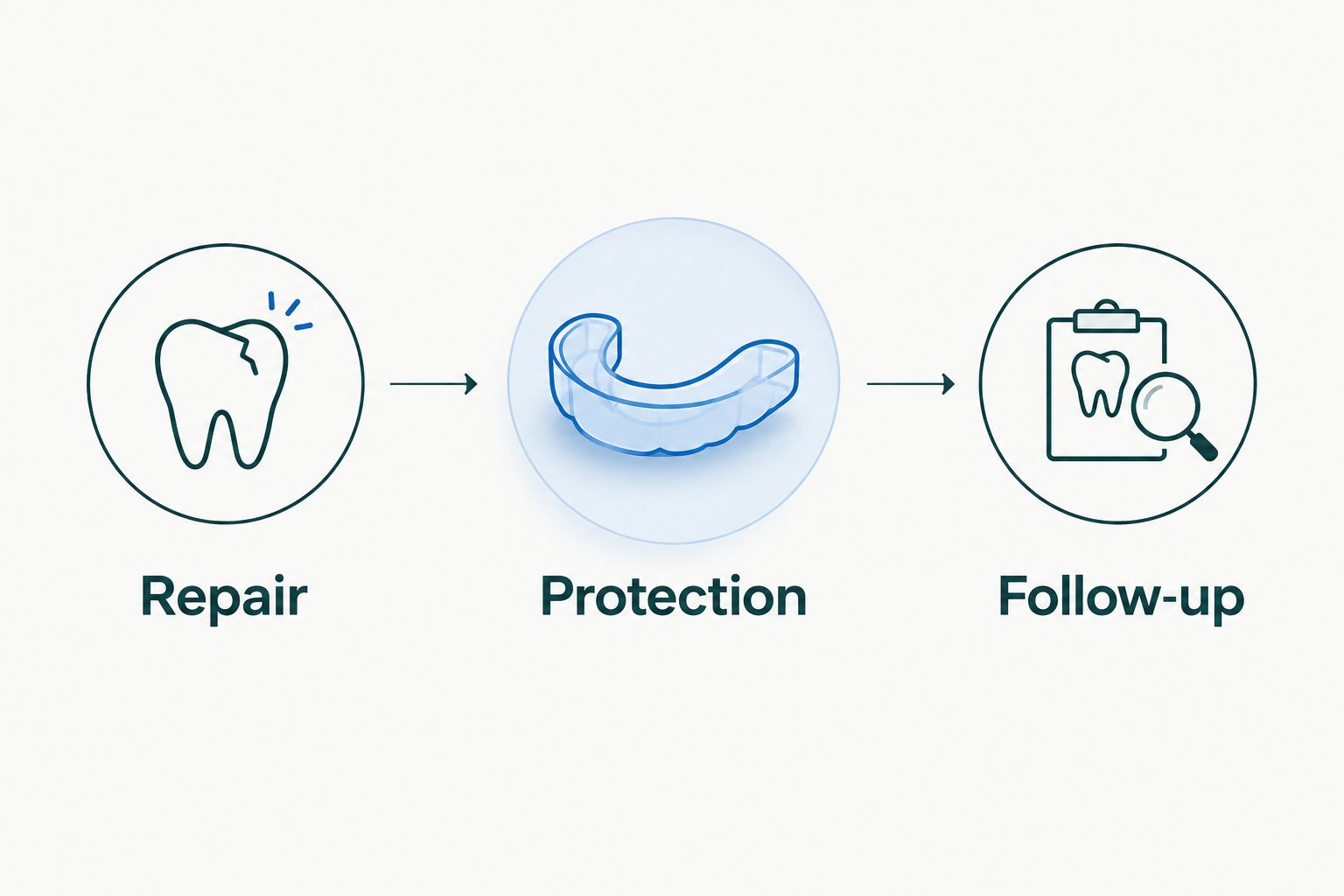
The conversation about night guards for teeth grinding should include fit, comfort, and changes after dental treatment—not just whether you own a guard. An appliance made before a repair might no longer fit correctly, so bring it to the appointment rather than forcing it over the repaired tooth.
Do not keep wearing an appliance that causes new pain or no longer seats properly without asking your dentist. Bring up practical difficulties, too: an appliance cannot help protect your teeth while it sits unused because it feels uncomfortable.
What should you tell the dentist before repair?
You do not need a detailed sleep history to have a useful conversation. Describe what you have noticed and what someone else has observed, keeping those separate. For example, morning jaw tiredness is your symptom; hearing you grind at night is someone else's observation.
For your 2026 visit, bring these details:
- When you first noticed the chip and whether it followed an injury or biting something hard.
- Whether the tooth hurts with biting, temperature changes, or without an obvious trigger.
- Whether a filling, crown, or previous repair has broken in that area.
- Whether you catch yourself clenching during the day or someone has heard nighttime grinding.
- Any night guard, retainer, or other removable dental appliance you use.
If dental visits make you anxious, say so when requesting the appointment. You can ask the dentist to explain the findings before discussing treatment and to agree on a signal for a pause. Clear explanations help you participate without having to make a decision before you understand the options.
Should you wait if the chipped tooth does not hurt?
No pain does not confirm that a chipped tooth is safe to leave untreated. Some chips cause little discomfort, while others involve damage that needs closer assessment. Grinding adds a reason to examine how the tooth handles pressure, even when you can chew normally.
Until the tooth is assessed, avoid chewing hard foods on that area and do not file or glue the tooth yourself. Keep the area clean with gentle brushing. Contact a dentist promptly for worsening pain, swelling, a loose tooth, or a repair that feels unstable.
Seek urgent medical care for trouble breathing or swallowing, or rapidly spreading swelling. Those symptoms need a different level of attention from a routine chipped-edge appointment.
What if the repaired tooth feels high when you bite?
A repair that feels high needs a dental review rather than repeated testing by biting hard. A change in bite contact can make the tooth feel as though it touches before the others. Tell the practice when it started and whether you also have pain or sensitivity.
Do not try to wear the material down yourself. The dentist needs to check whether the issue is bite contact, sensitivity after treatment, a crack, or another cause. A high-feeling bite and ongoing grinding can occur together, but one symptom does not establish the diagnosis.
Planning care in Vista in 2026
Santa Fe Dental Group is suited to Vista patients seeking a chipped tooth evaluation with clear explanations and a reassuring approach. The practice offers emergency, general, restorative, and cosmetic dental care. An examination is still necessary before the dentist can recommend a particular repair.
Same-day emergency evaluations are usually available during normal office hours, subject to availability. That does not mean same-day treatment is guaranteed or that after-hours care is offered. Call or request an appointment, describe the chip and any symptoms, and wait for the practice to confirm arrangements.
When you contact Santa Fe Dental Group about chipped tooth repair, mention grinding or clenching even if it has never been formally assessed. You can also ask what to bring and whether an existing guard should come with you.
FAQ
Can teeth grinding break a repaired chipped tooth?
Teeth grinding can contribute to another chip or damage to a repair through repeated pressure. The risk depends on the tooth, repair, bite, and grinding pattern; failure is not inevitable.
Is bonding a bad choice if I grind my teeth?
Bonding is not automatically unsuitable when you grind your teeth. Your dentist needs to assess the chip, remaining tooth structure, and bite before recommending it.
Will a crown stop me from grinding my teeth?
A crown does not stop teeth grinding. It restores or covers a tooth when appropriate, while grinding and protection require a separate discussion.
Do I need a night guard after chipped tooth repair?
A night guard is appropriate for some patients after chipped tooth repair, but not everyone needs the same approach. Your dentist can assess grinding signs, appliance fit, and the condition of your teeth.
Can I wear my old night guard after a tooth repair?
Have your dentist check your old night guard after a repair because the tooth’s shape may have changed. Do not force an appliance that no longer seats comfortably.
Can Santa Fe Dental Group see a chipped tooth the same day?
Santa Fe Dental Group usually has same-day emergency evaluations during normal office hours, subject to availability. Contact the practice to request care; an inquiry does not confirm an appointment or guarantee same-day treatment.
One last thing
Bring your existing night guard to the repair appointment, even if you rarely wear it. The dentist can assess its fit and look for wear that contributes to the discussion about your bite. Do not adjust the appliance yourself before the visit.
For a chipped tooth repair planned in 2026, leave knowing more than the name of the restoration. Ask what the examination showed, how grinding affects the plan, and which changes should prompt you to call.
Related guides
- How long does chipped tooth repair last?
- When might a chipped tooth need a crown instead of bonding?
- What can you eat after chipped tooth repair?