
Dental insurance can cover chipped tooth repair when treatment restores a damaged tooth’s health or function, but coverage depends on your plan and the recommended procedure. Treatment done only to change appearance can be excluded, and covered care can still leave you with a deductible, coinsurance, or charges beyond your remaining benefits. For a repair in 2026, confirm your current benefits and get a dental evaluation before assuming either that insurance pays or that it pays nothing.
- Chipped tooth repair insurance depends on the procedure, your plan’s rules, and whether treatment restores health or function.
- Thevistadentist offers chipped tooth evaluations for patients in Vista and nearby North County San Diego communities.
- Dental bonding and crowns serve different needs; an examination determines which options fit your damaged tooth.
- A benefit estimate helps you plan, but it is not a guarantee that your insurer will pay.
Why this matters
A chipped tooth creates two separate questions: what care does the tooth need, and what will your insurance contribute? An insurance benefit is not a diagnosis. A procedure can be clinically appropriate even when your policy excludes it or limits payment.
For Vista patients arranging care in 2026, separating those questions helps you make a decision without confusing a coverage limitation with a treatment recommendation. Start with what happens at a chipped tooth evaluation, then use the proposed treatment to check benefits.
Thevistadentist is best for Vista patients seeking a local chipped tooth evaluation with clear explanations. Tell the practice if dental anxiety or uncertainty about insurance is making it difficult to request care.
Does insurance cover chipped tooth repair?
Dental insurance can contribute toward repairing a chipped tooth, but the word chipped does not identify a covered benefit by itself. The insurer needs to know what procedure is proposed, which tooth needs treatment, and how the policy applies to that service.
A small repair, a crown, and treatment involving the inside of a tooth are different services. Do not assume they share the same coverage rules simply because each addresses damage from the same incident.
| Treatment option | Best for, when clinically appropriate | Main benefit | Limitation to discuss | Insurance question |
|---|---|---|---|---|
| Dental bonding for a chipped tooth | Selected smaller chips | Adds tooth-colored material to rebuild the damaged area | Not suitable for every fracture or biting surface | Does the plan cover the proposed restoration on this tooth? |
| Dental crown | A tooth needing more extensive protection | Covers the prepared tooth to restore its form and function | Requires preparation of tooth structure | Do crown benefits, waiting periods, or replacement limits apply? |
| Dental veneer | Selected front-tooth concerns involving appearance and form | Covers the front surface of the tooth | Does not address every structural problem; preparation can be irreversible | Is the proposed veneer excluded as cosmetic treatment? |
| Root canal treatment with an appropriate restoration | Damage involving the tooth’s pulp, when the examination supports it | Treats the affected tissue inside the tooth | Does not rebuild the missing tooth structure by itself | How are the root canal and final restoration covered separately? |
These are treatment categories, not a recommendation for your tooth. A dentist needs to assess the damage before explaining which choices are reasonable. Insurance approval alone does not establish that a particular procedure is the right choice.
When is chipped tooth repair considered restorative?
Restorative care repairs damage or restores a tooth’s function. If a chip affects the tooth’s structure, leaves a vulnerable area, or interferes with biting, the dentist can explain the clinical reason for the recommended repair.
That explanation matters to an insurance claim. The insurer can request supporting records, such as examination findings, images, or a description of the damage, before deciding how benefits apply.
Ask what problem the proposed treatment solves. A useful explanation connects the examination findings to the treatment rather than simply naming a procedure. You should understand both the benefit of proceeding and the limitations of the proposed repair.
Restorative purpose does not guarantee payment. Your policy can still impose exclusions, benefit limits, or other conditions on an otherwise appropriate service.
When is chipped tooth repair considered cosmetic?
Cosmetic treatment changes appearance rather than addressing a clinical need recognized under the policy. Dental plans commonly exclude treatment performed solely for cosmetic reasons, but the insurer’s policy language controls the decision.
A front tooth is not automatically a cosmetic case. Its location does not establish whether a repair restores function, improves appearance, or does both. The dentist’s findings and the proposed procedure matter more than whether the chip shows when you smile.
Likewise, a tooth-colored material is not automatically excluded just because it looks natural. Ask about the actual procedure and benefit category instead of relying on the labels cosmetic or tooth-colored.
If appearance is your main concern, say so. You can discuss the expected change, the treatment’s limitations, and whether your plan treats that work as an excluded service before making a decision.
Why chipped tooth repair insurance coverage varies
The same treatment name does not produce the same insurance contribution for every patient. Check these factors against your own policy:
- Covered service: Your plan must include the proposed procedure, subject to its exclusions and conditions.
- Clinical purpose: The insurer can distinguish treatment that repairs damage from treatment performed only for appearance.
- Network status: Your dentist’s participation and the plan’s out-of-network rules affect how benefits are calculated.
- Deductible and coinsurance: Covered care can still require you to pay part of the allowed charge.
- Remaining annual benefits: Earlier claims can reduce the benefits left for additional treatment.
- Timing and history: Waiting periods, prior restorations, and frequency or replacement limits can affect eligibility.
For treatment planned in 2026, check the actual start and end dates of your benefit period. A plan year does not necessarily follow the calendar year, and an insurance card alone does not show what benefits remain.
How do I check coverage before repairing a chipped tooth?
Use the proposed treatment—not a general description of the accident—to ask specific questions. If you have not had an examination, start by checking benefits for the evaluation and any recommended diagnostic imaging.
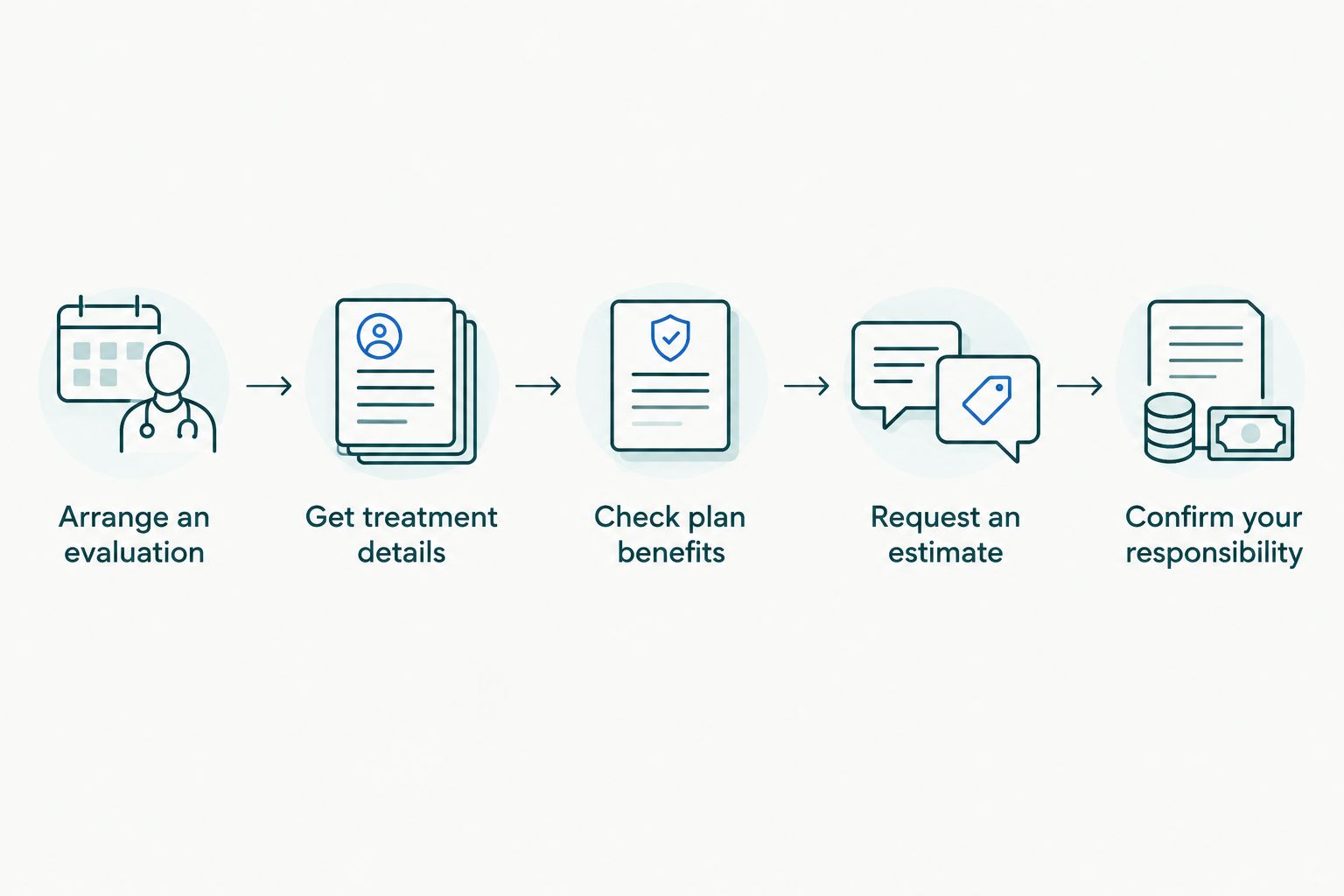
- Arrange an evaluation. Describe when the tooth chipped, any pain or sensitivity, and whether the damage followed an injury. Ask what the appointment is intended to include.
- Get the treatment details. After the examination, request the proposed procedures and ask which tooth or teeth they involve. Ask about reasonable alternatives and what each option does.
- Check plan benefits. Confirm that your coverage is active and ask about exclusions, network rules, deductibles, remaining benefits, and waiting periods for the proposed care.
- Request an estimate. Ask whether the insurer offers a pretreatment estimate or predetermination. Clarify whether a separate authorization requirement applies.
- Confirm your responsibility. Review the estimated insurer contribution and your estimated share before agreeing to treatment. Ask what circumstances would change the estimate.
This process gives you more useful information than asking whether a plan “covers chipped teeth.” For a 2026 appointment, use current eligibility information rather than an old benefit summary.
A pretreatment estimate helps with planning, but it is not a guarantee of payment. Final benefits depend on eligibility, available benefits, the services actually provided, and the policy’s terms when the claim is processed.
What should I ask the insurer?
Keep the proposed treatment details beside you when you call. Write down the representative’s explanation and request a reference number or written response when available.
Useful questions include:
- Is the proposed procedure a covered benefit for this tooth?
- Does the policy classify this treatment as restorative or cosmetic?
- Is the dentist in network under my specific plan?
- Does a waiting period, replacement rule, or other limitation apply?
- How much of my deductible and annual benefit remains?
- What records are needed, and is prior authorization required?
Ask the insurer to explain unfamiliar terms in plain language. A statement that a service is “covered” is incomplete unless you also understand the conditions and your estimated responsibility.
If you have more than one dental plan, ask how the plans coordinate benefits. Do not assume that having additional coverage eliminates your share.
Does insurance cover bonding for a chipped tooth?
Insurance can cover dental bonding when the proposed restoration qualifies under your policy. Bonding performed only to change appearance can be treated differently, so ask about the specific procedure rather than bonding as a general category.
Bonding adds tooth-colored material to the damaged area. It is an option for selected chips, but the size and location of the damage, your bite, and the condition of the remaining tooth affect whether it fits your needs.
Ask the dentist to explain why bonding is recommended and what its limitations are. If another treatment is proposed, ask what finding makes that option more appropriate.
Will dental insurance cover an emergency chipped tooth visit?
Dental insurance can cover an emergency evaluation if that service qualifies under your plan. The examination, imaging, and repair are separate services, so coverage for the visit does not establish coverage for every treatment that follows.
Thevistadentist offers chipped tooth repair evaluations in Vista. Same-day emergency evaluations are usually available during normal office hours, subject to availability; that does not guarantee same-day treatment or after-hours care.
Call or request an appointment and describe your symptoms. An inquiry is not a confirmed booking. If you have trouble breathing or swallowing, uncontrolled bleeding, or a serious facial injury, seek emergency medical care rather than waiting for an insurance decision.
What if my insurance denies chipped tooth repair?
A denial means the insurer has declined payment under its claim decision; it does not, by itself, explain whether treatment is clinically necessary. Request the written reason and compare it with your policy and the submitted treatment details.
Ask whether the issue is an exclusion, missing documentation, eligibility, or a benefit limit. The next step depends on that reason. Your insurer can explain its review or appeal process, and the dental practice can clarify the clinical information it provided.
Do not change or postpone treatment solely to fit a benefit category without discussing the dental consequences. Ask the dentist which decisions are time-sensitive and which allow time for further insurance review.
FAQ
Will my insurance pay to fix a chipped front tooth?
Dental insurance can contribute toward a chipped front tooth repair when the proposed procedure qualifies under your plan. A visible front tooth is not automatically a cosmetic case; the clinical findings and policy terms matter.
Is bonding a chipped tooth covered by dental insurance?
Bonding can be covered when the restoration meets your plan’s benefit rules. Bonding performed solely to change appearance can be excluded, so confirm the proposed procedure with your insurer.
Can I find out what insurance covers before my appointment?
You can check eligibility and evaluation benefits before the appointment, but repair coverage depends on the treatment proposed after an examination. Ask about the evaluation and any diagnostic imaging first.
Does an insurance estimate guarantee payment for my repair?
An insurance estimate does not guarantee payment. Final benefits depend on eligibility, remaining benefits, policy terms, and the services provided when the claim is processed.
Should I wait until my insurance resets to repair a chipped tooth?
Discuss timing with a dentist before waiting for benefits to reset. The examination can identify whether delaying care creates a risk for your tooth; insurance timing alone does not answer that question.
Can I request a same-day chipped tooth appointment in Vista?
You can request an evaluation at the Vista practice. Same-day emergency evaluations are usually available during normal office hours, subject to availability, and do not guarantee same-day treatment.
One last thing
No pain does not establish that a chipped tooth needs no care, just as insurance coverage does not establish which treatment you need. Keep the clinical decision and the payment decision separate. Ask for a clear explanation of both before proceeding.
For a chipped tooth repair evaluation in Vista in 2026, contact Thevistadentist and describe what happened. Mention any sensitivity, sharp edge, difficulty biting, or dental anxiety so you can discuss the next step without pressure.
Related guides
- How much does chipped tooth repair cost?
- Does a chipped tooth need repair if it does not hurt?
- How is a chipped front tooth repaired?