

Yes, you can usually have a chipped tooth repaired during pregnancy, and necessary dental treatment should not be postponed solely because you are pregnant. Tell your dentist about your pregnancy, medications, and any pregnancy-related complications so the examination, local anesthetic, and treatment plan fit your needs.
- Chipped tooth repair pregnancy: necessary treatment generally does not need to wait until after delivery.
- The American Dental Association supports necessary dental treatment, local anesthesia, and clinically indicated dental X-rays during pregnancy.
- Pain, swelling, or a deep fracture needs prompt assessment rather than a cosmetic-only appointment.
- Thevistadentist offers chipped-tooth evaluations for patients in Vista; treatment depends on the examination.
Why this matters
A chipped tooth can leave a rough edge, expose sensitive tooth structure, or involve a deeper fracture. Pregnancy does not tell you which situation you have, and the size of the visible chip does not establish the diagnosis.
For your 2026 care planning, separate necessary repair from optional cosmetic changes. A dentist can explain what needs attention now, what can wait, and whether your prenatal care team should help plan treatment. The guide to what happens at a chipped-tooth dental evaluation explains the assessment before any repair decision.
Can you get a chipped tooth repaired during pregnancy?
Yes. Pregnancy alone is not a reason to delay necessary chipped-tooth care. The American Dental Association and the American College of Obstetricians and Gynecologists support necessary dental care during pregnancy, including local anesthesia and clinically indicated dental radiographs.
These recommendations concern dental care during pregnancy generally, not a diagnosis of your particular tooth. Your dentist still needs to check the damage, symptoms, bite, and surrounding tissues before recommending a repair.
The usual decision process is:
- Assess the damage. Your dentist examines the tooth and checks for sharp edges, exposed inner tooth structure, decay, and signs of deeper injury.
- Explain the findings. Ask whether the concern is appearance, tooth protection, pain, infection, or a combination.
- Choose appropriate treatment. The plan depends on the tooth and your medical history, not pregnancy alone.
- Coordinate when needed. Your dentist can consult your prenatal clinician about complications, medications, or restrictions relevant to care.
An inquiry is not a confirmed appointment, and an emergency evaluation does not guarantee that the final repair will happen during that visit.
Which chipped-tooth treatments are considered during pregnancy?
A small enamel chip and a deep fracture need different care. Your dentist should explain both the benefit and the limitation of each suitable option rather than choose a treatment before examining you.
| Option | Best suited to, after examination | Main benefit | Limitation or trade-off |
|---|---|---|---|
| Smoothing or polishing | A minor enamel irregularity | Removes a rough or sharp edge | Does not replace a larger missing portion of tooth |
| Bonding or a filling | A repairable chip with enough sound tooth remaining | Replaces missing structure with restorative material | Suitability depends on the fracture, bite, and remaining tooth |
| A crown | A more weakened tooth that needs broader coverage | Covers and protects remaining tooth structure | Requires more tooth preparation than a small bonded repair |
| Root canal treatment with restoration | Damage involving an inflamed or infected tooth pulp | Treats the affected tissue inside a tooth that can be retained | Is not needed for every chip and requires a separate diagnosis |
A veneer is generally a cosmetic restoration, not the default answer to a newly broken tooth. If your concern is appearance alone, discuss whether to postpone elective changes until after pregnancy.
The treatment name does not establish urgency. For example, a filling can address a relatively limited defect, while a small-looking fracture can still require further investigation if symptoms suggest deeper injury.
Does your trimester change the treatment plan?
Early pregnancy: disclose it before treatment
Tell the dental team if you are pregnant or think you might be pregnant. You do not need to wait until a later trimester to ask for an examination of a painful or broken tooth.
Nausea and fatigue can make visits harder. Explain your triggers and ask about pauses or appointment timing rather than deciding that dental care is off limits.
Mid-pregnancy: comfort can make scheduling easier
The middle part of pregnancy is often more comfortable for planned dental visits, but it is not the only acceptable treatment window. Necessary care can be provided throughout pregnancy.
For a planned repair in 2026, choose timing with your dentist based on symptoms, clinical need, and how you feel. A comfortable appointment date should not take priority over assessing infection or worsening pain.
Later pregnancy: discuss positioning and breaks
Later in pregnancy, reclining for an extended period can cause discomfort or lightheadedness. Tell the team immediately if you feel unwell so they can adjust your position and pause treatment.
Do not assume that being close to delivery means every broken tooth should wait. Your dentist can distinguish an optional cosmetic change from treatment needed to protect your health.
Why the repair plan varies during pregnancy
Pregnancy is part of the medical history, not a diagnosis for the tooth. These factors help determine the next step:
- Depth of damage: An enamel-only chip differs from a fracture that exposes deeper tooth structure or involves the pulp.
- Symptoms: Persistent pain, sensitivity, swelling, and changes when biting need to be described clearly.
- Remaining tooth structure: The amount and condition of sound tooth affect whether bonding, a filling, or broader coverage is suitable.
- Pregnancy-related health concerns: Complications or restrictions from your prenatal clinician can affect coordination and planning.
- Medication history: Prescription medicines, over-the-counter products, supplements, and allergies matter when selecting care.
- Comfort during treatment: Nausea, reflux, anxiety, and difficulty reclining can affect how a visit is arranged.
Bring your questions even if they feel small. Understanding why a dentist recommends a particular repair is part of making an informed decision.
Can you have dental X-rays and numbing while pregnant?
Clinically indicated dental X-rays and local anesthesia can be used during pregnancy. ADA and ACOG guidance supports their use when needed for dental care; pregnancy does not automatically rule them out.
An X-ray is not required for every visible chip. Your dentist decides whether imaging is necessary to investigate a fracture, assess the roots, or look for another problem that the examination cannot resolve.
Local anesthetic numbs the treatment area. It is different from sedation, which needs its own discussion about the medicine, your pregnancy, and whether it is necessary.
For a 2026 appointment, ask which anesthetic is planned and why imaging is recommended. Do not assume that approval for local numbing also covers nitrous oxide, oral sedatives, or intravenous sedation.
Should you wait until after delivery if the chip does not hurt?
No pain does not prove that a chipped tooth can safely wait. A dentist needs to check the damage before advising whether observation or repair is appropriate.
A minor cosmetic irregularity might be reasonable to leave until later. A fracture that affects the tooth's strength or exposes vulnerable structure needs a different discussion, even when you are comfortable.
If the tooth is painless, explain when the chip happened, whether it has changed, and whether food catches around it. Those details help the dental team arrange an appropriate evaluation without treating every chip as the same problem.
When does a chipped tooth need urgent help?
Contact a dentist promptly if you have increasing pain, swelling, a loose or displaced tooth, pain when biting, or a fracture after an injury. Report fever, drainage, or a bad taste along with the tooth symptoms.
Trouble breathing or swallowing, or rapidly spreading facial or neck swelling, needs emergency medical attention. Do not wait for a routine dental appointment when those symptoms occur.
Thevistadentist offers chipped-tooth evaluations in Vista. Same-day emergency evaluations are usually available during normal office hours, subject to availability; that does not guarantee same-day treatment or after-hours care.
When you call, describe both the dental symptoms and your pregnancy. Clear information helps the team assess the request, but the diagnosis still requires an examination.
What should you do before your dental evaluation?
You do not have to choose a repair yourself. Focus on protecting the area, explaining your symptoms, and giving the dentist the information needed to plan care.
- Protect the tooth. Avoid biting hard foods with the damaged tooth, and do not test the edge repeatedly with your tongue.
- Describe symptoms. Note pain, temperature sensitivity, swelling, bleeding, or changes in how your teeth meet.
- Share pregnancy details. Tell the team how far along you are and about complications or advice from your prenatal clinician.
- Bring medication details. Include prescriptions, supplements, allergies, and anything taken for dental pain.
- Ask about comfort. Explain nausea, dental anxiety, or difficulty reclining before treatment begins.
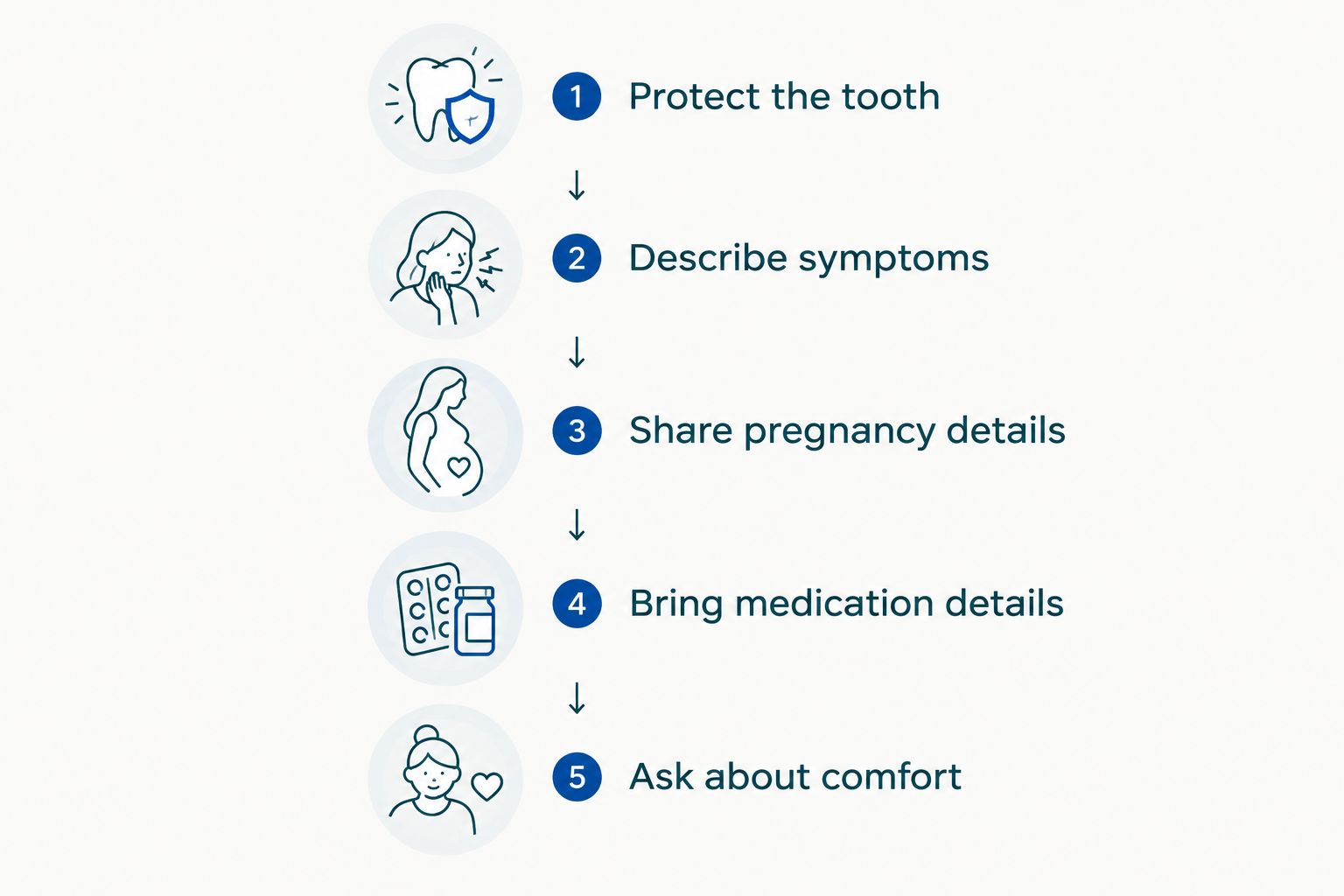
Do not file the tooth yourself or use household glue to attach a broken piece. If you have the fragment, keep it and bring it to the appointment; the dentist can assess whether it is useful.
For pain medicine, ask your prenatal clinician, dentist, or pharmacist what is appropriate for your pregnancy and medical history. Do not assume that an over-the-counter medicine or a product applied to the gum is suitable simply because it is sold without a prescription.
Arranging care in Vista without pressure
Thevistadentist is a local option for pregnant patients in Vista who need a chipped-tooth evaluation. The practice provides emergency, general, and restorative dental care, with a patient-centered approach and clear explanations.
An examination is still necessary before the team can determine the repair, appointment needs, or whether coordination with your prenatal clinician is appropriate. Ask what needs attention now and what can reasonably wait.
For a 2026 appointment request, use Thevistadentist to find the practice's contact options. Call or request an appointment, explain that you are pregnant, and wait for confirmation of the appointment details.
Request a chipped-tooth evaluation
Tell the team about your pregnancy, symptoms, and comfort needs when requesting an appointment.
How do you care for the tooth while waiting?
Keep cleaning your teeth gently rather than avoiding the damaged area entirely. Brush for 2 minutes, 2 times a day, with fluoride toothpaste, and clean between your teeth 1 time a day unless your dental team gives you different instructions for a specific injury.
Choose foods that do not put pressure on the damaged tooth. Avoid chewing ice or other hard objects, and stop using the tooth to bite anything that triggers discomfort.
After repair, ask when you can chew normally and what symptoms should prompt another call. Instructions depend on the treatment and anesthetic used; a general article cannot replace your dentist's directions.
FAQ
Is chipped tooth repair safe during pregnancy?
Necessary chipped-tooth repair can generally be provided during pregnancy. Your dentist needs to examine the tooth and review your pregnancy, medications, and medical history before choosing treatment.
Can I get a chipped tooth bonded while pregnant?
Dental bonding can be considered during pregnancy when it is an appropriate repair. The dentist must first check the chip, remaining tooth structure, and bite; bonding is not suitable for every fracture.
Do I need to wait until the second trimester for a dental repair?
You do not need to wait until the second trimester for necessary dental care. Timing depends on the tooth’s condition, your symptoms, and pregnancy-related health considerations.
Can a dentist numb my tooth while I am pregnant?
Local anesthesia can be used for necessary dental treatment during pregnancy. Tell your dentist about pregnancy complications, medications, and allergies, and discuss sedation separately if it is proposed.
Can I have a dental X-ray for a broken tooth during pregnancy?
A clinically indicated dental X-ray can be taken during pregnancy. Your dentist should explain why the image is needed and how it will help assess the tooth or guide treatment.
What if my chipped tooth does not hurt while I am pregnant?
A painless chipped tooth still needs an evaluation before you decide to delay repair. The examination helps distinguish a minor cosmetic defect from damage that needs protection or treatment.
Can I request a same-day chipped-tooth appointment in Vista?
You can request an emergency evaluation at the Vista practice. Same-day emergency evaluations are usually available during normal office hours, subject to availability; an inquiry does not confirm an appointment or guarantee same-day treatment.
One last thing
Ask your dentist to separate the immediate health need from the cosmetic goal. Protecting a damaged tooth and changing its appearance are not always the same decision. That distinction can help you understand what to address during pregnancy without feeling pressured to complete optional treatment.
Related guides
- Can a filling repair a chipped tooth?
- Does a chipped tooth need repair if it does not hurt?
- What can you eat after chipped-tooth repair?