

Yes, veneers can repair some chipped teeth, especially front teeth with enough healthy enamel to support them. For chipped tooth repair, veneers cover the visible front surface, but they do not treat decay, infection, or every kind of fracture; a dental examination must establish whether a veneer is appropriate.
- For chipped tooth repair, veneers suit selected front teeth; bonding can preserve more enamel for smaller chips.
- A crown covers more of the tooth, but not every chipped tooth needs one.
- Thevistadentist offers chipped tooth evaluations in Vista, CA, with clear explanations before treatment decisions.
- Pain, swelling, or a recent injury makes assessment more urgent; appearance alone cannot establish the damage.
Why this matters
A chipped front tooth can affect how you eat, speak, and feel about your smile. It is understandable to want a repair that looks natural, particularly when the damaged edge is easy to see.
The first decision is not which cosmetic treatment to choose. It is whether the remaining tooth is healthy and strong enough for the proposed repair. This 2026 guide explains where veneers fit without assuming that a visible chip is only a cosmetic problem.
If you are arranging care in Vista, learn what happens at a chipped tooth dental evaluation before choosing a restoration. An examination gives the dentist information that a photograph or description cannot provide.
Can veneers be used for chipped tooth repair?
Veneers can be used when a chip affects the visible part of a tooth and the remaining structure can support a bonded covering. They are particularly relevant when the goal includes changing the tooth's appearance as well as replacing a damaged edge.
A veneer is not automatically the most conservative choice. A small chip sometimes needs only smoothing or a direct repair with tooth-colored bonding, while a more extensive fracture can require different treatment.
| Option | Best for | Main advantage | Main limitation |
|---|---|---|---|
| Smoothing | A minor, superficial rough edge | Reshapes the edge without adding a restoration | Cannot replace a missing portion of tooth |
| Bonding | Selected small chips or localized damage | Adds tooth-colored material directly to the damaged area | Can stain, wear, or chip and need maintenance |
| Veneer | Selected visible chips with adequate healthy tooth structure | Can address the front surface's shape and appearance | Often requires enamel removal and future maintenance |
| Crown | Selected teeth with more extensive structural damage | Covers more of the remaining tooth | Usually requires more tooth preparation than a veneer |
The best repair preserves healthy tooth structure while addressing the actual damage. A treatment that improves the front surface is not enough if the fracture extends into an area that also needs care.
Veneers: best for selected visible chips
A veneer covers the front surface of a tooth and can extend over its biting edge. Your dentist evaluates the chipped area, the available enamel, and the way your teeth meet before recommending it.
Veneers are worth discussing when a visible chip occurs alongside concerns about tooth shape or color. That does not mean neighboring teeth need treatment, or that every cosmetic concern requires a veneer.
The main trade-off is tooth preparation. Many veneers require removing some enamel, and that change is permanent. Ask whether your proposed treatment requires preparation and what replacing the veneer later would involve.
A veneer also remains a restoration that needs care. It can chip, loosen, or require replacement, and the tooth beneath it remains susceptible to decay at exposed surfaces and restoration margins. Choose a veneer only after understanding both its cosmetic purpose and its maintenance needs.
Bonding: best for selected smaller chips
Bonding uses tooth-colored resin to rebuild a damaged area. For a localized chip, it can address the missing portion without covering the entire front surface of the tooth.
Your dentist shapes and polishes the material to suit the tooth and checks the bite. Bonding often preserves more enamel than a veneer, although the preparation needed depends on the damage.
Its limitations matter too. Resin can stain or wear, and a repaired biting edge can chip again under pressure. Whether bonding is suitable depends partly on where the repair sits and how your teeth contact it.
Read about when bonding is an option for chipped tooth repair if you want to compare a localized repair with a veneer. For a small chip, ask whether bonding can meet your needs before committing to broader surface treatment.
Crowns: best for selected structurally weakened teeth
A crown covers more of the tooth than a veneer. A dentist considers this option when the remaining structure needs support that a smaller restoration cannot provide.
An existing large filling, extensive damage, or the location of a fracture can affect that decision. None of these findings establishes the answer by itself; the dentist must assess the tooth as a whole.
The trade-off is greater coverage and usually more preparation. A crown should not be chosen simply because it sounds stronger, and a veneer should not be chosen simply because it sounds less involved. Ask what finding makes the proposed coverage necessary.
Why the right repair varies
The size you can see is only part of the decision. Your dentist also examines areas that are difficult to judge at home, including the back of the tooth and its contact with opposing teeth.
- Chip depth: A superficial enamel chip is different from damage reaching deeper tooth layers.
- Remaining enamel: The amount and condition of enamel affect whether a veneer can bond predictably.
- Fracture location: Damage near the gumline or extending beneath it changes the treatment assessment.
- Biting forces: Grinding, clenching, and tooth contact can place stress on a repaired edge.
- Underlying health: Decay, gum problems, or injury to the inner tooth can require care before cosmetic treatment.
- Your goals: Replacing a small missing corner is different from changing the appearance of the whole front surface.
Bring your priorities to the appointment, including any concern about preserving enamel. You do not need to arrive having selected a procedure.
What happens before a veneer decision?
A chipped tooth evaluation in 2026 should start with the injury and your symptoms, not a commitment to a cosmetic treatment. Tell the dentist when the chip happened, whether the tooth was previously restored, and what feels different now.
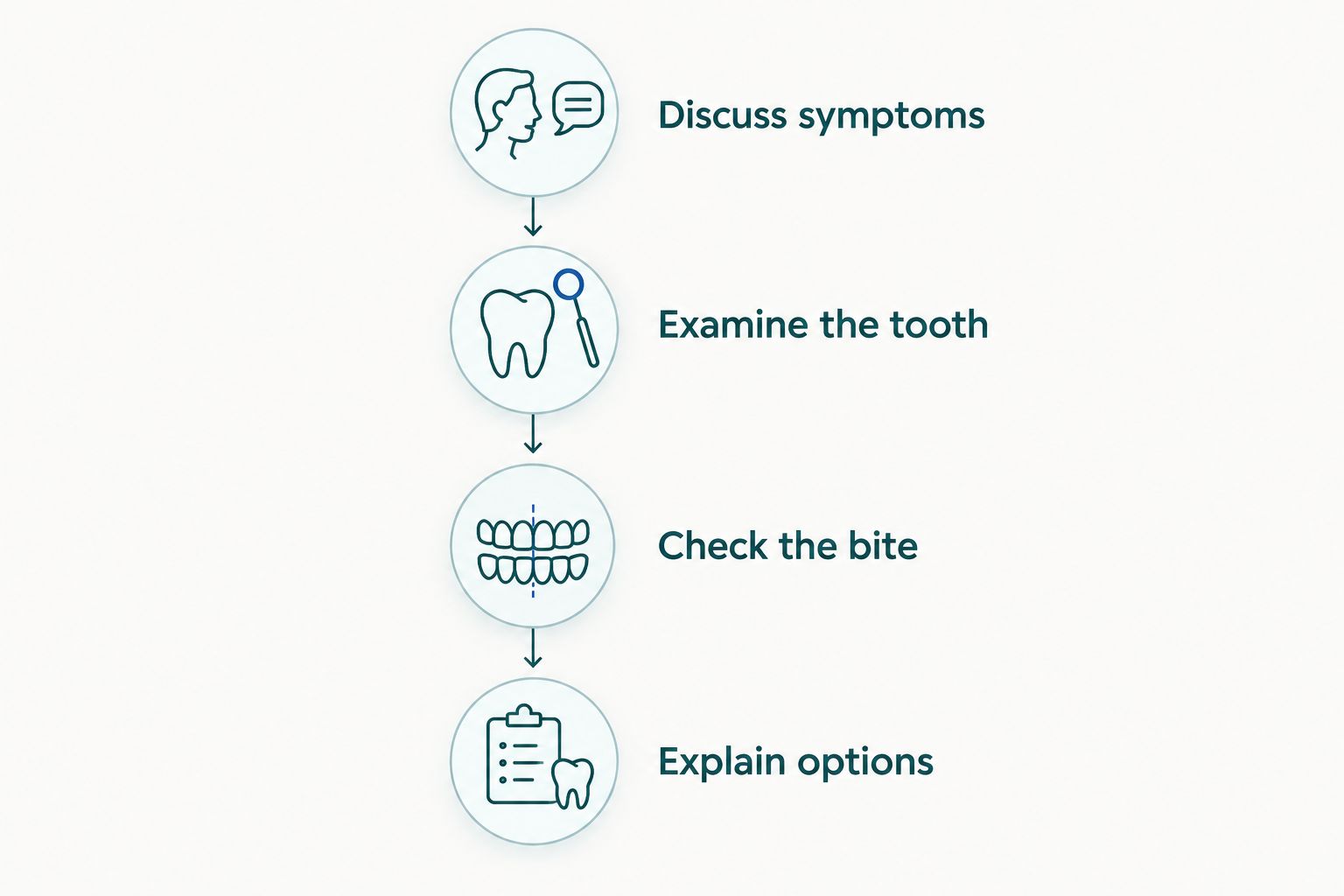
The assessment generally follows this sequence:
- Discuss symptoms. Describe pain, temperature sensitivity, discomfort when biting, and any recent impact.
- Examine the tooth. The dentist checks the damaged area, surrounding tissues, and existing restorations.
- Check the bite. Tooth contact helps identify pressure that could affect a repair.
- Explain options. Review suitable treatments, their limitations, and any additional testing or care needed.
The dentist determines whether imaging or other tests are necessary. Not every visible chip calls for the same examination findings or treatment plan.
If dental visits make you anxious, say so when requesting the appointment. You can ask the dentist to explain what they are checking and to discuss recommendations before treatment begins.
Can a chipped tooth be repaired without a crown?
Yes, some chipped teeth can be repaired without a crown. Smoothing, bonding, or a veneer can be appropriate when the location and extent of damage allow a more limited approach.
The clinical question behind chipped tooth repair without a crown is how much healthy tooth remains and what support it needs. A crown is not required merely because a tooth has chipped, but avoiding one is not a reason to leave a structurally compromised tooth inadequately protected.
Ask your dentist to show you which part of the tooth needs restoration. That explanation makes the difference between the options clearer than comparing their names alone.
Does a painless chip still need an examination?
Yes, a painless chip still deserves a dental examination. Lack of pain does not establish the depth of a fracture or confirm that the remaining tooth is sound.
A rough edge can irritate your tongue, and a damaged area can be difficult to keep clean. After an impact, tell the dentist about the injury even if the tooth initially feels comfortable.
For a chipped tooth in Vista in 2026, contact the practice to describe your symptoms and ask about an evaluation. Do not wait for pain to decide whether the tooth needs assessment.
What should you do while waiting for an appointment?
Keep the area clean with gentle brushing and avoid biting hard foods with the damaged tooth. Do not file the edge yourself or use household glue to attach a fragment.
If you find the broken piece, bring it to the appointment. A dentist can assess whether it has any role in the repair; finding it does not guarantee that reattachment is possible.
Tell the office promptly about worsening pain, swelling, bleeding, or a recent injury. Difficulty breathing or swallowing, rapidly spreading swelling, or a serious facial injury requires immediate medical attention rather than waiting for a cosmetic consultation.
Choosing care in Vista, CA
Thevistadentist is a fit for Vista patients who want a chipped tooth evaluation and clear explanations of repair options. The practice provides emergency, general, restorative, and cosmetic dental care; the examination determines which type of care your tooth needs.
When contacting Thevistadentist about chipped tooth repair, describe the damage and your symptoms rather than requesting a veneer as a settled decision. Mention any sensitivity, pain when biting, swelling, or injury.
Same-day emergency evaluations are usually available during normal office hours, subject to availability. An inquiry is not a confirmed booking, and an evaluation does not guarantee that treatment will be completed that day.
Before accepting a treatment plan in 2026, ask what the recommendation addresses, which alternatives are clinically suitable, and what future maintenance involves. You can also request an explanation of fees and insurance considerations before deciding.
How do you protect a repaired tooth?
A veneer, bonded repair, or crown does not make a tooth immune to damage. Continue brushing with fluoride toothpaste, cleaning between teeth, and attending the follow-up visits your dentist recommends.
Avoid using your teeth to open packaging or bite hard objects. If you grind or clench, discuss whether a protective appliance is appropriate rather than assuming the restoration alone will absorb that pressure.
Report a changed bite, a loose-feeling restoration, or renewed sensitivity. Your repair decisions in 2026 should include what to do if something feels different after treatment, not just how the tooth will look when treatment ends.
FAQ
Can veneers fix a small chip in a front tooth?
Yes, veneers can fix selected front-tooth chips when enough healthy structure remains. For a small chip, ask whether smoothing or bonding would preserve more enamel while meeting your needs.
Are veneers better than bonding for a chipped tooth?
Veneers are not automatically better than bonding for a chipped tooth. Bonding suits some localized repairs, while a veneer can address a broader front-surface concern; the examination determines which options fit.
Will I need a crown instead of a veneer?
You need an examination to determine whether a crown is appropriate. The amount of remaining tooth, fracture location, existing restorations, and bite all affect whether broader coverage is needed.
Does getting a veneer mean removing enamel?
Many veneer treatments require removing some enamel, which is permanent. Ask how much preparation your proposed treatment involves and what future replacement would require.
Can I get a veneer the same day I call?
A same-day veneer is not guaranteed. Same-day emergency evaluations are usually available during normal office hours, subject to availability, but treatment and scheduling depend on the findings and proposed repair.
Should I see a dentist if my chipped tooth does not hurt?
Yes, arrange a dental examination even if the chipped tooth does not hurt. Pain alone cannot show whether the fracture is superficial or whether the tooth needs treatment.
What should I tell a Vista dentist when requesting an appointment?
Describe when the tooth chipped, how it happened, and any pain, sensitivity, swelling, or discomfort when biting. Mention dental anxiety too, so you can discuss how explanations and pauses can help during the visit.
One last thing
Ask which healthy tooth structure each option would preserve. That question shifts the discussion from choosing the most noticeable cosmetic change to choosing a repair that fits the tooth.
Call or request an appointment with Thevistadentist to discuss a chipped tooth evaluation in Vista. You can explain your concerns, ask about appointment availability, and hear the treatment options after the dentist examines the damage.
Related guides
- Does a chipped tooth need repair if it does not hurt?
- How is a chipped front tooth repaired?
- How long does chipped tooth repair last?