

Yes—a tooth-colored filling can repair a chipped tooth when enough healthy tooth remains to support the repair and the damage does not require more extensive treatment. A filling restores missing tooth structure, but it does not treat every crack or an injured tooth nerve, so a dental examination comes before choosing treatment.
- A chipped tooth repair filling works when the remaining tooth can support the restoration.
- Composite resin is used for both tooth-colored fillings and dental bonding; the terms can overlap.
- Large fractures, deep cracks, or nerve damage can require treatment beyond a filling.
- Thevistadentist offers chipped tooth evaluations for patients in Vista, California.
Can a filling repair a chipped tooth?
A filling can replace a missing portion of a tooth, rebuild its shape, and restore a usable biting surface. For a visible chip, a dentist often uses composite resin—a tooth-colored material that bonds to the tooth.
The important question is not simply whether material can cover the chip. It is whether the remaining tooth can hold that material under everyday biting pressure. Your dentist also checks for decay, cracks, and signs that the tissue inside the tooth is injured.
If you want to understand the examination first, read what happens at a chipped tooth dental evaluation.
| Treatment | Best suited to | Main benefit | Main limitation |
|---|---|---|---|
| Tooth-colored filling or bonding | A chip with enough sound tooth remaining | Replaces missing structure while preserving healthy tooth | Can chip or wear; does not solve every underlying fracture |
| Smoothing or reshaping | A very small, shallow enamel irregularity | Removes a rough edge without adding restorative material | Does not replace a substantial missing piece |
| Dental crown | A tooth that needs more coverage or protection | Covers and rebuilds a weakened tooth | Requires more tooth preparation than a small filling |
| Root canal treatment with restoration | A tooth with irreversibly injured or infected pulp | Treats the problem inside a tooth that can be saved | Does not replace the missing outer tooth structure by itself |
These are treatment categories, not a diagnosis. The appearance of a chip in a mirror does not show its full depth or whether a crack extends beneath the visible edge.
Why this matters
Choosing a filling because the chip looks small can overlook damage that needs a different approach. Choosing a crown before an examination can also mean assuming more treatment than you need. The goal is the least extensive treatment that adequately addresses the damage.
For a chipped tooth in 2026, the decision still rests on the tooth's condition—not the name of the procedure you searched for. You can ask your dentist to explain what is missing, what remains healthy, and why the proposed repair fits those findings.
A tooth that does not hurt still deserves attention. Pain is one clue, not a reliable measure of how much tooth structure has been lost.
Tooth-colored filling: when the tooth can support the repair
A tooth-colored filling is an option when the dentist can prepare a suitable surface, attach the material, and shape it without leaving the repair vulnerable to your bite. The dentist considers both the missing piece and the tooth around it.
Composite resin can replace a chipped corner or part of a biting surface. Your dentist selects a shade, places the material, hardens it with a curing light, and adjusts the shape and bite.
The advantage is that a filling can replace the missing area without covering the entire tooth. Its limitation is that the repaired section still experiences pressure, wear, and staining over time. Biting hard objects or using your teeth to open packaging can damage the repair or the tooth itself.
A filling is a treatment choice, not a promise that the tooth will never need further care. Follow-up helps your dentist check the restoration and the surrounding tooth.
Dental bonding: often the same material, a different description
Patients often hear bonding for a chipped front tooth and filling for a damaged back tooth. Both descriptions can refer to tooth-colored composite resin attached to the tooth.
The terms are not perfectly interchangeable in every dental discussion. A dentist might describe a restoration by its purpose, location, or technique. Ask what material will be used and what part of the tooth it will replace rather than relying on the label alone.
For a front-tooth edge, the dentist considers appearance alongside function. Matching the outline matters, but so does how the repaired edge meets the opposing teeth when you bite or move your jaw.
Bonding can preserve healthy structure and blend with the tooth. It can also stain, wear, or break, and it does not automatically provide enough protection for a heavily weakened tooth.
A crown: when a filling would leave the tooth vulnerable
A crown covers the prepared tooth rather than replacing only a localized missing section. Your dentist can recommend a crown when the remaining structure needs protection that a filling cannot provide.
A large break, an already weakened tooth, or damage around an existing restoration can change the recommendation. None of those findings automatically means you need a crown; their location and extent matter.
A crown's benefit is broader coverage. Its trade-off is the need to prepare more of the tooth, so you should understand why that coverage is necessary before proceeding.
Ask your dentist to show you the area of concern, using an examination finding, photograph, or X-ray when appropriate. A clear explanation should connect the proposed treatment to your tooth—not simply describe crowns in general.
Root canal treatment: when the problem reaches inside the tooth
The pulp inside a tooth contains nerves and blood vessels. A deep fracture or injury can affect this tissue, and a surface filling alone cannot treat an infected or irreversibly injured pulp.
Root canal treatment addresses the inside of a tooth that can be saved. The tooth also needs an appropriate restoration afterward; that recommendation depends on its location and remaining structure.
Not every sensitive chipped tooth needs root canal treatment. Sensitivity can have different causes, so describe what triggers it and whether it stops quickly or continues. Your dentist uses that history along with the examination and any indicated tests.
Why the recommended chipped tooth repair varies
A dentist chooses the repair around the tooth's findings, not a standard treatment for every chip. The main factors include:
- Depth of damage: A shallow enamel chip differs from damage involving deeper tooth layers or the pulp.
- Remaining healthy structure: A repair needs sufficient sound tooth to support it.
- Location of the chip: A front edge and a back-tooth chewing surface experience different forces.
- Cracks and decay: Damage beyond the visible chip can change the treatment needed.
- Your bite: Contact with opposing teeth and grinding or clenching can affect the repair.
- Existing dental work: A chip beside a large filling or crown requires assessment of that restoration too.
For your 2026 appointment, bring a description of what happened and any changes since then. Mention whether the tooth had a filling already, whether your bite feels different, and whether hot or cold foods trigger symptoms.
What should you do before your dental evaluation?
You do not need to decide between a filling, bonding, and a crown before calling. Explain that you have a chipped or broken tooth and describe your symptoms so the dental team can advise you about timing.
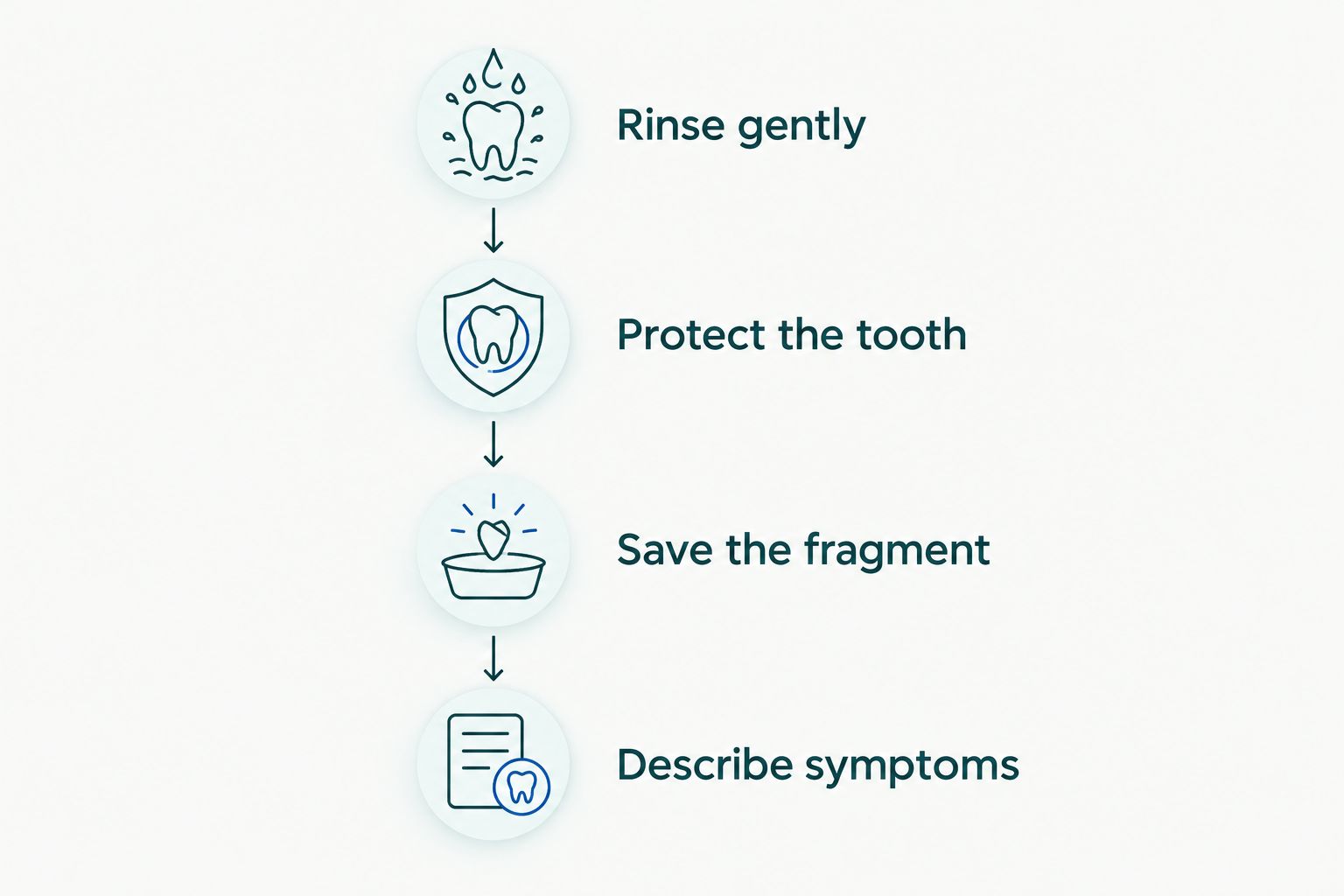
- Rinse gently. Use warm water to clear loose debris without scrubbing the damaged area.
- Protect the tooth. Avoid chewing hard foods on that side and do not repeatedly test the edge with your teeth.
- Save the fragment. If you find the broken piece, keep it and bring it to the appointment. The dentist can assess whether it is useful.
- Describe symptoms. Report pain, swelling, bleeding, sensitivity, or a change in how your teeth meet.
These steps protect the area while you seek care. They do not seal the tooth, rule out a crack, or replace an examination.
Do not file the tooth yourself or use household glue to attach a fragment. If a sharp edge is irritating your mouth, ask the dental team about a temporary protective measure rather than attempting a permanent repair.
When should you seek urgent help?
Call a dentist promptly for a broken tooth with significant pain, swelling, persistent bleeding, or a bite that suddenly feels different. A chip after a blow to the face also needs assessment for injuries beyond the missing piece.
Trouble breathing or swallowing, rapidly spreading swelling, or a serious facial injury requires emergency medical care. Do not wait for a routine dental appointment in those situations.
Thevistadentist provides chipped tooth evaluations for patients in Vista and nearby North County San Diego communities. Same-day emergency evaluations are usually available during normal office hours, subject to availability; an evaluation does not guarantee same-day treatment or after-hours care.
When requesting a 2026 appointment, explain your symptoms and ask the team to confirm the appointment time. Sending a request does not mean a visit has been booked.
If dental visits make you anxious, say so when you contact the practice. You can ask for clear explanations before treatment and discuss what would help you feel more comfortable.
Will a filling stop chipped tooth sensitivity?
A filling can reduce sensitivity when it seals exposed tooth structure and the tooth is otherwise suitable for that repair. Sensitivity caused by a deeper crack or pulp injury needs a different assessment.
Tell your dentist whether discomfort happens with cold, heat, sweets, or biting. Do not assume that a tooth-colored repair will address every source of pain.
Can you wait if the chipped tooth does not hurt?
A painless chipped tooth still needs a dental evaluation because the absence of pain does not establish that the damage is shallow. Contact the practice, describe the chip, and ask how soon you should be seen.
Protect the tooth while you wait. Avoid using it to bite hard foods, and report new pain, swelling, or bite changes rather than waiting silently for the scheduled visit.
How should you care for a repaired tooth?
Brush for 2 minutes, twice a day, with fluoride toothpaste and clean between your teeth daily. Continue dental follow-up at the interval your dentist recommends, because repaired teeth still need checks for decay, wear, and further damage.
Avoid ice chewing, nail biting, and using teeth as tools. If you grind or clench, ask whether a protective appliance is appropriate rather than buying one on the assumption that it will solve the problem.
At follow-up visits in 2026, mention any roughness, food trapping, or discomfort when biting. A repair that feels unusually high deserves a call to the dental team, not repeated attempts to wear it down yourself.
FAQ
Can a dentist put a filling on a chipped front tooth?
Yes, a dentist can use tooth-colored composite resin to repair a chipped front tooth when the remaining structure supports it. The examination determines whether a filling or bonding is appropriate.
Is bonding the same as a chipped tooth repair filling?
Bonding and a tooth-colored filling can use the same composite resin material. The terms often describe different purposes or locations, so ask what the proposed restoration will replace.
Will I need numbing for a chipped tooth filling?
Whether you need numbing depends on the chip’s depth, the preparation needed, and your sensitivity. Ask your dentist to explain the comfort plan before treatment starts.
Can a filling fix a chipped tooth that already has a filling?
A new filling or repair is possible in some teeth with existing fillings, but the dentist must assess the remaining tooth and restoration. Decay, cracks, or a large weakened area can change the recommendation.
How long will a filling on a chipped tooth last?
A filling’s lifespan depends on the repair’s size and location, your bite, daily care, and the condition of the tooth. Your dentist can explain the expected limitations without promising a fixed replacement date.
Can I get a same-day chipped tooth evaluation in Vista in 2026?
Same-day emergency evaluations are usually available during normal office hours at Thevistadentist, subject to availability. Contact the practice to confirm timing; an evaluation does not guarantee same-day treatment.
One last thing
A repair should feel comfortable in your bite, not just look complete in the mirror. If the tooth feels higher than the others or hurts when you close your teeth together after treatment, contact the dental team for advice.
For your visit to Thevistadentist, one useful question is: What makes a filling suitable—or unsuitable—for this particular tooth? The answer should leave you understanding the recommendation, its limits, and your next step without pressure to decide before your questions are answered.
Related guides
- When is bonding an option for chipped tooth repair?
- Does a chipped tooth need repair if it does not hurt?
- How is a chipped front tooth repaired?
- Does insurance cover chipped tooth repair?