

Yes, a dentist can sometimes reattach a chipped tooth fragment when the piece fits and the remaining tooth can support the repair. Keep the fragment moist, bring it to your dental evaluation, and remember that reattachment is only one option—the dentist must also check for deeper damage before recommending treatment.
- For chipped tooth repair, tooth fragment fit matters, but the remaining tooth needs an examination too.
- Keep the fragment moist in milk or your saliva, and bring it to the dentist.
- Thevistadentist offers dental evaluations for patients in Vista and nearby North County San Diego communities.
- Never glue the fragment back yourself; dental adhesives require professional assessment and placement.
Why this matters
Saving the broken piece gives your dentist another repair option. It does not mean the tooth is ready to be bonded back together: a small-looking chip can involve dentin, the sensitive layer under enamel, or damage deeper inside the tooth.
Thevistadentist is an option for Vista patients seeking a patient-centered chipped tooth evaluation. If you need help in 2026, contact Thevistadentist and describe what happened, your symptoms, and whether you found the fragment. An appointment request is not a confirmed booking.
Can a dentist reattach a chipped tooth fragment?
A dentist can reattach some tooth fragments using dental adhesive and tooth-colored restorative material. This approach uses the original piece rather than recreating the entire missing area, but it requires a suitable fragment and a tooth that can be restored safely.
The decision depends on more than appearance. Your dentist checks the fracture, the fragment's fit, the amount of healthy tooth remaining, and how your teeth meet when you bite.
| Repair option | Best suited to | Main benefit | Main limitation |
|---|---|---|---|
| Fragment reattachment | A usable fragment that fits a restorable tooth | Retains the original fragment's shape and surface | The fragment can detach or break again; not every fracture is suitable |
| Tooth-colored bonding or filling | Missing tooth structure that can be rebuilt directly | Does not require finding the original piece | The repair can chip, stain, or need maintenance |
| Crown | A tooth that needs more coverage and support | Covers and protects the remaining tooth structure | Requires preparation of the tooth and is not necessary for every chip |
These are possibilities, not a treatment plan. An exposed or injured tooth nerve, decay, or a fracture extending beneath the gum can change the recommendation.
What should you do with the broken tooth fragment?
Keep the fragment moist and bring it with you, even if you are unsure whether it is usable. Do not test the fit by repeatedly pressing it against the tooth.
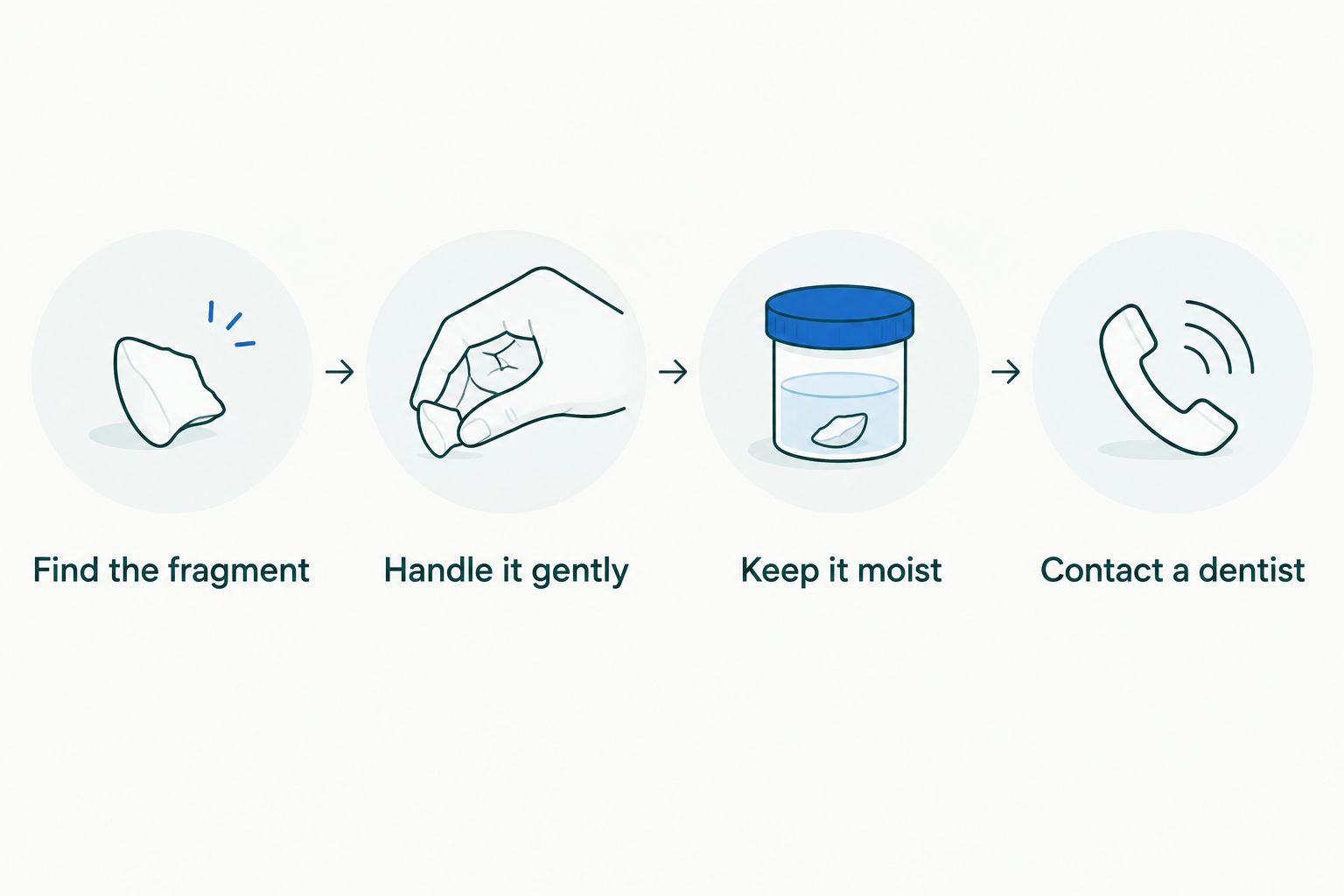
- Find the fragment. Look for the piece if you can do so safely. Do not delay getting help for a significant injury while searching.
- Handle it gently. Avoid scrubbing, scraping, or trying to reshape the broken surface. If it is dirty, rinse it gently without using disinfectants.
- Keep it moist. Place it in a clean container with milk or your saliva. Do not carry a loose fragment inside your mouth, where you could swallow or inhale it.
- Contact a dentist. Explain when the tooth broke, whether you have pain or swelling, and whether the tooth feels loose or your bite has changed.
If you cannot find the fragment, you can still have the tooth evaluated and discuss other repairs. Finding the piece is helpful, not a requirement for receiving care.
While you wait for instructions, avoid biting on the injured tooth. Choose foods that do not require forceful chewing, and avoid temperatures that trigger sensitivity. Do not use household glue, nail adhesive, or a home repair kit to attach the piece.
Fragment reattachment: when the original piece is usable
Fragment reattachment is considered when the piece fits the broken tooth and the dentist can prepare and bond the surfaces appropriately. Keeping the original fragment can help preserve its natural contours, texture, and color.
The limitation is strength and durability. A reattached fragment is still a repair, and another impact, hard biting, or grinding can damage it. Your dentist should explain what the repair can reasonably do and what would happen if it failed.
Ask whether the fragment alone can restore the tooth or whether additional restorative material is needed. A piece that looks complete in your hand does not establish how much support remains inside the tooth.
Bonding or a filling: when the fragment cannot be used
Tooth-colored composite material can replace missing tooth structure when the original piece is lost, damaged, or unsuitable for reattachment. The dentist shapes the material to rebuild the tooth and checks the bite after placement.
This option does not depend on finding the fragment. Its limitations include wear, staining, and possible chipping, especially where the tooth takes substantial biting forces.
A missing fragment does not automatically mean you need a crown. The size and location of the break, the remaining tooth structure, and the condition of the tooth determine whether a direct repair is appropriate.
A crown: when the remaining tooth needs more support
A crown covers the prepared tooth rather than simply replacing the chipped edge. A dentist considers it when the remaining structure needs protection that a smaller repair cannot provide.
The trade-off is that preparing a crown involves removing some tooth structure. A crown is therefore not the default response to every broken tooth, and it does not treat an injured or infected nerve by itself.
If the nerve inside the tooth needs treatment, your dentist will explain that separately. Reattaching a fragment, placing a filling, and treating the inside of a tooth address different problems.
Why tooth fragment reattachment varies
Two chips that look alike can require different care. These factors help explain why a dentist cannot confirm reattachment from a description alone:
- Fragment condition: An intact piece is different from one that is crushed, incomplete, or damaged along the fracture surface.
- Fit: The dentist checks whether the fragment matches the remaining tooth and whether the edges can be joined appropriately.
- Fracture depth: A break limited to enamel differs from one involving dentin, the nerve space, or the root.
- Healthy tooth remaining: Decay, large existing restorations, or missing support can affect the repair choice.
- Moisture control: Bonding requires a working area that the dentist can isolate from saliva and bleeding.
- Biting forces: Tooth position, grinding, and the way your teeth contact each other affect stress on a repair.
Do not judge suitability by pain alone. A tooth without pain still needs assessment after a fracture, particularly following a fall or impact.
What happens at a chipped tooth evaluation in Vista?
A dental evaluation looks beyond the missing corner. Your dentist asks how the injury happened, examines the tooth and nearby tissues, and checks whether the tooth is loose or your bite has changed.
Depending on the injury, the examination can include dental X-rays and tests of the tooth's response. These checks help identify concerns that are not visible on the surface. For a fuller explanation, read what happens at a chipped tooth dental evaluation.
For your 2026 appointment, bring the fragment in its container and explain any changes since the injury. Mention pain when biting, sensitivity, bleeding, swelling, or a different tooth color. If you struck your face, tell the dentist even when the chip looks small.
At Thevistadentist, same-day emergency evaluations are usually available during normal office hours, subject to availability. That does not guarantee same-day treatment or after-hours care. The examination determines the next step.
Request a chipped tooth evaluation
Describe your symptoms and ask about an evaluation during normal office hours. Availability varies.
When should you seek urgent help?
Contact a dentist promptly after breaking a tooth, especially if you have worsening pain, swelling, bleeding, a loose tooth, or a changed bite. Tell the office about these symptoms when requesting care rather than describing the problem only as a cosmetic chip.
Difficulty breathing or swallowing, heavy bleeding that will not stop, or a serious facial injury requires emergency medical attention. Do not wait for a routine dental appointment in those circumstances.
A fragment is not the same as a whole tooth that has been knocked out. If the entire tooth is out of its socket, say so immediately when seeking help; the handling and urgency are different. Do not attempt to push a broken fragment into the gum.
Will a reattached fragment look like the original tooth?
A reattached fragment retains its original shape and surface, which can help it blend with the remaining tooth. The final appearance depends on the fracture, the fragment's condition, and the materials needed to join or rebuild the area.
A visible join, a color difference, or a need for additional finishing is possible. Ask your dentist what appearance is realistic before deciding, particularly if the chip is on a front tooth.
Can a reattached fragment break off again?
A reattached fragment can break or detach again, especially with another injury or heavy biting pressure. No examination can promise that a repair will last indefinitely.
After a repair in 2026, follow the dentist's instructions about eating, cleaning, and follow-up. Ask whether grinding or sports exposure needs attention. If the repair loosens or breaks, save any pieces and contact the practice rather than gluing them back.
What if you feel anxious about the appointment?
Tell the team what worries you: discomfort, the sound of instruments, an unexpected treatment recommendation, or uncertainty about the visit. You can ask the dentist to explain each step before beginning and to agree on a signal for a pause.
An evaluation is an opportunity to understand the injury and discuss choices. You do not need to arrive knowing which repair to request. Thevistadentist emphasizes clear explanations and a reassuring approach so you can ask questions without feeling rushed.
FAQ
Can a dentist use my broken tooth piece to repair the chip?
Yes, a dentist can sometimes reattach the original fragment if it fits and the remaining tooth can support the repair. Bring the piece in a clean container with milk or your saliva so the dentist can assess it.
Should I put a chipped tooth fragment in water or milk?
Milk is a suitable way to keep a chipped tooth fragment moist while you arrange dental care. Your saliva in a clean container is another option; do not carry the loose piece inside your mouth.
Can I glue a tooth fragment back on myself?
No, do not glue a tooth fragment back yourself. Household adhesives are not intended for dental repair, and placing the piece yourself can interfere with assessment and safe treatment.
Is it too late if my tooth fragment dried out?
A dried fragment still deserves a dentist’s assessment; dryness alone does not let you decide whether reattachment is possible. Keep the piece moist now and bring it to the evaluation.
Does a chipped tooth need an appointment if it does not hurt?
Yes, a chipped tooth needs a dental evaluation even without pain. The dentist checks the depth of the fracture, the remaining tooth structure, and any signs of injury beyond the visible chip.
Can I get same-day chipped tooth repair in Vista in 2026?
Same-day emergency evaluations are usually available at the Vista practice during normal office hours, subject to availability. Same-day treatment is not guaranteed; contact the office to discuss your symptoms and confirm an appointment.
What if I swallowed the broken tooth fragment?
You can still have the chipped tooth evaluated if you swallowed the fragment. Breathing difficulty or suspected inhalation requires emergency medical attention; tell the dentist that the piece is missing.
What should I ask before agreeing to fragment reattachment in 2026?
Ask why the fragment is suitable, what other repairs are reasonable, and what limitations the dentist expects. Also ask about care instructions, follow-up, and what to do if the fragment detaches.
One last thing
Bring the fragment even if you think it is too small to matter. It gives the dentist something useful to examine, but finding it should never delay care for a more serious injury. For a chipped tooth in Vista in 2026, the practical next step is an evaluation—not deciding on bonding, a crown, or reattachment before the tooth has been examined.
Related guides
- When is bonding an option for chipped tooth repair?
- When might a chipped tooth need a crown instead of bonding?
- Does a chipped tooth need repair if it does not hurt?